


All Articles
SUBMIT ARTICLE

From Medals to Medley: What the Olympic Village Can Teach the Coliving Sector
From Medals to Medley: What the Olympic Village Can Teach the Coliving Sector
The Olympic Village is rarely discussed in housing innovation circles, but it should be. Every Games cycle delivers one of the most complex residential operations in the world - thousands of residents from over 200 nations living in high-density, shared environments with extraordinary logistical demands. The model combines temporary occupancy, community integration, sustainability targets, and long-term adaptive reuse planning. It must function immediately, operate flawlessly, and convert seamlessly into legacy housing. For stakeholders in coliving, the Olympic Village offers a valuable case study in scale, community management, and urban integration.
Every Olympic Games is remembered for its medal counts, its record-breaking feats, and its global spectacle. Yet one of the most complex components of the Games unfolds largely outside public view - and often years before the opening ceremony - the Olympic Village. Built to temporarily house thousands of athletes, coaches, and officials from more than 200 nations, the Olympic Village is one of the most ambitious residential experiments in the world. It must function at extreme density, under global scrutiny, for a limited time frame, while accommodating diverse cultural norms, dietary needs, languages, and daily routines. From the perspective of coliving, the Olympic Village offers some of the world’s most ambitious coliving experiments at scale, and is a testament to how coliving has escaped the confines of its rigid characterisation as a lifestyle product for digital nomads.
Shared Purpose as the Foundation of Community

One of the most persistent challenges in coliving is the creation of authentic community. Many developments attempt to engineer social cohesion through events, branding narratives, or shared interest themes. Olympic Villages, by contrast, begin with an organic and powerful driver of cohesion - shared purpose.
Olympic Villages bring together athletes, coaches, and officials into a densely populated, but highly coordinated environment. For instance, the Paris 2024 Olympic Village alone housed approximately 14,500 Olympic athletes and 9,000 Paralympic athletes and their teams across its 82 buildings, creating a temporary coliving environment that spanned 46 hectares of Seine-Saint-Denis and adjacent areas.
Athletes enter the Village with clear behavioural expectations. Rest is respected. Performance routines are prioritised. Social life is structured around preparation and recovery. Even without formal community-building programmes, bonds form rapidly through shared intensity.
Unlike many coliving developments that attempt to retrofit community, the design of the Olympic Village embeds community around performance goals - shared meals, recovery spaces, communal transport, recreational areas, and integrated medical and sports facilities - all optimised to support elite performance. Functional community design, rooted in a clear shared purpose, offers a template for how coliving developments can move beyond amenity lists toward meaningful interdependence among residents.
Designing for Performance & Wellbeing
If Olympic Villages demonstrate anything, it is that operations matter as much as architecture. Managing thousands of residents from different cultures requires centralised services, clear communication systems, and behavioural norms that are widely understood and accepted.
Olympic Villages operate with centralised food services capable of serving thousands of meals daily, multilingual wayfinding and communication, strict but accepted codes of conduct, and continuous logistics, security, and maintenance.
This operational intensity offers a counterpoint to the idea that structure undermines autonomy. In practice, Olympic Villages show that well-run operations enable individual freedom by removing uncertainty and inefficiency. For coliving operators, this reinforces the importance of operational clarity - especially at scale.
The foundations of coliving emphasise architecture that supports interaction and wellbeing, but designers often struggle to create spaces that genuinely influence behaviour at scale. Olympic Villages demonstrate how architectural and spatial decisions shape daily life. With temporary housing designed as efficient apartments, shared kitchens, and common areas, and easy access to services - healthcare, restaurants, transport nodes, gyms, recovery spaces - under the same roof or adjacent buildings, this integration translates to walkability that makes almost every destination within the Village is a short walk or cycle away.
These principles align with the growing emphasis on wellbeing, routine, and reduced daily friction in communal environments, and show how mass-scale high-performance living can also be human-oriented.
Temporality: Can Temporary (Pop-up Coliving) Still Be Real Community?
One of the distinctions of Olympic Villages is that they operate intensely, but briefly. Athletes and officials live there for a matter of weeks, yet communities form rapidly under shared schedules and routines. This matters for coliving, as it challenges the idea that community requires years to build, and highlights how clear behavioural rhythms - meal times, training, rest periods, communal transit - accelerate social integration. Coliving developments can leverage this insight by designing intentional rhythms, collective routines, and event-based lifestyles that accelerate community formation.
Yet temporality also reveals that not all residents willingly embrace communal living, even within the Olympic context. Ahead of the 2026 Winter Olympics, reports confirmed that members of Canada’s men’s hockey team would opt to stay in a five-star hotel rather than the Olympic Village, prioritising privacy, routine control, and performance optimisation over communal immersion. This decision underscores a broader truth about shared living. While the Olympic Village functions as a highly engineered coliving ecosystem, elite athletes - much like certain demographics in urban markets - may resist density when individual performance or privacy are perceived to be at stake. The Olympic Village demonstrates that coliving can operate at scale, but it also exposes a psychological barrier of willingness to share space being contextual, and often stratified by status, expectation, and perceived need for autonomy.
From Games to Neighbourhoods: Legacy & Adaptive Reuse

Perhaps the most compelling intersection of Olympic Villages and coliving is what happens after the Games. Rather than being dismantled, many Olympic Villages are transformed into permanent residential communities, often housing thousands. The most recent Olympic projects have been conceived explicitly with legacy in mind. Conversion plans are embedded into initial master planning, infrastructure investments are aligned with long-term demographic needs, and public amenities are designed to remain functional after athlete departure.
- London 2012’s Olympic Village was converted into the East Village, with approximately 2.818 homes intended for mixed use, including affordable housing and community facilities such as schools and health centres. The Village originally accommodated around 17.000 athletes and officials during the Games.
- Seoul’s 1988 Olympic Village, originally built with capacity for around 15.000 people across 3.692 apartments, is now a mixed residential community containing approximately 5.500 households decades after the Games.
- Vancouver’s 2010 Olympic Village, which housed up to 2.800 athletes, coaches, and officials during the Games, was redeveloped into a neighbourhood with about 1.100 residential units and broader mixed-use spaces aligned with sustainability goals.
- Paris 2024’s Olympic Village is being transformed into approximately 2.800 housing units expected to house around 6.000 long-term residents, alongside green spaces, transit connections, and commercial spaces.
These legacy conversions mirror coliving’s goals to build dense, supportive, mixed-use residential environments. While Olympic Villages are purpose-built and later converted, much of the coliving sector operates in the opposite direction through adaptive reuse. Former office buildings, hotels, industrial sites, and even retail spaces are being transformed into shared living environments. Adaptive reuse has become a defining strategy within coliving because it allows developers to respond to shifting urban demand, especially in cities facing office oversupply or changing retail patterns. Rather than building entirely new residential districts, coliving frequently inserts itself into the existing urban fabric, reprogramming underutilised assets into community-oriented housing. For coliving developers, Olympic Villages demonstrate the importance of designing for future flexibility even in new-build projects - adaptability should not be reactive but embedded structurally.
Sustainability & Urban Integration
In recent decades, Olympic Villages have evolved from temporary accommodation compounds into large-scale sustainability demonstrations. Modern Olympic Village designs are now intentionally aligned with sustainability goals - an area where coliving also seeks leadership.
- The Paris Olympic Village aimed to reduce carbon emissions by nearly 47% compared to conventional development projects, and includes six hectares of green space, integrated transit connections, and water management systems.
- Milan’s 2026 Olympic Village, uses mass-timber construction and plans to convert the facilities into 1.700 beds of student housing, promoting urban regeneration and reduced environmental impact after the Winter Games.
Olympic Villages suggest that coliving can go further. Coliving developments can integrate district-scale energy systems rather than relying solely on building-level efficiencies. Partnerships with municipalities to connect to renewable district heating, geothermal networks, or shared battery storage systems could transform coliving projects into sustainability anchors within broader neighborhoods. Material selection in new-build coliving can also prioritise low-carbon construction, including mass timber and modular prefabrication. Prefabrication, widely used in Olympic developments due to time constraints, not only accelerates construction but reduces waste and improves quality control. Coliving developers, particularly those scaling portfolios across multiple cities, could adopt similar modular systems to standardise sustainable construction.
Olympic Villages as Hyper-Scale Coliving Prototypes

Olympic Villages prove that when residents share a compelling common purpose - be it performance, schedules, or service systems - community forms quickly and meaningfully. From a design perspective, spatial arrangements that prioritise proximity to services, community spaces, and wellbeing amenities result in livable, supportive environments. To those still unconvinced by coliving’s temporal status, Olympic Villages prove that even short-term coliving can be socially rich when rhythms and routines are explicit and intentional. Finally, with regard to sustainability efforts, Olympic Villages incorporate carbon-reduction and ecological planning that coliving communities can emulate, especially in new developments and event-driven urban districts.
The Olympic Village may be designed for elite sport, but it embodies many of the principles coliving advocates value most: community by design, shared environments with purpose, and adaptability. By studying how Olympic Villages are conceived, inhabited, and repurposed, the coliving sector can learn how to create urban living environments that are social, sustainable, resilient, and adaptable - for both temporary communities and long-term neighbourhoods.


Become a Premium Member to Enjoy All Articles!
Coliving for Every Generation: Building Inclusive Communities Across Demographics and Lifestyles
Coliving for Every Generation: Building Inclusive Communities Across Demographics and Lifestyles
The Coliving Conference 2025 featured a thought-provoking panel discussion diving into how coliving is evolving to meet the needs of diverse groups, from seniors to creatives, offering tailored community experiences for all moderated by Kristina Kurma. Panelists included Martin Kring, Maxence Petit, and Thomas Townsend. This session explored how operators, investors, and developers can navigate the balance between inclusivity and specialisation - ensuring that targeted models remain open, welcoming, and adaptable, while meeting market demand and creating a sense of belonging for all.

Become a Premium Member to Enjoy All Articles!
AI, Tech, Automations vs. Human Authenticity: Striking the Optimal Balance in Future Coliving Experiences
AI, Tech, Automations vs. Human Authenticity: Striking the Optimal Balance in Future Coliving Experiences
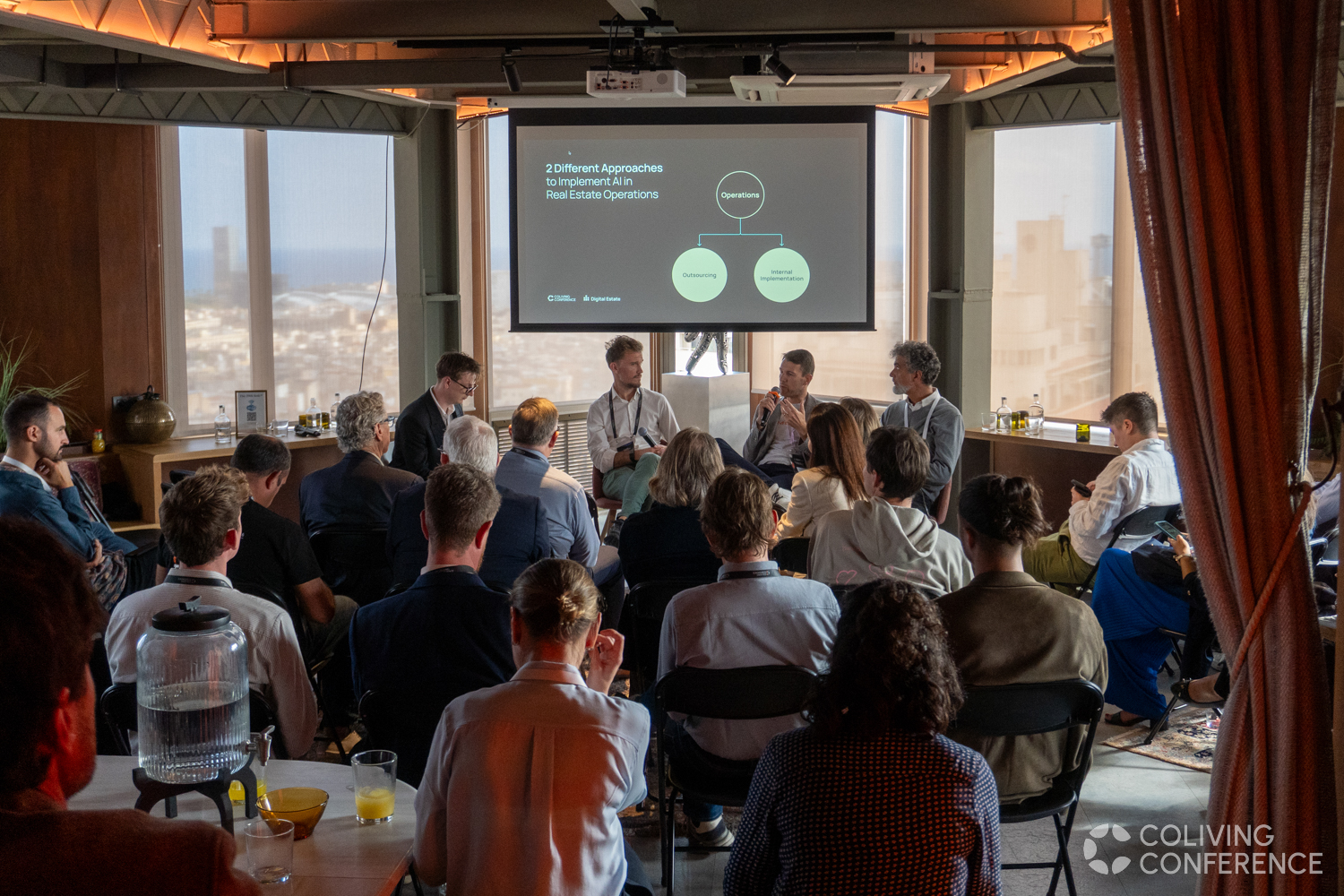
The Coliving Conference 2025 featured a thought-provoking panel discussion diving into how coliving balances AI-driven efficiencies with genuine, human-centred experiences for the future of shared living moderated by Dawid Houser. Panelists included Marc Rovira, Martin Reichenbach, and Diego Gaspar. This session delved into the evolving role of AI across the project development and resident lifecycle; from streamlined, automated leasing processes and dynamic pricing models, to predictive maintenance and hyper-personalised service delivery.
Become a Premium Member to Enjoy All Articles!
Cohabitation in the neighbourhood of tomorrow
Cohabitation in the neighbourhood of tomorrow
The Coliving Conference 2025 featured a thought-provoking panel discussion analysing coliving as a driver of urban regeneration, fostering mixed-use neighbourhoods, balancing density, and enhancing social infrastructure moderated by Seth Rutt. Panelists included Gina McMorran, Michael Swiszczowski, and Yeji Cheon. the face of rising urban density, housing crises, and social fragmentation, the future of neighbourhoods depends on how we design, programme, and manage shared spaces.

Become a Premium Member to Enjoy All Articles!
Beyond Community: What Today’s Coliving Residents Truly Value
Beyond Community: What Today’s Coliving Residents Truly Value
The Coliving Conference 2025 featured a thought-provoking panel discussion analysing what coliving residents truly prioritise today and in the future moderated by Jeremi Wasilewski. Panelists included Dean Koenning, Joke Vereecke, and Will Silencio. While community remains a core benefit, today’s residents are increasingly seeking more from their coliving experience - privacy, flexibility, sustainability, and tech-driven convenience are becoming essential as lifestyles evolve.

Become a Premium Member to Enjoy All Articles!
Is It Time for Spain? Unpacking the Coliving Opportunity
Is It Time for Spain? Unpacking the Coliving Opportunity
The Coliving Conference 2025 featured a thought-provoking panel discussion exploring whether Spain is ready for the coliving boom, moderated by Bart Sasim. Panelists included Carlos Muriel, Andres Nieto, and Davide Ravalli. With growing rental demand, and relatively affordable real estate, the session covered what the barriers to entry are, and how Spain compares to established coliving hubs like the UK, France, Germany, or the Netherlands.

Become a Premium Member to Enjoy All Articles!
Coliving Outside the Metropolis: Exploring the Potential Beyond Primary Urban Centres
Coliving Outside the Metropolis: Exploring the Potential Beyond Primary Urban Centres
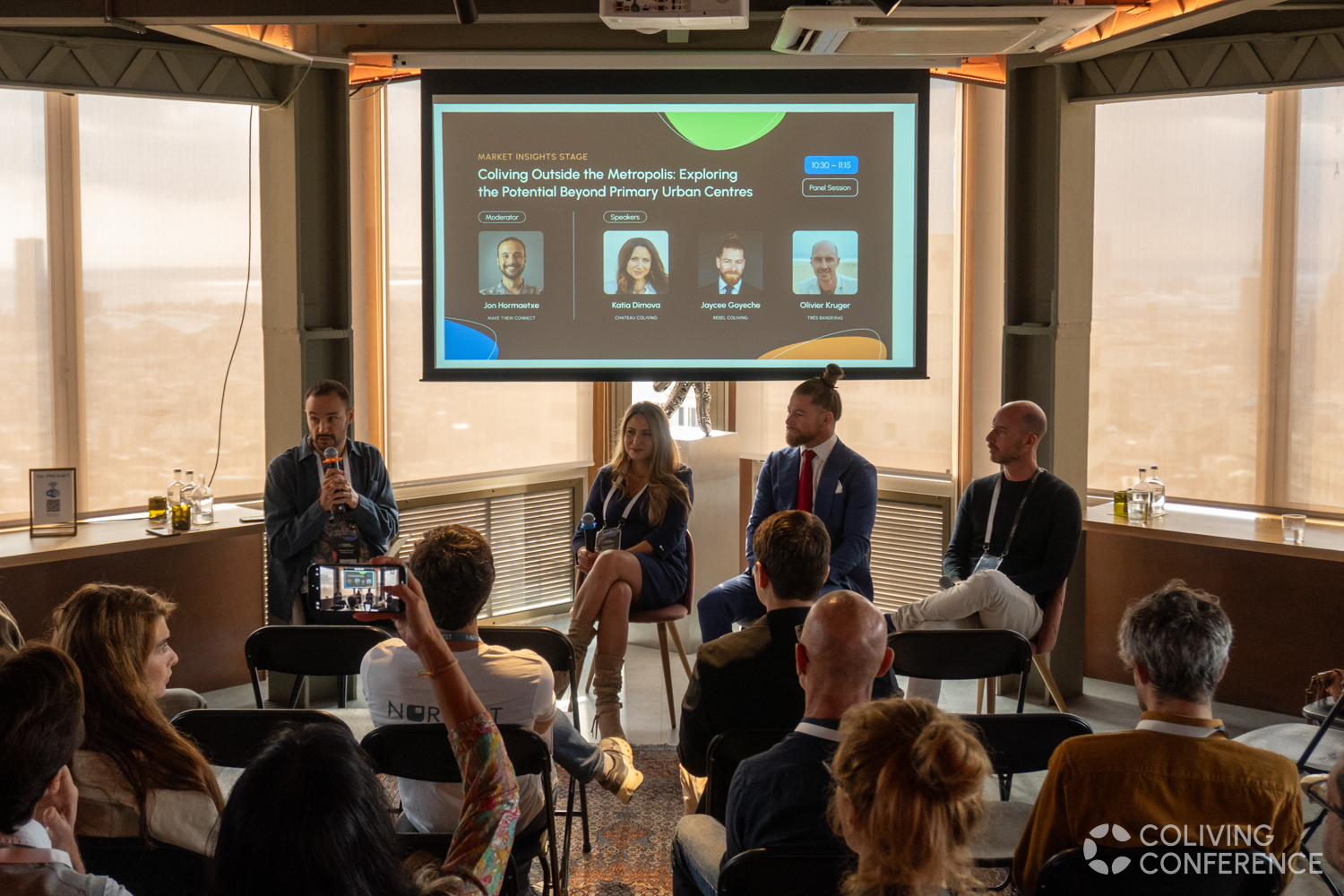
The Coliving Conference 2025 featured a thought-provoking panel discussion exploring the growing opportunity for coliving in secondary, tertiary & rural areas, and its the investment, operational & lifestyle benefits, moderated by Jon Hormaetxe. Panelists included Katia Dimova, Jaycee Goyeche, and Olivier Kruger. The session covered how these non-metropolitan spaces are becoming key opportunities for both operators and investors, offering unique advantages in terms of affordability, sustainability, and community-driven living.
Become a Premium Member to Enjoy All Articles!
Paving the Way: Unlocking Capital & Policy Levers for Coliving's Next Chapter
Paving the Way: Unlocking Capital & Policy Levers for Coliving's Next Chapter
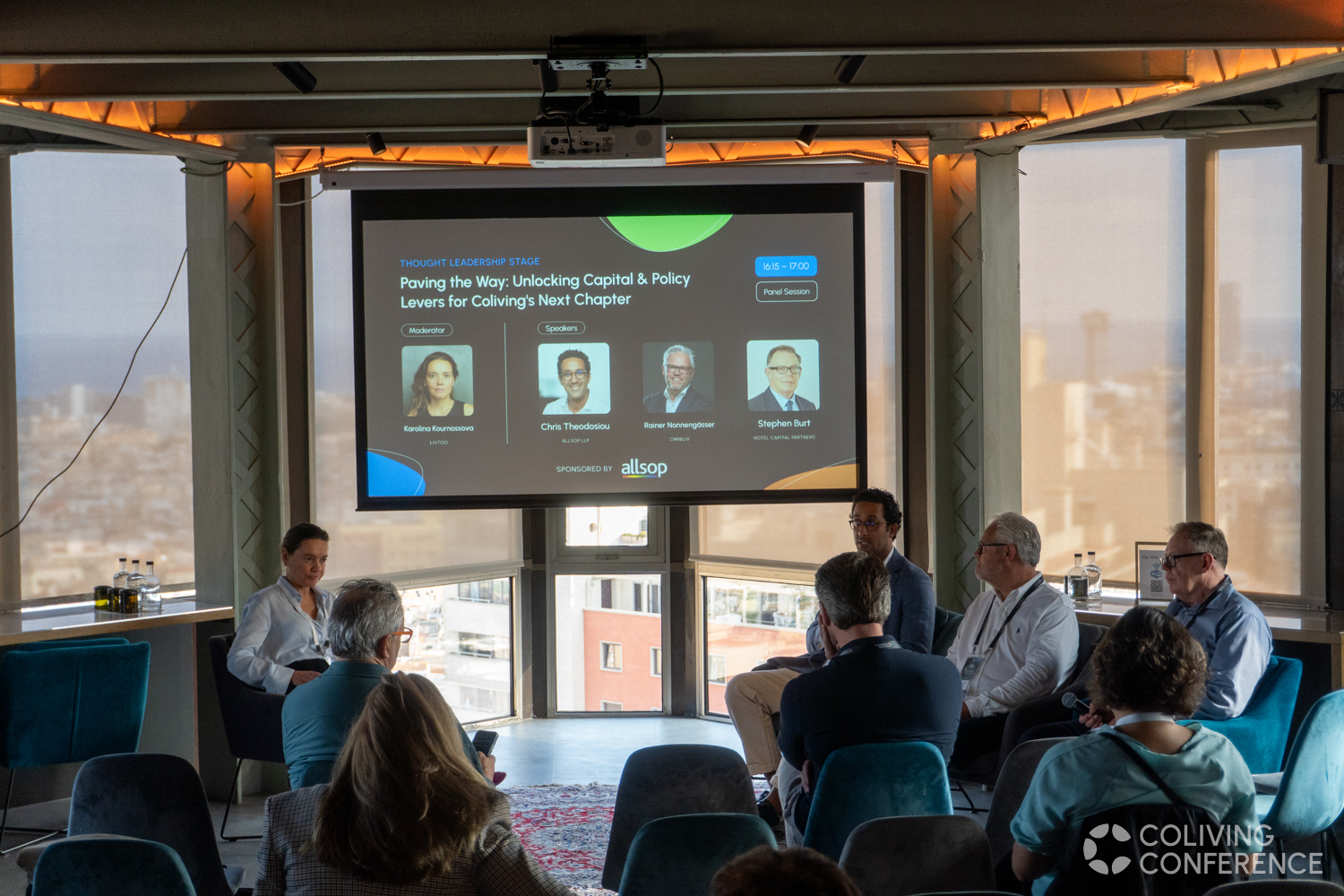
The Coliving Conference 2025 featured a thought-provoking panel discussion on how investment trends, liquidity evolution & adaptive regulations are forging the future development of the coliving sector, moderated by Karolina Kournossova. Panelists included Chris Theodosiou, Rainer Nonnengässer, and Stephen Burt. The session covered how the critical interplay of capital investment, regulatory evolution, and innovative development is affecting the coliving sector.
Become a Premium Member to Enjoy All Articles!
Sustainable by Design: Rethinking Coliving Development for an ESG Future
Sustainable by Design: Rethinking Coliving Development for an ESG Future
The Coliving Conference 2025 featured a thought-provoking panel discussion on how can coliving design integrate ESG principles, tackle embodied carbon, and unlock affordable housing, moderated by Santiago Ossa. Panelists included Yimei Chan, Robert Barnard, and Yianni Tsitouras. The session covered how a new generation of coliving developments is emerging that aligns environmental goals, adaptive reuse, and community impact within a single, scalable vision.
.jpg)
Become a Premium Member to Enjoy All Articles!
Urban (R)Evolution: Navigating the Future of Multifunctional Spaces
Urban (R)Evolution: Navigating the Future of Multifunctional Spaces
The Coliving Conference 2025 featured a thought-provoking panel discussion on the changing landscape of Coliving, PBSA, Hybrid Hospitality, Flex Living and BTR models, moderated by George Sell. Panelists included Josephine Phinith, Andreea Kaiser, and Giles Horwitch-Smith. The session covered how live-work-play products have adapted and continue to evolve, responding to the demands for flexibility, community, and adaptability, with a focus on spatial design, brand evolution, and service stack innovations.
.jpg)
Become a Premium Member to Enjoy All Articles!
Accelerating Coliving with Technology: A Strategic Approach
Accelerating Coliving with Technology: A Strategic Approach
The Coliving Conference 2025 featured a thought-provoking panel discussion on how coliving businesses are embedding digital solutions into their strategies, moderated by Jupiter Lucas. Panelists included Floris Lauwerier, Aleks Pes, and Johannes Peter. The session focused on how technology is reshaping coliving from investment to operations, creating fully integrated and future-proofed coliving ecosystems. From low-code agility and automation, to investor transparency, pricing ethics, and scaling community without burning out teams, technology is no longer an add-on to coliving operations -it is the infrastructure itself.

Become a Premium Member to Enjoy All Articles!
Affordable Luxury: Redefining Value in Coliving Amidst Economic Pressures
Affordable Luxury: Redefining Value in Coliving Amidst Economic Pressures
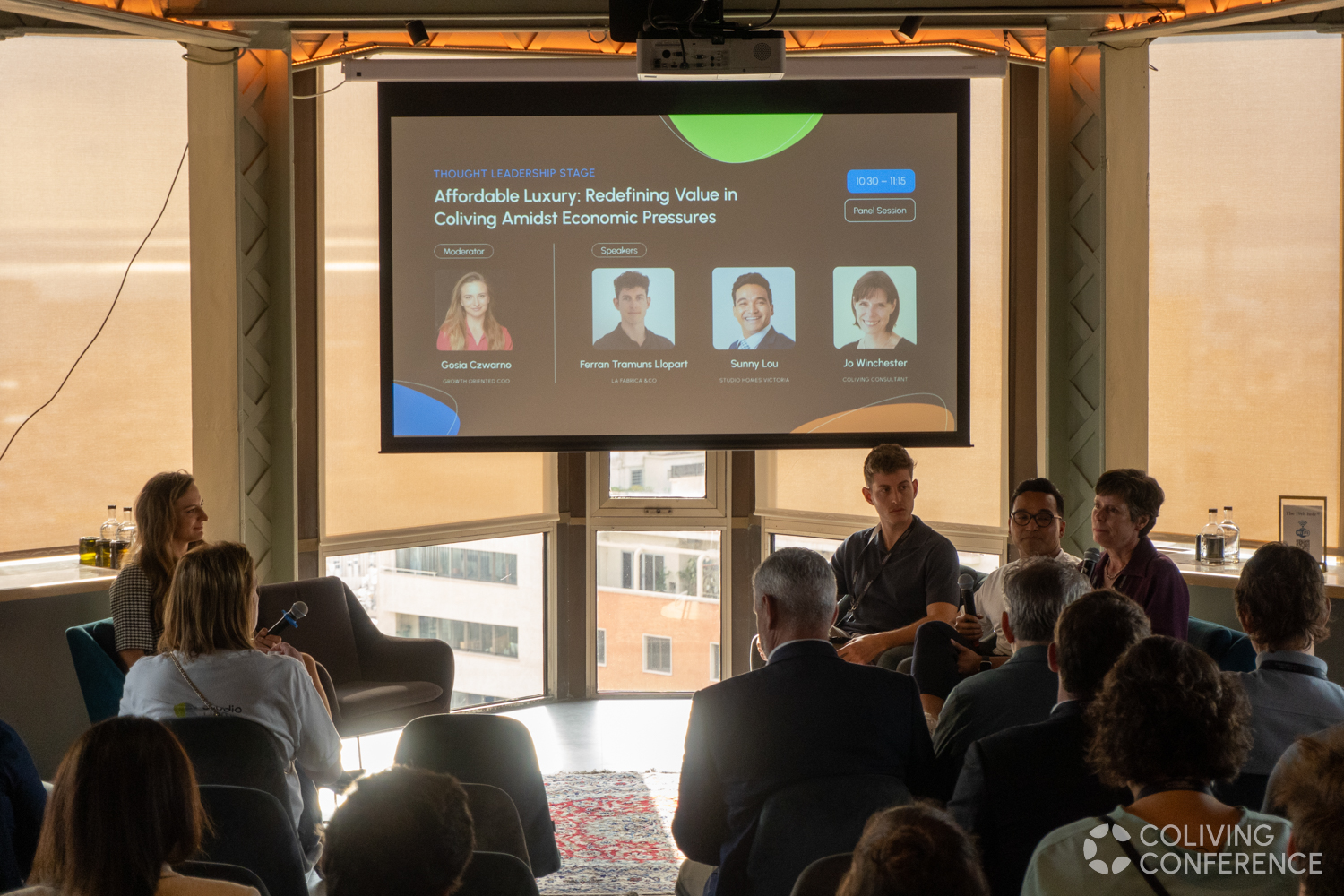
The Coliving Conference 2025 featured a thought-provoking panel discussion on how coliving brands deliver affordable luxury amidst rising costs, moderated by Gosia Czwarno. Panelists included Ferran Tramuns Llopart, Sunny Lou, and Jo Winchester. The session focused on how operators are redefining value for money, offering residents substantially more than just a private room - from intelligent spatial solutions and premium shared amenities to flexible contract models that resonate with contemporary, evolving lifestyles.
Become a Premium Member to Enjoy All Articles!
Creating Working & Living Hubs for Hybrid Lifestyles
Creating Working & Living Hubs for Hybrid Lifestyles
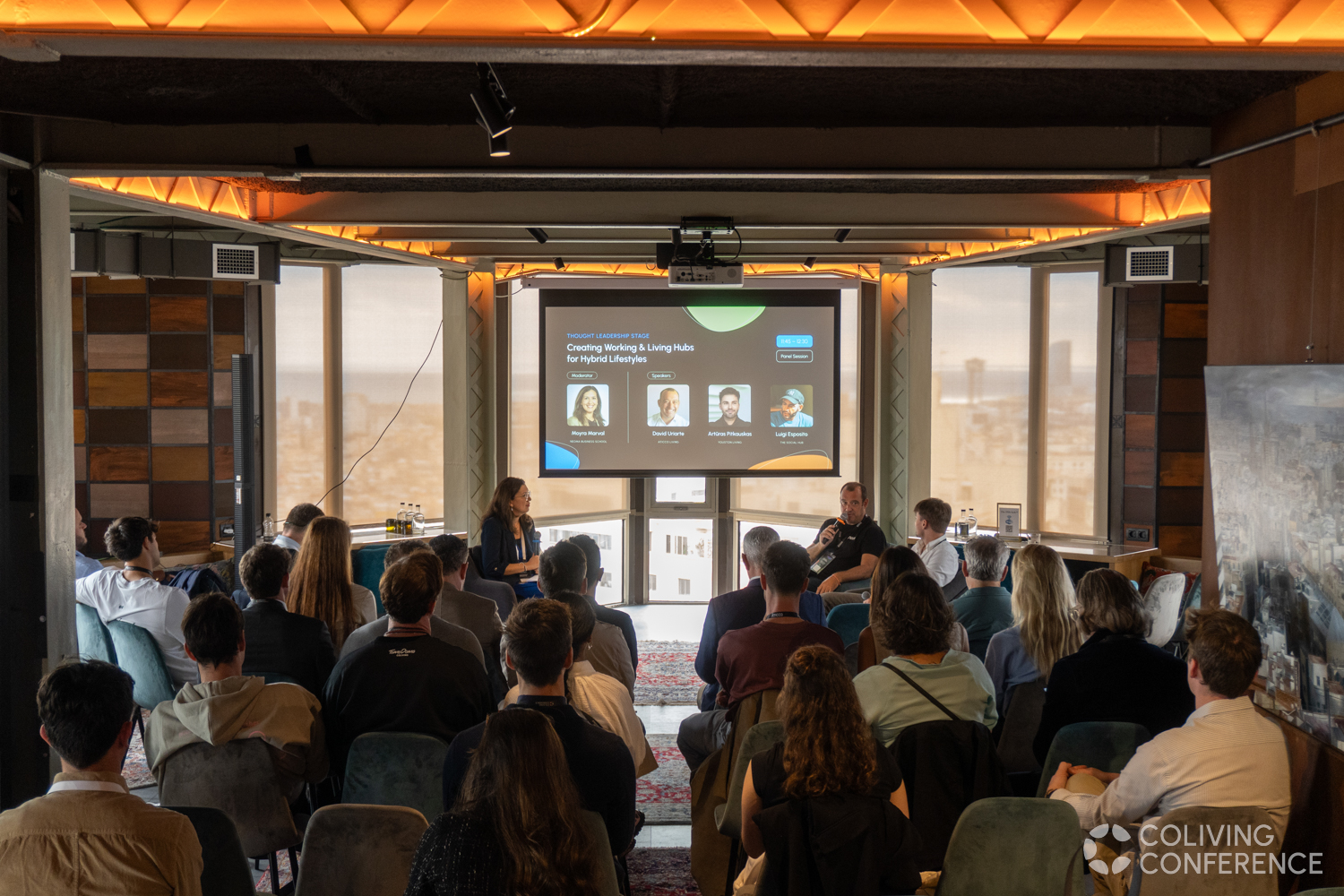
The Coliving Conference 2025 featured a thought-provoking panel discussion on how coliving has adapted to accommodate the workforce of today, moderated by Moyra Marval. Panelists included David Uriarte and Artūras Pitkauskas. The session focused on how the lines between residential and professional environments are becoming increasingly blurred as the workforce of today becomes more diverse. As the demand increases for spaces that are adaptable, connected, and conducive to both personal well-being and professional growth, developers and operators are now designing ecosystems that combine residential comfort with the flexibility of dynamic workspaces.
Become a Premium Member to Enjoy All Articles!
Building the Coliving Blueprint: From Concept to Operation at Coliving Insights Talks
Building the Coliving Blueprint: From Concept to Operation at Coliving Insights Talks
As coliving continues to grow as a scalable housing model, industry leaders are refining the blueprint for success. The second Coliving Insights Talks webinar, ‘Building the Coliving Blueprint’, brought together key figures to discuss the essential steps in creating a thriving coliving venture. From securing investment and structuring financial models to building engaged communities and streamlining operations, the discussion explored the key elements that contribute to long-term success.

Moderated by Bart Sasim, Co-Founder & Managing Director of Coliving Ventures, the panel featured: Murray Clark, Co-Founder & CEO of Neighbourgood and Benjamin Röber-Rathay, Director of Business Development at International Campus Group. Together, they outlined the core phases of coliving development — from initial investment to day-to-day management — while addressing the challenges and opportunities shaping the sector.
Phase 1: Securing Investment and Financial Stability
Every successful coliving project begins with a sound financial strategy and that is what the speakers explored, focusing on how different funding models impact scalability and long-term profitability.
Murray Clark shared Neighbourgood’s introduction of a co-ownership model, enabling individuals to invest in coliving properties with as little as $5,000, and opening the market to younger investors and digital nomads. Investors receive share certificates, with projected returns of 8.5% in the first year and 18-19% IRR over five years. This approach lowers the barrier to entry and broadens access to property investment.

In contrast, International Campus Group has transitioned from relying on private investors and family offices to securing institutional backing from global firms such as Brookfield. This shift has provided greater financial stability, allowing for large-scale expansion and higher-value asset acquisitions, as Benjamin Röber-Rathay explained.
Regardless of the funding model, balancing risk and return remains crucial. Both speakers emphasised the importance of structuring investment strategies that appeal to different investor profiles — ranging from those seeking stable returns to those prepared for higher-risk, higher-reward opportunities. Additionally, understanding local tax structures and regulations was noted as a key factor in maximising profitability when expanding into new markets.
Phase 2: Designing for Community and Flexibility
Coliving is more than just providing a place to live; it relies on creating an environment that fosters interaction while offering flexible living arrangements. The panel discussed two primary approaches to scaling a coliving brand:
Neighbourgood focuses on high-density urban areas, ensuring multiple properties exist within a city to encourage interaction between residents. By operating in lifestyle-driven cities such as Cape Town and San Francisco, it integrates properties into the wider urban fabric, making local engagement a natural part of the resident experience.

IC Group employs a flagship and satellite model, where a larger, well-established coliving development serves as a central hub, with smaller properties nearby benefiting from shared resources and management. This model enables the brand to expand without compromising operational efficiency or the sense of belonging among residents.
Beyond design, community-building efforts play a crucial role in making coliving spaces truly appealing. Both companies allocate 1-2.5% of the budget to marketing and community building activities, such as events or similar initiatives, ensuring that residents of coliving spaces feel connected. The discussion also explored the importance of hiring the right staff — for example, community managers, who act as the necessary bridge between residents and management, helping to create an engaging environment.
Phase 3: Managing Operations and Expanding Revenue Streams
Once a coliving development is operational, financial sustainability extends beyond rent collection. This raises the question: what additional revenue streams can enhance both resident experience and overall profitability?
Benjamin noted that one effective approach is offering bundled services such as cleaning, laundry, and meal plans, making life easier for residents while increasing the value of their rental package. Some coliving spaces also introduce membership models, where non-residents pay for access to shared spaces such as co-working areas or events.

Another revenue strategy involves partnering with local businesses to provide exclusive deals to residents, while also generating advertising income or referral commissions. These approaches not only increase profitability but also strengthen the connection between coliving communities and the surrounding city.
For IC Group, long-term financial success also depends on asset appreciation. By targeting high-demand locations and maintaining high standards, properties continue to gain value over time, strengthening their position in the market and making them more attractive to investors.
Phase 4: Scaling Without Compromising Quality
Expansion is a natural goal for coliving brands, but ensuring quality and consistency across multiple locations presents challenges. The panel agreed that maintaining a strong brand identity is essential; whether through flagship properties, consistent design principles, or well-trained staff.

Another critical factor in scaling is adapting to local markets. While the overall concept of coliving remains the same, tailoring services, pricing structures, and engagement strategies to fit the cultural and economic conditions of each location helps ensure continued demand. Understanding local regulations also plays a crucial role in successful expansion, as compliance with zoning laws, safety standards and rental regulations can all significantly impact operational feasibility.
By applying these principles, coliving operators can scale effectively while retaining high occupancy rates and offering a compelling resident experience.
Conclusion: Laying the Foundations for a Strong Coliving Future
Building a successful coliving project involves multiple phases: from securing investment and structuring development to cultivating a strong community and ensuring operational efficiency. As discussed in the Coliving Insights Talks webinar, strategic investment models, scalable expansion approaches, structured community engagement, diversified revenue streams, and regulatory compliance all contribute to a well-functioning coliving operation. By following these principles, operators can create coliving environments that are financially sustainable and appealing to modern residents.
What’s Next for Coliving Insights Talks?
The next Coliving Insights Talks webinar will take place in March 2025, offering an unmissable opportunity to gain valuable insights from industry leaders. Stay updated on upcoming sessions and details by visiting the Coliving Insights Talks homepage. While these expert-led discussions are open to all, Coliving Insights members can access them free of charge — as part of their membership perks.
If you’re not yet a member, now is the perfect time to join. Gain exclusive access to future webinars, in-depth industry research, and enhanced brand recognition — all within our integrated business intelligence hub, designed to support your growth and success in the coliving space.

Become a Premium Member to Enjoy All Articles!
What’s Next for Coliving? Key Investment, Design and Development Trends Shaping 2025 at Coliving Insights Talks
What’s Next for Coliving? Key Investment, Design and Development Trends Shaping 2025 at Coliving Insights Talks
What does the future hold for coliving? That was the question at the heart of Coliving Insights Talks' first webinar - ‘Coliving 2025 Trends in Review’. In this recap, we highlight the key insights shared by industry pioneers as they delved into the evolving market, shifting investment landscapes, and design innovations shaping shared living. Moderated by Bart Sasim, Co-Founder & Managing Director at Coliving Ventures, the discussion brought together Simon Chinn from the Urban Land Institute, Jo Winchester from Newmark, and John Badman of Gensler to share their expert perspectives.

Moderator of this webinar, Bart Sasim, a creative strategist and experienced real estate entrepreneur, has spent over a decade shaping the shared living sector, leading initiatives that push the boundaries of coliving and student housing. His work with Spatial Experience and Coliving Ventures has positioned him at the forefront of industry evolution, making him well-placed to guide this insightful discussion.
Real Estate Investment & Development Trends: A Balancing Act
Simon Chinn, Vice President of Research & Advisory Services at the Urban Land Institute, began the conversation by examining the state of global real estate investment trends, drawing from research conducted by ULI. Simon, with his extensive background in urban planning and economic development, brought a nuanced perspective on the forces currently shaping cities, especially in the face of environmental and technological shifts.
Simon’s presentation focused on the slow-moving real estate market in Europe, with transaction volumes dropping to their lowest level in over a decade by the end of 2023. This decline reflects a wider sense of caution, mainly driven by heightened geopolitical risks and fragile economic growth, which have overtaken inflation concerns as the primary challenges facing the industry. The volatility of these factors is causing uncertainty in investment decisions, with strategic planning becoming more measured.

Despite the prevailing challenges, Simon expressed cautious optimism for the sector. He noted a shift in business confidence, as professionals in the field grow more hopeful that evolving market conditions will stabilise. Expectations for profitability in 2025 are rising, particularly as industry players believe a recovery could begin once geopolitical tensions and economic instability subside.

As the industry navigates these hurdles, another significant factor influencing decisions is environmental sustainability. Investors, developers and tenants are increasingly placing pressure on real estate development to meet sustainable, energy-efficient standards. Simon emphasised that the push for decarbonisation and environmental responsibility is reshaping the landscape, with greater scrutiny now being placed on real estate projects' environmental, social, and governance (ESG) performance. As such, the demand for green buildings and sustainable investments is becoming critical in shaping long-term strategies.
The UK’s Coliving Market: Understanding Demand
Jo Winchester, coliving and PBSA consultant at Newmark, shared insights on the growing coliving sector in the UK. With over 20 years in real estate valuation and consultancy, Jo has influenced industry research and demand studies, earning recognition in Property Week’s PBSA Hall of Fame in 2023.

She explained how coliving is growing in favour as part of the UK’s housing crisis, particularly for single renters and young professionals seeking affordable, flexible living arrangements. With the average age of coliving tenants around 28, nearly half of whom come from overseas, the sector is increasingly attracting international students and young professionals. This demographic growth further reinforces the demand for flexible leasing agreements and community-oriented living spaces.
Jo also discussed the increasing investor interest in coliving. High-profile transactions, with property funding prices in the range of £300k-£420k/key, showcase its strong returns compared to traditional build-to-rent (BTR) and Purpose-Built Student Accommodation (PBSA) models.

Despite this growth, Jo noted significant challenges, such as rising inflation, construction costs, and delays in the UK’s under-resourced planning system, which impact development feasibility. Yet, demand for coliving in London is estimated at 600,000, with only 5,000 operational beds and a relatively limited pipeline, underscoring the need for greater investment to bridge the supply gap and address the housing shortage.
Designing for Community and Flexibility
John Badman, Residential Leader for Gensler’s Europe region, led an insightful discussion on the evolving trends in residential design. With over 20 years of experience shaping more than 20,000 Build-to-Rent homes across the UK and Europe, John’s work focuses on creating spaces where residents not only feel at home but also a strong sense of community. As Chair of the inaugural ARL Design Committee for the UK, he’s been at the forefront of setting standards in residential design.

John highlighted that modern development now prioritises place-making, focusing on location, community vibe, and fostering belonging over just the size of spaces. Homes are increasingly designed for flexibility, catering to “multi-hyphen” individuals who balance work, leisure, and personal activities. As a result, living areas are evolving to serve various functions — home offices, coworking spaces, or relaxation zones — depending on the time of day.
With the rise of remote and hybrid work, demand for spaces that blend work and home life is growing. Designs now include communal kitchens, wellness zones, and spaces that encourage both interaction and solitude. These innovations are crucial in supporting residents’ well-being while balancing privacy and communal engagement.

Finally, John stressed that thoughtful unit design is key to enhancing overall satisfaction. When units make the most of available space and provide multifunctional areas, they promote both comfort and a sense of community. This thoughtful approach to design ensures that residents are not only comfortable in their private spaces but also connected with their neighbours, creating stronger, more cohesive communities within coliving environments.
The Road Ahead for Coliving
Building on John Badman’s insights into design, the panel discussed the challenges of maintaining community engagement as coliving expands to diverse groups. The speakers stressed the importance of inclusive programming, regular community-building activities, and flexible shared spaces that encourage interaction among residents. These elements are essential to creating a strong sense of belonging and helping residents connect, despite differing backgrounds.
Turning to investor interest, the conversation focused on opportunities in secondary and tertiary cities, where affordable housing demand is rising. The panel noted that investors are targeting university towns and cities with economic growth potential. However, challenges like lower rental yields remain, which can be addressed through innovative designs and mixed-use developments.
The discussion also explored coliving’s role in improving housing affordability. By offering shared living spaces, coliving provides a more affordable alternative for students and young professionals, helping to tackle housing shortages. Additionally, sustainability practices in coliving spaces encourage residents to share resources and live more eco-consciously.
Finally, the panel addressed the stigma that still surrounds coliving. While early issues with poorly designed spaces and management practices had caused negative perceptions, the panellists highlighted the importance of effective branding and positive testimonials. By emphasising the community aspect and successful case studies, coliving could overcome its past reputation and become a widely accepted solution in the housing market.
Looking Ahead: The Next Coliving Insights Talks Session
The next Coliving Insights Talks webinar will take place in February 2025, offering another opportunity to gain valuable insights from industry leaders. Stay updated on upcoming sessions and details by visiting the Coliving Insights Talks homepage. While these expert-led discussions are open to all, Coliving Insights members can access them free of charge — as part of their membership perks.
If you’re not yet a member, now is the perfect time to join. Gain exclusive access to future webinars, in-depth industry research, and enhanced brand recognition — all within our integrated business intelligence hub, designed to support your growth and success in the coliving space.

Become a Premium Member to Enjoy All Articles!
The Ultimate Coliving Stakeholder: Understanding Demand for Optimal Product Market Fit
The Ultimate Coliving Stakeholder: Understanding Demand for Optimal Product Market Fit
The Coliving Conference 2024 featured a thought-provoking fireside chat with two coliving professionals who have lived the coliving experience firsthand and now work within the industry. Andreea Rusu and Kyle Gaarder shared their unique journey from residents to professionals working alongside operators and industry hubs provided a valuable perspective on how coliving spaces can evolve to better serve the needs of their communities.

Become a Premium Member to Enjoy All Articles!
The Role of Modern FinTech in Optimising & Scaling Transaction Volumes
The Role of Modern FinTech in Optimising & Scaling Transaction Volumes
The Coliving Conference 2024 featured a thought-provoking panel discussion about financial technology (FinTech) and its transformative impact on transaction volumes within coliving moderated by Pascal De Keyser. Panelists included Enric Solé, Nicolas Erodiades, and Jerzy Lipiński, and Aleks Pes. This session examined innovative tools like blockchain, digital financial tooling and payment solutions, uncovering how they optimise business administration, financial operations and scale up of coliving ventures.
Become a Premium Member to Enjoy All Articles!
Coliving's Flexibility in Crafting Offerings: From Affordable Comfort to Premium Experiences
Coliving's Flexibility in Crafting Offerings: From Affordable Comfort to Premium Experiences
The Coliving Conference 2024 featured a thought-provoking panel discussion about the flexibility of coliving models in catering to diverse offerings, ranging from affordable comfort to premium experiences moderated by Filip Schmidt. Panelists included Paula Narkiewicz, Carlos Muriel, and Kelly-anne Watson. This session examined the various segments within the coliving market, from budget-friendly options to high-end, luxury experiences.

Become a Premium Member to Enjoy All Articles!
Investment Agenda: Exploring Challenges, Trends, Sentiment, and Indicators Driving Market Dynamics
Investment Agenda: Exploring Challenges, Trends, Sentiment, and Indicators Driving Market Dynamics
The Coliving Conference 2024 featured a thought-provoking panel discussion about the investment landscape in coliving, including challenges, trends, sentiment analysis, and key market indicators moderated by Williams Johnson. Panelists included Christophe Vercarre, Steve Davis, and Jerzy Lipiński. This session analysed the current financing landscape in the coliving industry, including various funding options and sources of capital for developers and operators, providing valuable insights for investors and industry professionals.

Become a Premium Member to Enjoy All Articles!
Global Outlook: Where and How Coliving Spreads its Wings
Global Outlook: Where and How Coliving Spreads its Wings
The Coliving Conference 2024 featured a thought-provoking panel discussion about the global expansion of coliving and the identification of key markets for future growth moderated by Bart Sasim. Panelists included Andrea Mastrogiacomo, Kahraman Yigit, Aleks Pes, and Michael Erd. From established markets to emerging hotspots, this session explored where coliving is thriving and where new opportunities are arising, as well as the factors influencing global expansion and how to navigate the complexities of entering new markets.

Become a Premium Member to Enjoy All Articles!
How Does Nomadism Shape the Demand for Modern Real Estate & Hospitality?
How Does Nomadism Shape the Demand for Modern Real Estate & Hospitality?
The Coliving Conference 2024 featured a thought-provoking panel discussion exploring the nuanced needs and preferences of modern nomads and how to design spaces that cater to the growing nomadic demographic moderated by Anna Maria Kochanska. Panelists included Nacho Rodriguez, Enric Solé, Frédéric Geoffrois, and Juan Aramburo. This session explored the characteristics and expectations of digital nomads and how these factors influence their choice of living and working spaces.

Become a Premium Member to Enjoy All Articles!
Mastering the Coliving Blueprint: Strategies for Asset Lifecycle Optimisation
Mastering the Coliving Blueprint: Strategies for Asset Lifecycle Optimisation
The Coliving Conference 2024 featured a thought-provoking panel discussion on comprehensive strategies for optimising the lifecycle of coliving assets, moderated by Aitana de Jong. Panelists included Katherine Rose, Ali Ravanshad, George Ahye, and Tim Chapman-Cavanagh. The session focused on key strategies for optimising the lifecycle of coliving assets, from initial design to long-term management.

Become a Premium Member to Enjoy All Articles!
Data Driven Design for Enhancing Human Interaction
Data Driven Design for Enhancing Human Interaction
The Coliving Conference 2024 featured a thought-provoking panel discussion on the intersection of data and design in coliving spaces, moderated by Martina Pardo. Panelists included Alessandro Nacci, Marthijn Pool, Seth Rutt, and Erwin Buckers. The session focused on how to leverage data-driven design principles to foster stronger connections and more engaged communities within coliving environments.

Become a Premium Member to Enjoy All Articles!
What can AI do for Coliving?
What can AI do for Coliving?
The Coliving Conference 2024 featured a thought-provoking panel discussion on the potential applications of artificial intelligence in optimising coliving spaces and experiences, moderated by José Llanos. Panelists included Lea Mishra, Dr. Hendrik Braun, and Dr. Dorota Iskra. The session focused on how AI is reshaping the landscape of shared living environments, from personalised space optimisation to predictive maintenance, revolutionising the way we design, manage, scale and experience communal living at large.
Become a Premium Member to Enjoy All Articles!
Exploring Destination Coliving: Nomad Communities and the Rise of Rural Retreats
Exploring Destination Coliving: Nomad Communities and the Rise of Rural Retreats
The Coliving Conference 2024 featured a thought-provoking panel discussion on the analysis of the rise of Destination Coliving and its appeal to digital nomads seeking unique, immersive living experiences, moderated by Haz Memon. Panelists included Katia Dimova, Christine Bay, and Ana Sousa. The session focused on the appeal of beyond city settings for those seeking unique living and working environments, and discovering the transformative potential of Destination Coliving projects. Key discussions entailed how to bridge hospitality and community in urban hubs, and operational realities and lessons from these industry experts.

Become a Premium Member to Enjoy All Articles!
From Coliving 1.0 to 2.0: Next Generation of Community Driven Real Estate.
From Coliving 1.0 to 2.0: Next Generation of Community Driven Real Estate.
As coliving evolves, industry leaders are refining its future. The Coliving Conference 2024 panel discussion explored the shift from Coliving 1.0 to 2.0, focusing on community-driven real estate and innovative concepts like hybrid hotels and purpose-built properties. Key topics included addressing diverse audiences, navigating international expansion, and attracting institutional investors. The discussion highlighted emerging markets and the potential for senior-focused developments, emphasising the need for diversified revenue streams and community-driven products.
Become a Premium Member to Enjoy All Articles!
The Role of Coliving & Shared Living in the Cities of Tomorrow
The Role of Coliving & Shared Living in the Cities of Tomorrow
The Coliving Conference 2024 featured a thought-provoking panel discussion on the future of coliving and communal living in urban areas, moderated by Wouter Onclin. Panelists included Matt Driscoll, Michiel Voskamp, Russell Garnett, and Joost Kool. The session focused on the importance of designing spaces that foster community and emphasised the roles of operators and community managers in cultivating vibrant, people-driven cultures. Key discussions centered on regulatory challenges, including the need to balance housing needs with rental subsidy management and the future of coliving. The panelists envisioned the evolution of coliving over the next five years, advocating for innovative development and collaborative planning in countries like the Netherlands and the UK.

Become a Premium Member to Enjoy All Articles!
Active Ageing: Redefining Senior Housing with Coliving
Active Ageing: Redefining Senior Housing with Coliving
This article from the inaugural Coliving Conference 2023 spotlights the growing potential of coliving for active ageing communities. Brought to you in collaboration with Coliving Conference, it reimagines senior housing with adaptability, community, and engagement at its core. Preview how coliving is transforming senior living — read the complete piece on Coliving Insights.
Become a Premium Member to Enjoy All Articles!
Resident Perspectives: A Guide to Improving Services for Optimal User Experiences
Resident Perspectives: A Guide to Improving Services for Optimal User Experiences
This article, features a recap from a Showcase stage panel session at the Coliving Conference 2023 that brought resident experiences to the forefront. Developed in partnership with Coliving Conference, it provides a preview of how resident feedback is shaping service innovation and satisfaction in coliving spaces. Uncover the keys to optimizing user experiences — find the full article on Coliving Insights.
Become a Premium Member to Enjoy All Articles!
Redefining Coliving Investment: Empowering Portfolio Growth with Alternative Financing
Redefining Coliving Investment: Empowering Portfolio Growth with Alternative Financing
As part of the Coliving Conference 2023 series of articles, this recap offers a glimpse into innovative financing strategies driving portfolio growth. Created in collaboration with Coliving Conference, it showcases how alternative investments are transforming the coliving landscape. Discover the financial trends shaping the future of shared living — read more on Coliving Insights.

Become a Premium Member to Enjoy All Articles!
Beyond the City: Exploring Remote & Nomad Coliving
Beyond the City: Exploring Remote & Nomad Coliving
This article, from the first Coliving Conference 2023, redefines the boundaries of home and work through the lens of remote and nomad coliving. In partnership with Coliving Conference, it highlights the trends and opportunities that cater to digital nomads and remote workers. Explore how these communities are reshaping modern living - read the complete feature on Coliving Insights.

Become a Premium Member to Enjoy All Articles!
DACH: Market Updates, Opportunities & Investments
DACH: Market Updates, Opportunities & Investments
Discover the unique dynamics of the DACH coliving market in this article from the inaugural Coliving Conference 2023. Developed in collaboration with Coliving Conference, it unveils expansion strategies, investment prospects, and opportunities tailored to this thriving market. This recap sets the stage for a deeper dive into the factors driving coliving success in the DACH region — read the full article on Coliving Insights.

Become a Premium Member to Enjoy All Articles!
Iberia: Market Updates, Opportunities & Investments
Iberia: Market Updates, Opportunities & Investments
Dive into the dynamic Iberian coliving market with this article from the inaugural Coliving Conference 2023. Created in partnership with Coliving Conference, it unpacks strategies to overcome affordability challenges and adapt to rising demand. Preview how coliving is evolving in Portugal and Spain — access the complete recap on Coliving Insights.

Become a Premium Member to Enjoy All Articles!
Bridging the Gap: Harmonising Coliving Policies & Regulations
Bridging the Gap: Harmonising Coliving Policies & Regulations
From the Market Insights discussions at the Coliving Conference 2023, this article delves into the complexities of coliving regulations across Europe. In collaboration with Coliving Conference, it highlights strategies for achieving harmony and fostering collaboration in this diverse landscape. Unlock insights on creating consistent policies for coliving success — read more on Coliving Insights.

Become a Premium Member to Enjoy All Articles!
Benelux: Market Updates, Opportunities & Investments
Benelux: Market Updates, Opportunities & Investments
This article, originating from the first edition of the Coliving Conference 2023, explores the vibrant coliving landscape in Benelux. Created in partnership with Coliving Conference, it examines strategies like sustainability, accessibility, and stakeholder collaboration that are fueling regional growth. Get an inside look at the transformative potential of coliving in Benelux — find the full article on Coliving Insights.

Become a Premium Member to Enjoy All Articles!
UK: Market Updates, Opportunities & Investments
UK: Market Updates, Opportunities & Investments
Discover the unique dynamics of the UK coliving market in this article from the inaugural Coliving Conference 2023. Developed in collaboration with Coliving Conference, it unveils growth strategies, investor trends, and opportunities tailored to this thriving market. This recap sets the stage for a deeper dive into the factors driving coliving success in the UK — read the full article on Coliving Insights.

Become a Premium Member to Enjoy All Articles!
Co-Tech: Pioneering the Convergence of Technology and Community Living
Co-Tech: Pioneering the Convergence of Technology and Community Living
At the intersection of technology and shared living, this article from the inaugural Coliving Conference 2023 unveils a tech-powered future for coliving. Created in collaboration with Coliving Conference, it explores groundbreaking innovations shaping operations and fostering connections. Discover how technology is redefining the community experience — find the complete article on Coliving Insights.

Become a Premium Member to Enjoy All Articles!
Driving Change: Coliving’s Role in ESG & Social Impact
Driving Change: Coliving’s Role in ESG & Social Impact
Coliving is sparking social and environmental transformation, as detailed in this article from the 2023 Coliving Conference. Developed with Coliving Conference, the article delves into ESG-driven initiatives and their profound impacts on shared living. Get a glimpse of how the sector is redefining sustainability and community engagement - explore more on Coliving Insights.
Become a Premium Member to Enjoy All Articles!
Meeting Market Demand: Strategies for Scaling Coliving Brands
Meeting Market Demand: Strategies for Scaling Coliving Brands
Direct from the Thought Leadership Stage at the first Coliving Conference 2023, this article reveals the strategies behind scaling coliving brands sustainably. In partnership with Coliving Conference, it highlights how innovation, accessibility, and collaboration meet dynamic market demands. Dive into the key tactics shaping the industry's future — access the complete article on Coliving Insights.

Become a Premium Member to Enjoy All Articles!
Cross-Learning: The Evolution from PBSA to Coliving & PBSL
Cross-Learning: The Evolution from PBSA to Coliving & PBSL
This article is a recap of a panel session from the 2023 Coliving Conference, where experts explored the future of communal living through PBSA, coliving, and hybrid models. Curated in collaboration with Coliving Conference, it highlights the evolving opportunities, challenges, and transformative potential of shared living solutions. Discover how these housing models are shaping the future — read the full article on Coliving Insights.

Become a Premium Member to Enjoy All Articles!
Hybrid Horizons: Redefining Hospitality & Living Experiences
Hybrid Horizons: Redefining Hospitality & Living Experiences
From the first edition of the Coliving Conference 2023, this article unravels the fusion of coliving and hospitality, redefining the boundaries of how we live, work, and socialise. Brought to you in collaboration with Coliving Conference, it highlights innovative design and adaptable spaces that reflect the future of shared living. Get a glimpse into the hybrid paradigm and unlock the full insights available on Coliving Insights.

Become a Premium Member to Enjoy All Articles!
Experience-Driven Shared Living: Coliving as a Lifestyle & Life Stage
Experience-Driven Shared Living: Coliving as a Lifestyle & Life Stage
This article, part of an exclusive series from the inaugural Coliving Conference 2023, takes you deep into the transformative potential of coliving as a lifestyle. Crafted in collaboration with Coliving Conference, it explores how thoughtful community-building, sustainable design, and operational innovation shape thriving shared living spaces. Discover the core of what makes coliving a resilient and evolving lifestyle solution. Read the full article on Coliving Insights.
Become a Premium Member to Enjoy All Articles!
Coliving. Time to grow up.
Coliving. Time to grow up.
The coliving sector is at a crucial stage in its growth, but without clear benchmarks for the asset class, it could be stifled. In this article, Richard Lustigman, Head of Coliving at JLL Capital Markets, discusses the need for coliving professionals to evolve their products to deliver the impact they have the potential for, and the importance of setting minimum standards without suppressing innovation.

Become a Premium Member to Enjoy All Articles!
It’s time for intergenerational coliving
It’s time for intergenerational coliving
Senior living investor Jorge Fonseca discusses intergenerational coliving and the need for more hybrid typologies. Exploring the role of senior housing, he highlights pandemic-driven societal changes and envisions the evolution of coliving, urging the real estate industry to create innovative models for independent living.

Become a Premium Member to Enjoy All Articles!
When isolation is the new black, does coliving still make sense?
When isolation is the new black, does coliving still make sense?
There is no denying that community is at the core of the coliving concept. COVID-19 obliged us to keep a distance and to limit our interactions with each other, putting our capacity to keep the community alive to the test. In this context, does coliving still make sense? Christina Wooning-Apicella of THE BABEL COMMUNITY shares her thoughts.
Become a Premium Member to Enjoy All Articles!
Pivot to essential: how Outpost Club housed dozens of nurses during a pandemic
Pivot to essential: how Outpost Club housed dozens of nurses during a pandemic
Discover from Jacob Shapiro how Outpost Club adapted their business model to support New York-bound nurses during the pandemic, showcasing their agile culture and community-driven approach to overcome logistical, financial, and pandemic-related obstacles.

Become a Premium Member to Enjoy All Articles!
COCO: Collaboration and Cooperation for High-End Cosmopolitan Shared Living
COCO: Collaboration and Cooperation for High-End Cosmopolitan Shared Living
According to COCO Community (COCO), coliving means cool places to live, work and socialise, with ambitious talks and events dedicated to international and local colivers. The branding behind the COCO vision was created by design agency The Letter O., who helped them develop their brand since they founded in 2019. COCO aims to have a major role in developing the high-scale segment of coliving and especially coliving for international professionals, with locations in the very centre of international cities, starting with Le Marais in Paris. As finalists for the Coliving Awards 2021 in the Branding & Marketing category, Coliving Insights reached out to them to hear how their brand has evolved in the last few months and spoke with Founder Frédéric Geoffrois about how they position and market themselves in the coliving world and how their positioning is helping evolve the sector.

Become a Premium Member to Enjoy All Articles!
Branding and Marketing For 21st Century Urban Living
Branding and Marketing For 21st Century Urban Living
The winners of the Coliving Awards 2021 ‘Branding & Marketing’ category, OurDomain has developed a strong presence in the coliving and specialist real estate sectors. OurDomain is managed by Greystar, and offers 21st- century urban living for students, young professionals and all who are attracted to vibrant city life. In this article, Coliving Insights speaks with Anke Storms, Marketing Executive at Greystar Europe, about how OurDomain has developed their award-winning brand and how Greystar’s track record has helped them along the way.

Become a Premium Member to Enjoy All Articles!
Why Upgrade to our Premium Membership Plans?

Access In-Depth Knowledge on Various Industry Topics

Leverage Data-Driven Insights to Make Well-Informed Decisions
