




Beyond Community: What Today’s Coliving Residents Truly Value
The Coliving Conference 2025 featured a thought-provoking panel discussion analysing what coliving residents truly prioritise today and in the future moderated by Jeremi Wasilewski. Panelists included Dean Koenning, Joke Vereecke, and Will Silencio. While community remains a core benefit, today’s residents are increasingly seeking more from their coliving experience - privacy, flexibility, sustainability, and tech-driven convenience are becoming essential as lifestyles evolve.
For the better part of a decade, the coliving sector has sold a promise wrapped in a single, ubiquitous buzzword - community. It is the golden thread running through pitch decks, the headline on landing pages, and the justification for premium yields per square metre. Yet, as the asset class matures and residents become more sophisticated, a palpable tension is emerging between the corporate promise of connection and the messy reality of living together. The insights shared during the Coliving Conference 2025 in Barcelona, Spain, suggest that the industry can no longer rely on aesthetic branding or generic happy hours to drive retention. Instead, operators must grapple with the complex behavioural science of how strangers truly bond, the architectural implications of unforced interaction, and the operational challenges of curating compatible lifestyles. This shift was brought into sharp relief during a candid session featuring those who know the product best - the residents themselves.
Why Residents Are Demanding More Than Just Community
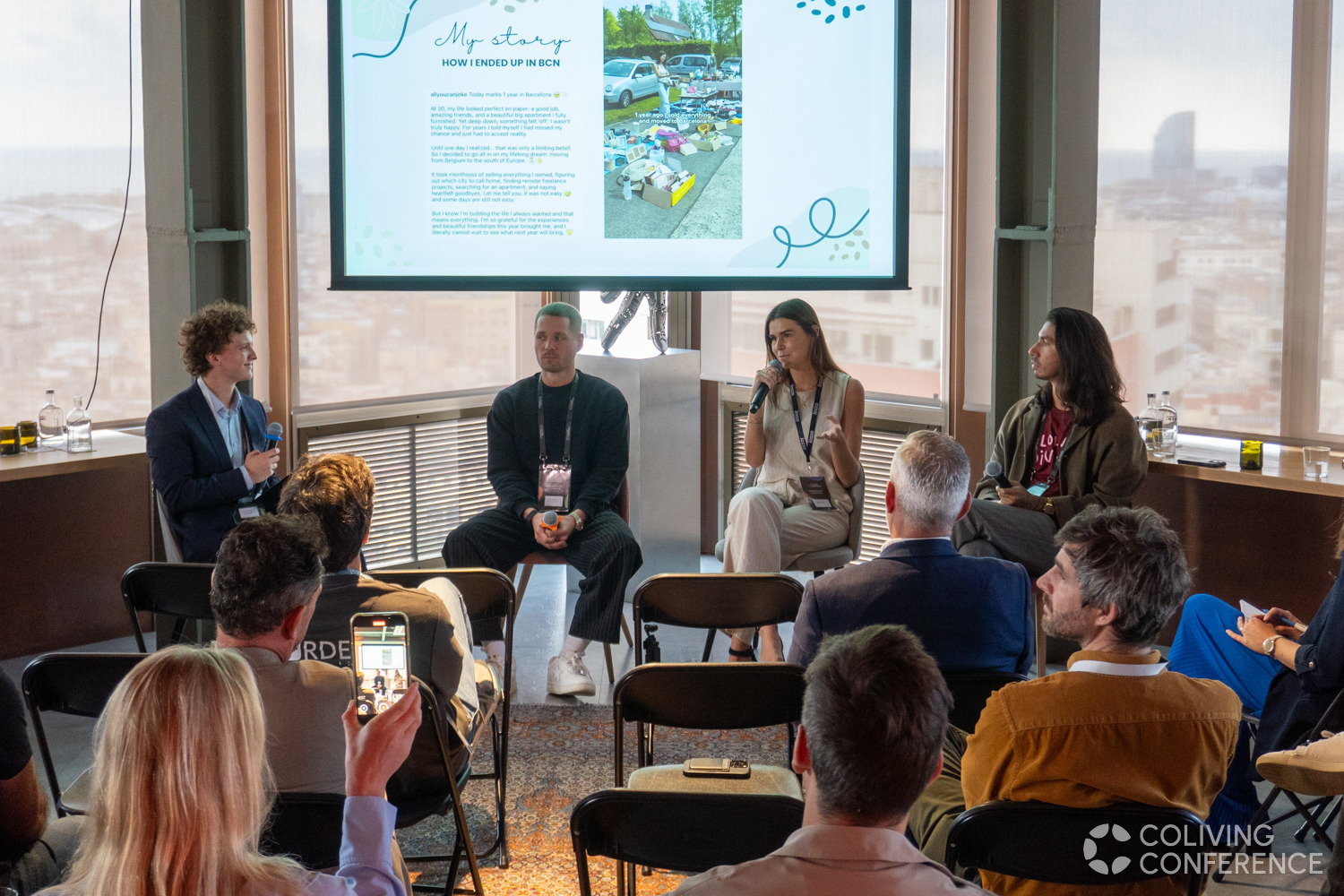
For some residents, the appeal of coliving is not driven by novelty, mobility, or even housing scarcity, but by a conscious decision to treat connection as a core requirement. Will Silencio, Community Member at The Social Hub, described social connection as something he needs alongside food and sleep, framing coliving as a long term behavioural shift, rather than a temporary lifestyle experiment.
That framing matters for the sector because it shifts the value proposition away from amenities and towards outcomes. Through this lens, coliving competes less with conventional renting and more with isolation, fragmented urban living, and the erosion of informal support networks. It also raises the bar for operators, because a resident who sees connection as essential will be able to detect the difference between engineered togetherness and an environment that makes authentic interaction feel effortless.
A second value sits alongside connection - frictionless routine. Dean Koenning, Resident at La Fabrica &Co, described the appeal of an environment where working, exercising, socialising, and daily logistics can happen without leaving the building, turning coliving into a space for focus as much as for friendship. Consolidated convenience, supported by on site facilities and services, becomes a productivity tool when paired with access to like minded peers.
How Do Buildings Turn Proximity into Belonging?
Resident insight suggests that belonging is rarely created by a single flagship space, and more often emerges from a network of small, repeatable encounters. When an architect in the audience asked which areas actually facilitate connection, the answers pointed to spaces that remove the pressure of formal networking and make interaction feel natural. Silencio singled out kitchens and play areas as reliable structures for conversation, precisely because they encourage casual participation rather than office-like focus.
Joke Vereecke, Coliver at Aticco Living, added a building-scale perspective that is easy for developers to underestimate. She described how a shared rooftop connected residents across different flats, creating friendships that did not depend on sharing an apartment, and demonstrating that vertical communities need horizontal mixing points. The same resident also observed variability inside flats, where some living rooms become social anchors while others drift into “hotel mode” with residents retreating to bedrooms.
These details point to a strategic implication for design and asset planning. The spaces that drive connection are not always the most expensive or visually striking, but the ones that nudge behaviour daily, especially at transitional moments like making coffee, preparing food, or taking breaks. The sector’s challenge is to design for sociability without making residents feel monitored, managed, or forced into extroversion.
Operations Make or Break the Product
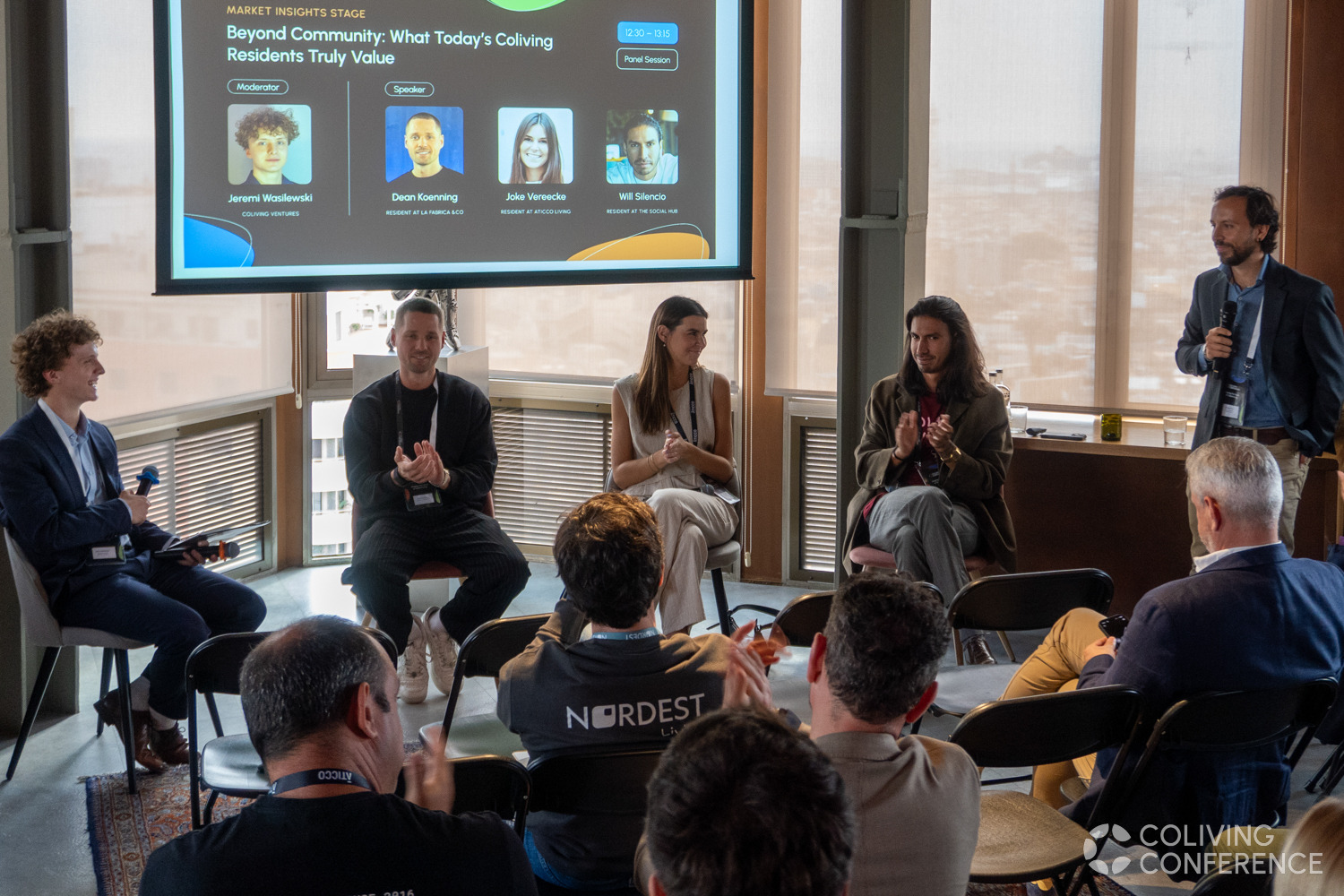
High-turnover sits at the centre of coliving’s operating trade-offs. Vereecke described a year of living with high resident turnover driven by internships, Erasmus placements, and short trials of expat life, and highlighted the emotional cost of building friendships that quickly end. However, she also acknowledged the upside of cultural variety and constant new perspectives, making rotation both a fatigue and a feature.
Koenning offered a complementary view of the same phenomenon. He described turnover as a network engine that creates fresh contacts, even as it encourages residents to assess relationships by starting conversations with “How long do you stay here?” to decide how deeply to invest. This overlooked reality explains how short stays can subtly reshape behaviour, pushing residents towards transactional social strategies unless the environment supports deeper continuity.
Matchmaking emerged as a provocative operational lever. Vereecke suggested that operators should look beyond bookings and attempt to match personalities, lifestyles, and age ranges, and even consider giving long term residents a voice in who joins the household to protect the “vibe” that makes a place feel like home.
The discussion also surfaced a governance dilemma that becomes sharper as coliving scales. Shared rooftops and communal areas create value, yet they also generate noise, mess, and conflict when norms are unclear or enforcement feels arbitrary. Silencio highlighted the deeper issue by contrasting a private flat, where a host can control who enters, with a larger coliving building, where residents “lose control” over shared decisions, even though home is meant to be a safe space.
In practice, that means operators need mechanisms that feel fair, visible, and human. Community managers and facilitators can provide that layer, but only if the role goes beyond a checklist. Koenning described a monthly events schedule displayed in La Fabrica’s elevators and framed it as a way to ensure that at least one event aligns with each resident’s interests. Vereecke described community managers, WhatsApp groups, and an app at Aticco, but also noted that promotion and visibility could be stronger so residents are aware of what is available.
Silencio’s critique landed on culture rather than tools. He argued that shared living is emotional and personal, and that operators remain “far away” from fully prioritising the human science of connection over visual branding, even when event programmes exist.
The Architecture of Belonging
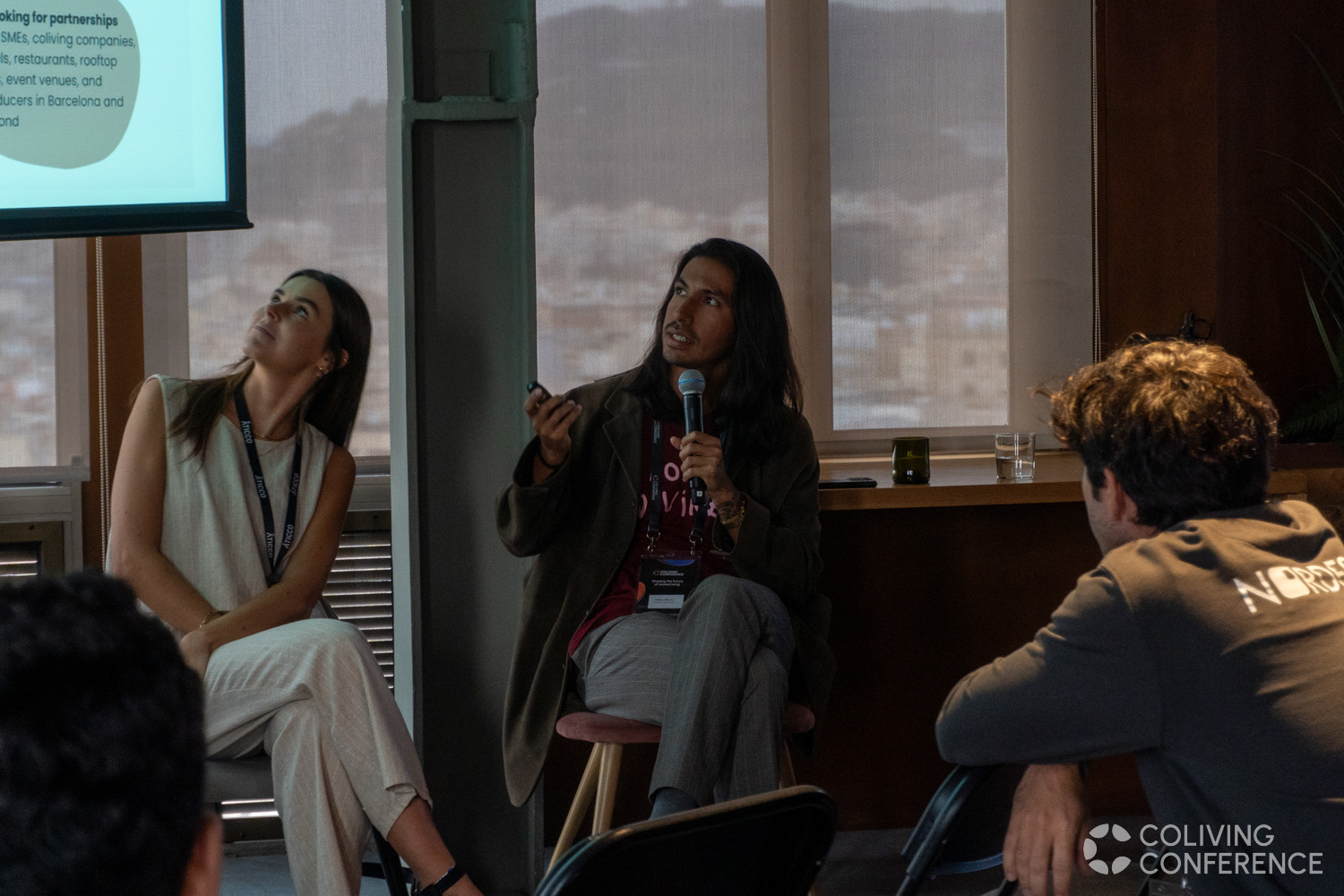
It is clear that residents are no longer satisfied with a transactional relationship where they rent a room and receive a calendar of events in return. They are instead seeking a sophisticated ecosystem that supports their need for connection, while respecting their need for privacy and control.
For operators and investors looking to future‑proof their portfolios, authenticity must replace corporate branding - residents stay because of honest connections, not slogans. Beyond that, architecture must prioritise “collision zones” like kitchens and rooftops over underutilised formal lounges. The industry must also get comfortable with the complexity of curation, potentially using data to match personalities, rather than just filling vacancies. Finally, the role of the community manager must be elevated from an event planner to a connection facilitator. By addressing these human realities, the industry can move beyond the buzzword of community and deliver on the true promise of shared living.