


From Coliving 1.0 to 2.0: Next Generation of Community Driven Real Estate.
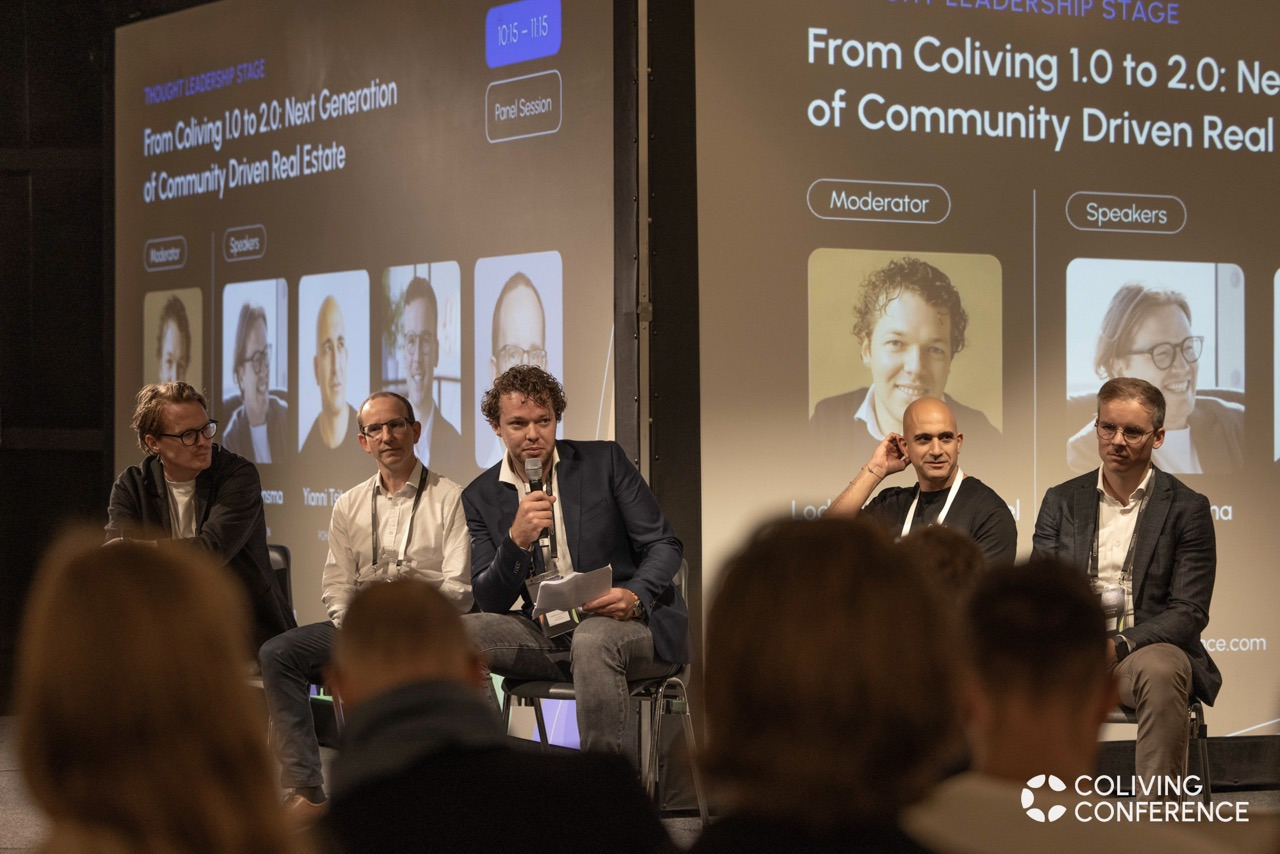
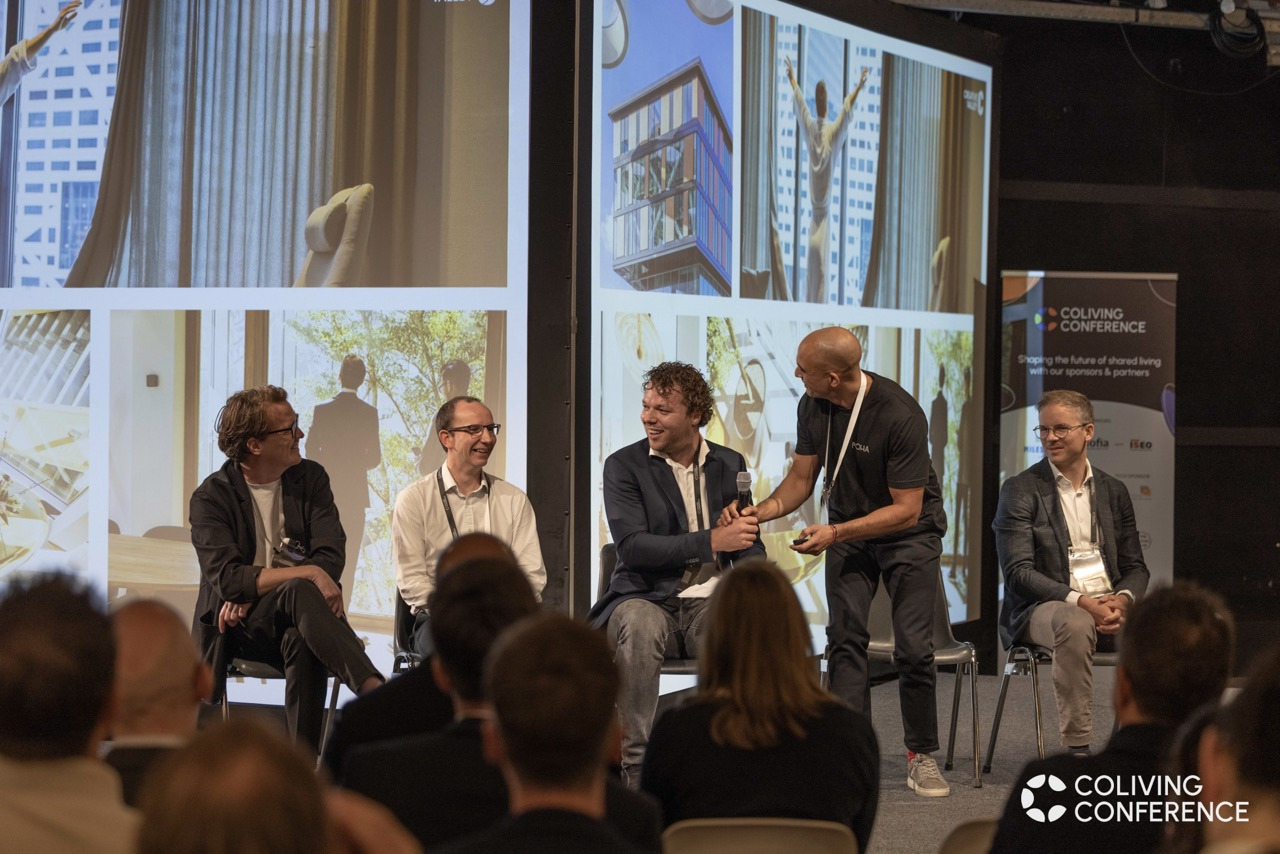
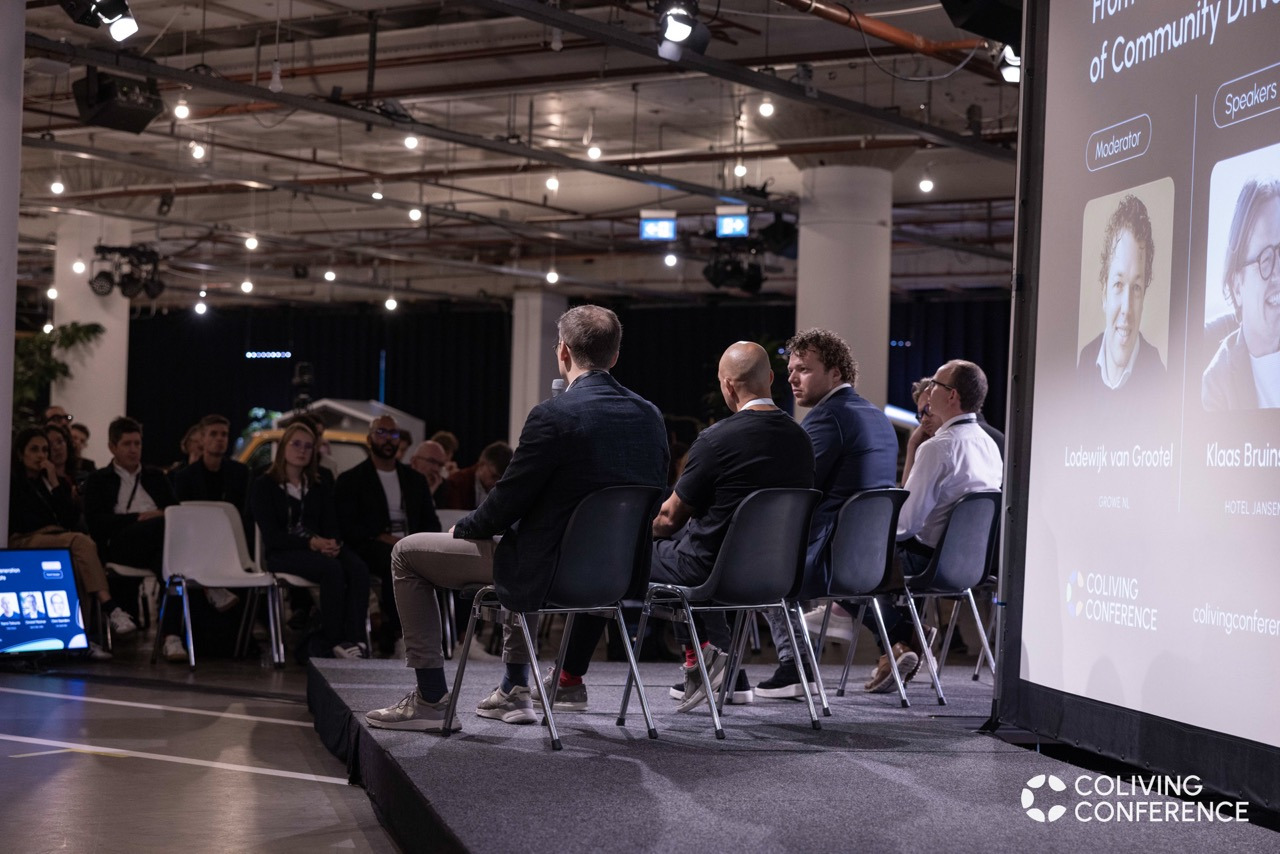
As coliving evolves, industry leaders are refining its future. The Coliving Conference 2024 panel discussion explored the shift from Coliving 1.0 to 2.0, focusing on community-driven real estate and innovative concepts like hybrid hotels and purpose-built properties. Key topics included addressing diverse audiences, navigating international expansion, and attracting institutional investors. The discussion highlighted emerging markets and the potential for senior-focused developments, emphasising the need for diversified revenue streams and community-driven products.
The conversation surrounding shared living has shifted noticeably over the last decade. What began as a series of fragmented experiments driven by startups and creative entrepreneurs is rapidly turning into a serious, data-backed asset class that demands institutional attention. During the Coliving Conference 2024 in Amsterdam, Netherlands, industry leaders met to discuss this transition, often referred to as the move from 'Coliving 1.0' to '2.0'. This progress represents a structural change in how these assets are funded, built, and operated. The sector is moving away from temporary permits and modular experiments toward permanent infrastructure, long-term operational horizons, and sophisticated capital strategies. Yet, as the industry matures, it faces a complex new set of tensions regarding affordability, investor education, and the true nature of community interaction.
The Investor Disconnect
One of the most persistent hurdles for the expansion of coliving remains the gap in understanding between operators and the capital markets. Investors often struggle to define the sector because the term itself has become diluted, applied loosely to everything from digital nomad retreats to student housing offshoots. This lack of clarity forces operators to simplify the narrative. According to Chris Saunders, Folk Investment Director at DTZ Investors, who manages a dedicated coliving fund, the conversation must move beyond the romanticism of community and toward the hard facts of financial performance. Saunders notes that his fund, which launched in October 2019 and raised just over £ 110 million, has had to educate institutional investors by framing coliving as a serious cash flow opportunity, and not just as a lifestyle product.
The argument for coliving in an institutional portfolio is its similarity to residential build-to-rent models, yet with a distinct yield advantage that sits closer to student housing (PBSA - Purpose Built Student Accommodation). The fundamentals are robust because they rely on essential human needs. People always need somewhere to live, making the cash flow stable, predictable, and typically rising in line with wages and inflation. However, convincing capital partners requires demonstrating that these assets can withstand market fluctuations. Saunders points out that despite the vague definitions floating around the market, the demand-supply imbalances in major cities provide a solid bedrock for investment. The portfolio he manages now houses over 850 residents, proving that the scale exists. The challenge lies in proving that this model is scalable beyond London and applicable to broader European markets where regulatory environments differ.
Christof Flöckner, Managing Director at MILESTONE Living, reinforces this need for institutionalisation, but highlights a cultural clash that often occurs during development. There remains a natural friction between the developer, whose timeline ends when the keys are handed over, and the operator, who must manage the asset for the period after that. For coliving to succeed as an investment product, this isolated approach must end. Operators need to be involved in the design phase to prevent costly mistakes that don't translate to real life. This integration of operational expertise into the development cycle is a key part of the '2.0' era, moving the industry away from buildings that are simply built to sell and toward assets that are built to perform.
Expanding the demographic horizon beyond young professionals
However, the reputational risk remains a hurdle, particularly as the sector eyes its next massive demographic - seniors. The logic for senior coliving is undeniable as loneliness is a proven health risk for the elderly. Yet, securing capital for senior coliving is proving difficult, suggesting that while the data supports the expansion, the stigma of care versus lifestyle still spooks investment committees.
The future of the sector appears to lie in breaking the age-related stereotypes that have defined it thus far. While coliving is often associated with recent graduates and digital nomads, the operational reality is far more diverse. Data from various operators shows that the model is not dictated by age, but by life stage and mindset. This is why there is a growing recognition of the massive potential in the senior living market. Flöckner describes the demographics of an ageing Europe as a “no-brainer” for future development. With loneliness in later life scientifically linked to reduced life expectancy, the social mechanism of coliving has profound benefits for seniors.
This expansion into new demographics - from 'active adults' to seniors - requires a sophisticated understanding of what different users need. It is not enough to simply rebrand a student housing (PBSA) building. The senior market requires specific operational adjustments and arguably carries a higher reputational risk for investors, who are wary of the complexities of care and management in this segment. Nevertheless, the predictability of demographic trends makes it an inevitable frontier for the industry.
Is the Community Actually the Product?
For years, the industry’s elevator pitch has hinged on the idea that residents are getting a community, not just a room. However, Saunders suggests that the romantic vision of communal living does not always align with resident motivations. There is a growing realisation that operators cannot engineer community from the top down. The era of over-amenitising, where developers installed climbing walls and slides in lobbies to outdo competitors, is fading. The novelty wears off quickly, leaving behind dead space that drains operational budgets without adding value to the resident experience.
The data on resident behaviour paints a nuanced picture of social interaction. Saunders revealed that within their portfolio, only about 25% of residents are heavily engaged in the community aspect. Conversely, another 25% do not care about the community at all and are simply there because they like the quality and convenience of the building. The largest group appreciates the option of community but wishes to engage on their own terms. This insight is critical for future design. It suggests that buildings should not be designed to force interaction but to enable it. Flöckner advocates for leaving “blank spaces” within a development - areas without a strict purpose - allowing residents to define how they use the space themselves.
Yianni Tsitouras, CEO at POHA House, builds on this by emphasising the importance of staffing efficiency in community creation. A significant learning curve for his organisation was the realisation that community managers cannot effectively double as sales staff. When their focus is split, the resident experience suffers. By assigning specific roles for community engagement, staff can focus on connecting residents to one another and the neighbourhood, rather than chasing occupancy targets. When a community manager helps a foreign resident navigate the local healthcare system, they are building loyalty that no discount can buy. Tsitouras also highlights the need for spatial efficiency. To prevent amenity spaces from sitting empty during the day when residents are at work, POHA House integrates coworking elements that use the same space. This layering of uses ensures that the building remains active and efficient, a crucial consideration for maintaining the yield advantages that attract investors in the first place.
Navigating the Affordability & Regulatory Paradox
As the quality of the product increases, so does the tension between delivering a high-service experience and maintaining affordability. There is a delicate balance to be struck - if a developer strips back amenities to lower costs, planning councils often reject the proposals, viewing them as substandard accommodation. On the other hand, meeting the high amenity standards required by authorities inevitably drives up rents, potentially alienating the very demographic the product was designed to serve. Saunders points out that residents often vote with their wallets, with the cheapest rooms in a building leasing up first. This indicates a strong market appetite for value, yet the regulatory framework often pushes developers toward a premium product.
Tsitouras argues that affordability can be engineered through unit variety rather than quality reduction. By offering a range of options within a single scheme - from flat shares starting at roughly € 600 per month to self-contained studios and full apartments - operators can capture a wider demographic. This “'lifecycle” approach allows a resident to enter the building at a lower price point and move up as their financial situation improves, retaining the customer within the ecosystem for longer. This strategy also counters the narrative that coliving is inherently expensive. Tsitouras suggests that when the total cost of living is analysed - including the cost of buying a kitchen in markets like Germany, utility bills, and WiFi - coliving can remain cheaper than the traditional rental market for stays of up to four years.
The Shift from Temporary Solutions to Permanent Infrastructure
The transition to Coliving 2.0 is perhaps best shown by the physical evolution of the assets themselves. Klaas Bruinsma, General Manager at Hotel Jansen & Creative Valley, describes his company's journey from a temporary, modular building with a temporary permit to a permanent development rooted in land ownership. The first version was a test case, a way to prove the concept with lower risk. The second version involves a significantly larger investment, permanent fixtures, and a long-term commitment to the urban fabric. This shift changes everything from the quality of furniture, fixtures, and equipment (FF&E) to the complexity of the permits required.
However, this permanence brings new challenges in stakeholder management. Bruinsma notes that corporate partners and large companies still lack a basic understanding of the product. Companies relocating staff to cities like Amsterdam often default to traditional corporate housing, viewing coliving as student housing for adults and fearing their employees will view shared kitchens as a drawback rather than a feature. This fails to take into the perspective of how the soft landing of a coliving environment can benefit an expatriate employee.
Bruinsma highlights this as a major educational hurdle. The industry has yet to fully convince HR directors that for a new hire landing in a strange city, the instant network of a coliving building is a job perk, not a compromise. This B2B disconnect highlights a broader communication problem for the sector, and threatens to slow down the absorption of larger, 2.0 developments that rely on corporate contracts to stabilise occupancy. As assets become more permanent and capital-intensive, the industry must become more adept at explaining its value proposition not just to investors, but to the corporate clients and municipal councils that hold the keys to planning and occupancy.
From Experimental Concepts To Institutional Reality
The trajectory from the early experiments to today’s institutional assets shows a sector that is growing up fast. The Coliving 2.0 era is being defined more and more diversified unit mixes, rigorous operational data, and a keen understanding of investor requirements.
It is moving away from the chaotic energy of its startup phase toward a disciplined, operationally mature asset class. The lessons emerging from this transition are practical. Operators must engage with developers earlier to ensure buildings work in practice, not just on paper. They must stop trying to force community interaction and instead build flexible spaces that allow it to emerge organically. They must explain their value proposition clearly to overcome regulatory skepticism and corporate confusion. Finally, they must look beyond the young professional demographic to the vast, untapped markets of an ageing population. The era of testing is over. The era of execution has begun.