


The Role of Modern FinTech in Optimising & Scaling Transaction Volumes
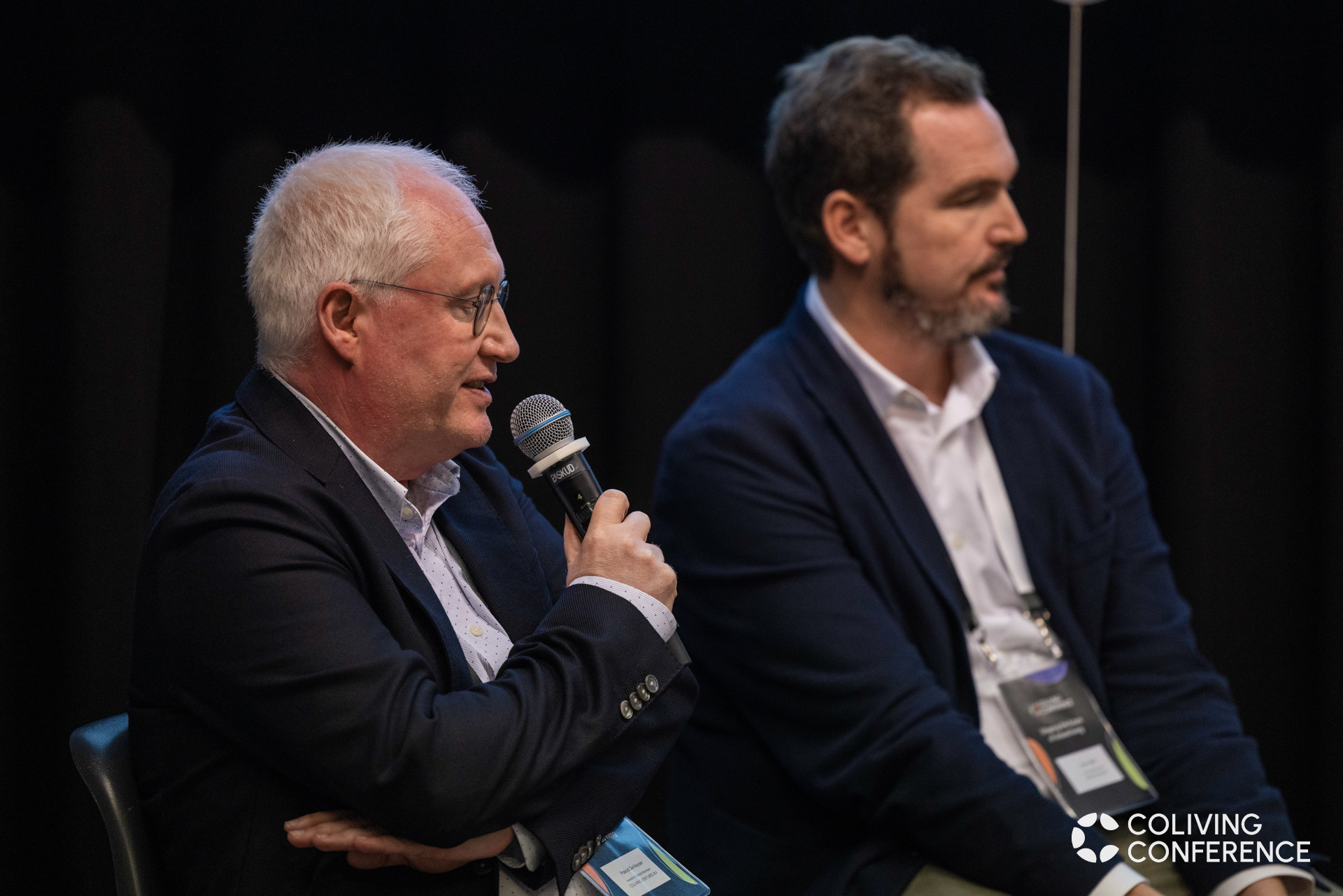
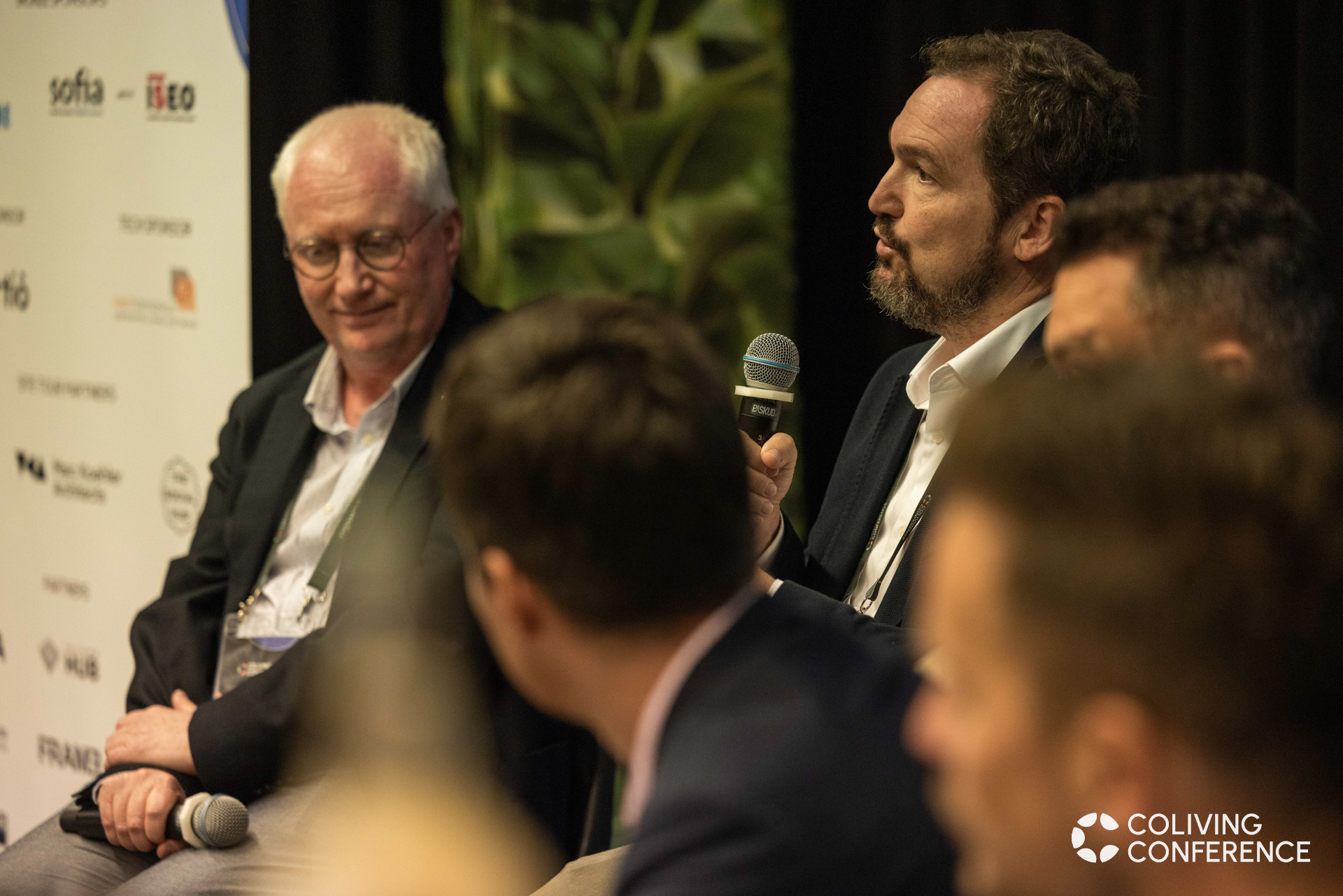
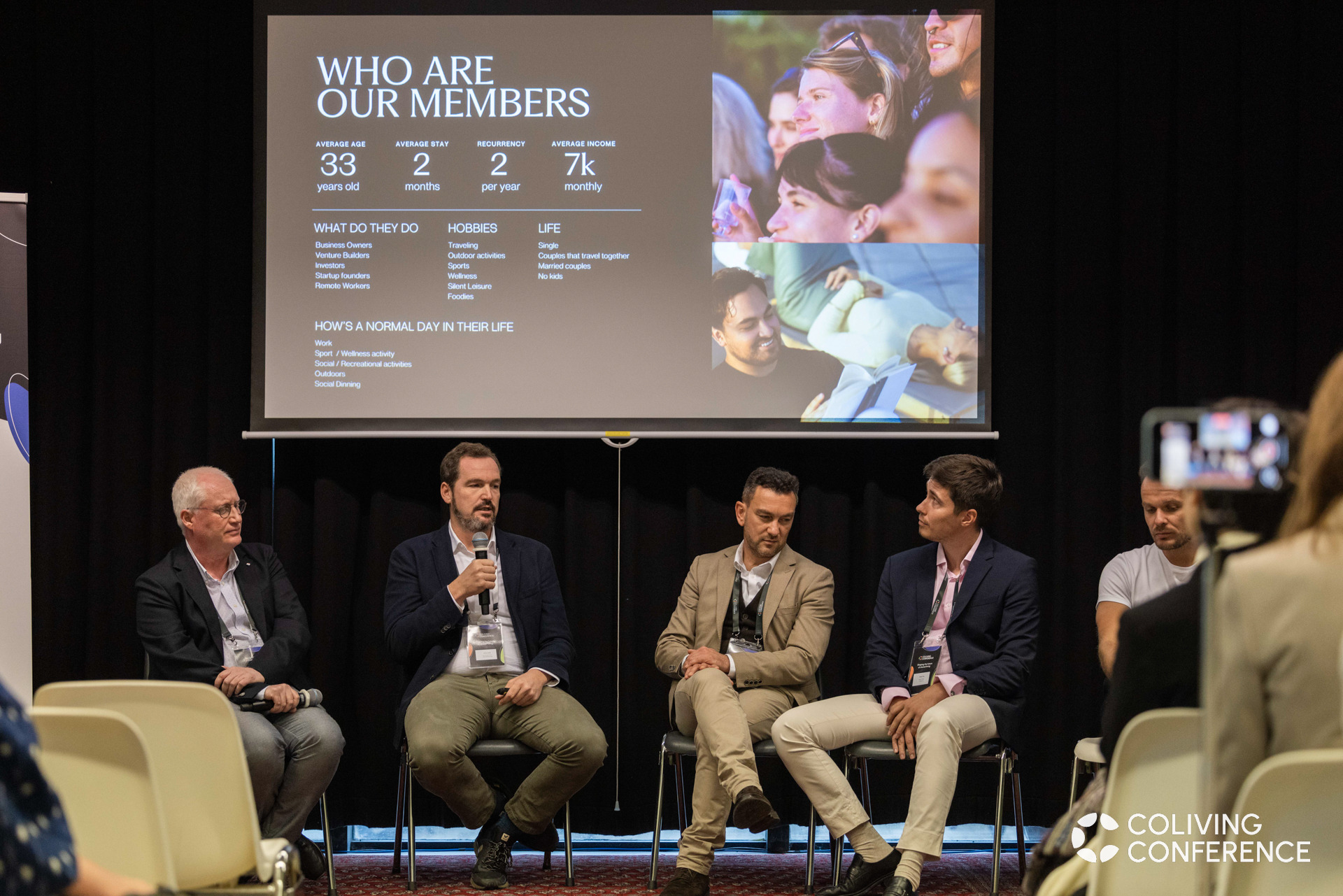
The Coliving Conference 2024 featured a thought-provoking panel discussion about financial technology (FinTech) and its transformative impact on transaction volumes within coliving moderated by Pascal De Keyser. Panelists included Enric Solé, Nicolas Erodiades, and Jerzy Lipiński, and Aleks Pes. This session examined innovative tools like blockchain, digital financial tooling and payment solutions, uncovering how they optimise business administration, financial operations and scale up of coliving ventures.
In shared living today, the real bottleneck is no longer demand, design or even operations. It is capital. As land and construction costs climb faster than wages, and as institutional lenders stay cautious on what they still see as an emerging asset class, the pressing question is who will actually own the buildings that underpin the next wave of coliving, and on what terms. This tension sat just beneath the surface of discussions at the Coliving Conference 2024 in Amsterdam, The Netherlands, where founders, investors and operators explored how modern financial technology might unlock new types of ownership, participation and liquidity for shared living spaces. What emerged was about using FinTech to shift who participates in real estate returns, how quickly projects can be financed, and how deeply communities can be tied into the success of the places they inhabit.
Can tokenisation actually solve the liquidity problem?
The promise that keeps recurring is liquidity. Real estate’s illiquidity shapes everything, including risk appetite, underwriting timelines, and expansion strategy. Tokenisation aims to turn a physical building into a structure that can be divided into small, tradeable stakes, allowing more participants to invest and, critically, allowing them to exit without waiting for a full asset sale. Pascal De Keyser, Founder & CEO at Portio, described a model where tenants could become co-owners of coliving projects through blockchain-based tokenisation, with a low entry point of around € 100 per token and the potential for those tokens to be tradeable on a marketplace. He also positioned Luxembourg as a base due to its regulatory stance towards tokenisation and its suitability for structuring such products.
The coliving relevance is not abstract. Enric Solé, Co-Founder & CEO at Circles House, starts from the lived reality of entrepreneurs. He described how “hacker houses” in Silicon Valley showed the compounding value of living among peers, and how Circles reinterpreted that model in Barcelona as a niche coliving offer for entrepreneurs who want to live, work, and socialise in one environment. The operational detail matters because it underpins the financing logic: Circles’ members stay roughly two to three months, return multiple times per year, and skew towards higher incomes, which creates a community with both willingness and capacity to back the brand financially. Solé noted that Circles had already run a crowdfunding round with over 250 community investors and is now exploring how tokenisation could extend that logic from investing in the operator to investing in the building itself, bringing diversification and potential liquidity.
Yet liquidity does not appear by default just because a token exists. Nicolas Erodiades, Founder & CEO at Melting Spots, was blunt about the real risk - the success of any tokenised offering depends on whether a true secondary market forms, meaning enough buyers and sellers to make exits realistic rather than theoretical. That is why the conversation kept returning to transaction volumes - a marketplace without volume is not a market, it is a digital brochure. Portio’s answer is community-building, framed through “Portio Club”, with the explicit goal of creating enough engaged participants to support trading over time. The implication for operators is that finance becomes another branch of community management. The platform has to do what coliving does best - build trust, repeat engagement, and a sense of belonging, then translate that into transactions.
There is also a crucial technical clarification that cuts through the hype. When asked what investors actually own, De Keyser described the token as representing shares in a structure that owns the legal entity holding the asset, giving exposure to revenues and potential appreciation, rather than a vague claim on a building. That matters for investor confidence, governance, and legal enforceability, and it signals that the serious tokenisation projects are converging on familiar real estate structures, just with a new distribution and trading layer.
Regulation and capital are regional
Tokenisation is often talked about as borderless, yet real-world experience points in the opposite direction - maturity, regulation, and investor habits vary sharply by market. In Luxembourg, Erodiades described an economy where around half the population and most of the private workforce are non-Luxembourgish, and where housing affordability has become a strategic constraint on the country’s ability to attract talent. Melting Spots’ response is to build managed coliving and coworking properties dedicated to a single corporate client, targeting fast-growing organisations that need landing pads for new joiners and satellite workspace for existing staff. The development pipeline he shared was concrete - three high-end properties under development, expected to be live by the end of 2026, delivering around 100 suites, 150 workstations, and a aimed 25% reduction in residents’ cost of living.
Melting Spots also offered evidence that retail-style capital can move quickly when trust and product fit align. Erodiades described raising close to € 3 million through crowdfunded bonds in 58 minutes, with roughly 400 bondholders, and noted that the overwhelming majority were from Belgium rather than Luxembourg, which he interpreted as a sign of differing investor maturity by country. He shared net yields of 7% on the properties, and suggested that leverage could raise that to 12% - 13% per cent, positioning the model as an attempt to let smaller investors participate in an asset class that historically demanded high minimums.
In Poland, Jerzy Lipiński, Managing Partner at L Corp, highlighted how macro structure can stall institutional capital even when demand is present. He argued that around 90% - 95% of capital in Poland comes from Western Europe and tends to favour office and commercial buildings because currency risk is easier to manage when rents are euro-denominated, while Poland’s housing market remains dominated by ownership, with a limited rental segment. He also claimed that much of Polish home buying is done in cash rather than via mortgages, and suggested that fractional ownership could be a practical bridge between cultural belief in real estate and declining affordability. His broader point was less about blockchain and more about distribution: when large pools of institutional money hesitate, local retail capital becomes strategically important, and tokenisation is attractive because it can turn fragmented interest into fundable volume.
Dubai offered a different form of the same story. Aleks Pes, MENA Partner at You&Co, explained that You&Co has pursued retail investors for a decade, accumulating more than 1.000 investors who buy apartments or flats within their properties, a model that demands heavy effort in investor relations. For him, tokenisation is compelling not only as a capital-raising tool but as a transparency tool, because retail investors keep asking whether rental payments will arrive and whether projected income will become reality. In other words, modern FinTech is being judged on whether it can make a traditionally opaque system feel verifiable, auditable, and fair.
Meanwhile, cross-border ambition runs straight into regulation. When asked whether tokenised structures could be used globally, De Keyser pointed to a European movement towards harmonising classifications and compliance, referencing MiCA, the Markets in Crypto-Assets framework, as a step towards easier cross-border transactions within Europe once applied. The caution was that moving capital between Europe and Latin America would still require local compliance, and that legal constraints and uneven jurisdictional readiness remain the biggest hurdle. For coliving leaders, the practical takeaway is to treat tokenisation as a local-first strategy with export potential, not as an instantly global switch.
The operating model becomes the financial model
The most forward-leaning part of the conversation was not about tokens as an investment wrapper, but about how financing can reshape operations. Erodiades described replacing the conventional security deposit with fractional ownership that bears interest. The intention is behavioural as much as financial. If residents are co-owners, they may feel more committed to the space, and they begin to build a long-term asset position rather than seeing housing costs as pure expense. For operators, this is an invitation to reimagine resident retention through economics rather than only through events, design, or culture.
Solé also framed tokenisation as a new engagement layer that can combine security tokens, which represent ownership, with utility tokens, which can deliver perks and experiences tied to a brand. Whether or not every operator should go down that road, the underlying strategic idea is powerful - resident loyalty can be formalised into investable participation, and brand affinity can become a distribution channel for capital. When the token holder can resell to someone else, the investor effectively becomes part of marketing and demand generation, widening the audience for both the asset and the operator.
The panel also touched on early-stage funding, which is where many coliving projects stall. When asked whether tokenisation can fund acquisition and construction before a building exists, Erodiades pointed to the 3 million euro raised at an early stage with land as collateral, and Lipiński cited a Polish example where a project reportedly raised 10 million euro in five days with land as collateral to secure bank leverage. These are not proof that every project can do the same, but they illustrate that retail capital can participate earlier in the risk curve when collateral and credibility are structured properly.
A new playbook for scaling
Coliving often talks about scale in terms of unit counts, cities, and brand consistency. The FinTech lens suggests that scale will increasingly be defined by a company’s ability to create trusted, repeatable financial transactions at volume, across residents, retail investors, and institutional partners. That is why Portio’s timeline language matters: De Keyser described preparations to launch first opportunities within six to eight weeks and expected marketplace readiness around late October to early November, reflecting the product-like cadence of a technology business rather than the slow cadence of a traditional real estate vehicle.
Operators should treat liquidity not as a feature but as a market-building exercise, because secondary trading will not function without sustained community growth and trust. Investors should scrutinise what the token represents, how cash flows are distributed, and how governance works, because tokenisation does not remove risk, but redistributes it. Developers should notice that retail funding can arrive earlier than expected when collateral is clear, which can reshape acquisition strategies and reduce dependence on a single institutional gatekeeper. Finally, the sector should recognise that purpose and profit are not a binary choice but a sequencing challenge, as multiple speakers argued that profitability is necessary for survival, while mission alignment can drive long-term retention and brand strength.
Coliving has long claimed it can align the interests of residents, operators, and cities. The next alignment is a financial one, with residents as stakeholders, communities as capital networks, and operators as orchestrators of both experience and investment. If that alignment holds, transaction volume stops being a back-office metric and becomes a strategic signal of momentum, resilience, and the sector’s readiness to scale on its own terms.