


The Role of Coliving & Shared Living in the Cities of Tomorrow
The Coliving Conference 2024 featured a thought-provoking panel discussion on the future of coliving and communal living in urban areas, moderated by Wouter Onclin. Panelists included Matt Driscoll, Michiel Voskamp, Russell Garnett, and Joost Kool. The session focused on the importance of designing spaces that foster community and emphasised the roles of operators and community managers in cultivating vibrant, people-driven cultures. Key discussions centered on regulatory challenges, including the need to balance housing needs with rental subsidy management and the future of coliving. The panelists envisioned the evolution of coliving over the next five years, advocating for innovative development and collaborative planning in countries like the Netherlands and the UK.
Cities across Europe and beyond face converging pressures that planners once treated as separate problems. Young professionals cannot afford independent housing. Ageing populations require new models of care and connection. Sustainability targets demand denser, more efficient use of urban land. Yet coliving, despite its apparent promise as a response to all three, remains a marginal segment in most housing markets. Conversations at Coliving Conference 2024 in Amsterdam highlighted a paradox at the heart of the sector: widespread agreement that shared living can address urgent urban needs sits alongside persistent regulatory fragmentation, cultural scepticism, and a troubling gap between aspiration and delivery.
Can coliving move beyond transience?
The question of permanence divides the sector into distinct camps. Matt Driscoll, Founding Director at Threefold Architects, acknowledged that many purpose-built coliving developments serve highly mobile populations, but argued that skilful operators create vibrant cultures even in transient environments. Drawing on the firm's work across London, Germany, and France, Driscoll emphasised that community managers act as the constant in buildings where residents cycle through, bringing new arrivals into established rhythms of shared meals and events. The challenge lies in designing spaces that support connection at multiple scales, from corridor kitchens serving 20 people to building-wide amenities that draw in neighbours from the surrounding area.
Michiel Voskamp, Community Manager at Crowdbuilding in the Netherlands, described a fundamentally different model emerging in the country. His platform connects groups pursuing collective self-built projects, housing cooperatives, and senior collectives, all characterised by long-term commitment and member ownership. Voskamp's own cooperative in Amsterdam, which gathered 25 members, began organising close to five years ago, and expects to start construction in January with a building that allocates 30% to shared spaces. The Netherlands now counts roughly 300 such initiatives representing around 5.000 homes, with government ambitions to reach 100.000 units developed through cooperative models. Members invest years in planning, become friends during the process, and retain ownership through an association that does not aim to sell the building for profit.
Russell Garnett, Founder and Managing Director at Vuvale in Australia, positioned his brand somewhere in the middle. Garnett entered the sector in 2011 after a teenage boy asked whether he would ever afford to leave home, prompting more than a decade of advocacy to reshape planning and tax policy. Vuvale now operates a hybrid model spanning short and long-term residence, offering room typologies from hotel stays to micro apartments and studios. Garnett described an ecosystem designed to accelerate residents' housing goals rather than extend them, targeting people who seek independence and a hand up rather than indefinite tenure.
How should cities regulate what they cannot define?
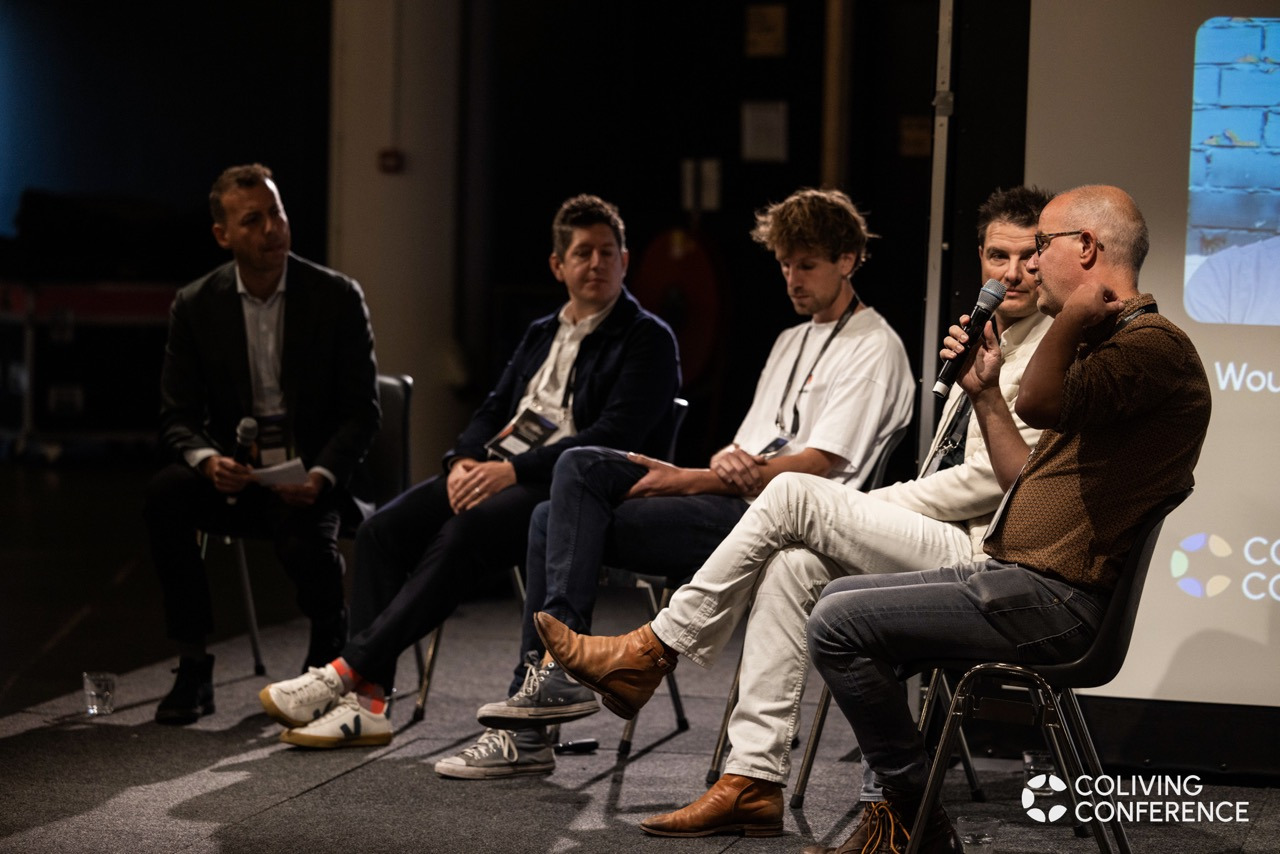
Joost Kool, Senior Advisor Shared Housing at the City of Amsterdam, described the policy challenge in stark terms. Amsterdam distinguishes between shared housing - where landlords rent to unrelated individuals who may never meet before moving in - and coliving, where purpose-built developments foster intentional community. Regulations designed for houses of multiple occupation fail to capture the latter, yet Dutch rental assistance rules penalise projects with shared kitchens and bathrooms, making financially viable developments nearly impossible to deliver at scale. Kool expressed hope that within five years Amsterdam might pilot larger coliving buildings accommodating 50 to 100 residents in new districts such as IJburg, but acknowledged that realising such projects requires political decisions beyond his jurisdiction.
Driscoll reported similar frustrations in the United Kingdom, where local authorities often conflate professionally managed coliving with poorly maintained houses of multiple occupation. He argued that British planning authorities increasingly isolate residential typologies, creating barriers to the mixed communities his firm seeks to design, where people move from studios to family apartments within a single development as their lives evolve. Conversely, Germany treats coliving as part of a broader residential use class, allowing developers to blend tenure types and household sizes more fluidly.
Garnett deliberately rewrote Australian planning codes to convert stigmatised boarding house regulations into aspirational coliving frameworks. The process required changing mindsets among planners who instinctively segregate uses and build barriers rather than, as he put it, “building bigger tables for more people to share”. The resulting framework is imperfect but workable, providing the regulatory certainty investors need whilst avoiding excessive prescription. His pragmatic advice is that it is easier to ask forgiveness than permission, so prioritise delivering excellent outcomes for residents, and address regulatory friction afterwards.
Designing for Connection at Every Scale
Community formation requires intentional design across multiple levels. Driscoll explained that successful coliving recognises the spectrum from introvert to extrovert, creating spaces for both lively social interaction and quiet retreat. At the corridor level - which serves approximately 20 residents - double-height shared kitchens provide natural gathering points where people connect over food. Whereas at the building scale, community spaces must occupy highly trafficked locations near entrances, generating buzz and spontaneous encounters rather than hidden amenities in basements or upper floors.
The most sophisticated schemes integrate with surrounding neighbourhoods as opposed to creating isolated enclaves. Driscoll emphasised that bringing the outside community in through events, shared workspaces, and public programming helps residents build lives that extend beyond the development's four walls. Having worked with POHA House, Driscoll explained that their developments open coworking spaces to local freelancers and small businesses. This generates rental revenue, keeps amenities activated throughout the day, and brings coliving residents into existing community networks. Residents might then use a gym across the street rather than an in-building facility, directing their spending into the local economy.
The transient nature of many coliving communities makes operator skill crucial. Residents may stay three to seven years as part of a housing career trajectory, creating turnover that could fragment community cohesion. Exceptional community managers act as constants, using their knowledge and enthusiasm to cultivate culture and facilitate connections even as individual residents come and go. Driscoll noted that meeting people during a three-week holiday creates meaningful experiences even without long-term contact. Similarly, well-operated coliving can deliver genuine community benefit during medium-term stays. The key is designing varied housing typologies within developments so residents can transition from studios to larger apartments as circumstances change, maintaining neighbourhood ties while moving through different unit types.
The Cooperative Alternative
Voskamp represents a fundamentally different model where communities form before buildings do. Through Crowdbuilding's online platform, groups collaborate to acquire land and develop housing they will own collectively through associations. The process is lengthy, but creates deep commitment from a cohesive group with shared values. They now holiday together, having built genuine friendship through the development process.
The economic logic is compelling. When cooperatives own buildings in perpetuity through membership associations, eliminating profit extraction allows reinvestment in community infrastructure. Voskamp’s project dedicates 30% of space to shared amenities, while ensuring each unit includes a private kitchen, bathroom, and sleeping areas. The model balances autonomy with connection, appealing to people who want self-sufficient homes within intentional communities. Amsterdam currently has 400 cooperative housing units under construction, and the government has set targets for 100.000.
This bottom-up approach contrasts sharply with developer-led coliving, but addresses similar needs. For cooperative members, the building is not a transitional housing step, but a permanent home they design around their own needs and values. The challenge is providing plots, expertise, and policy support to scale what remains a grassroots movement.
Lessons for an Industry Still Finding its Shape
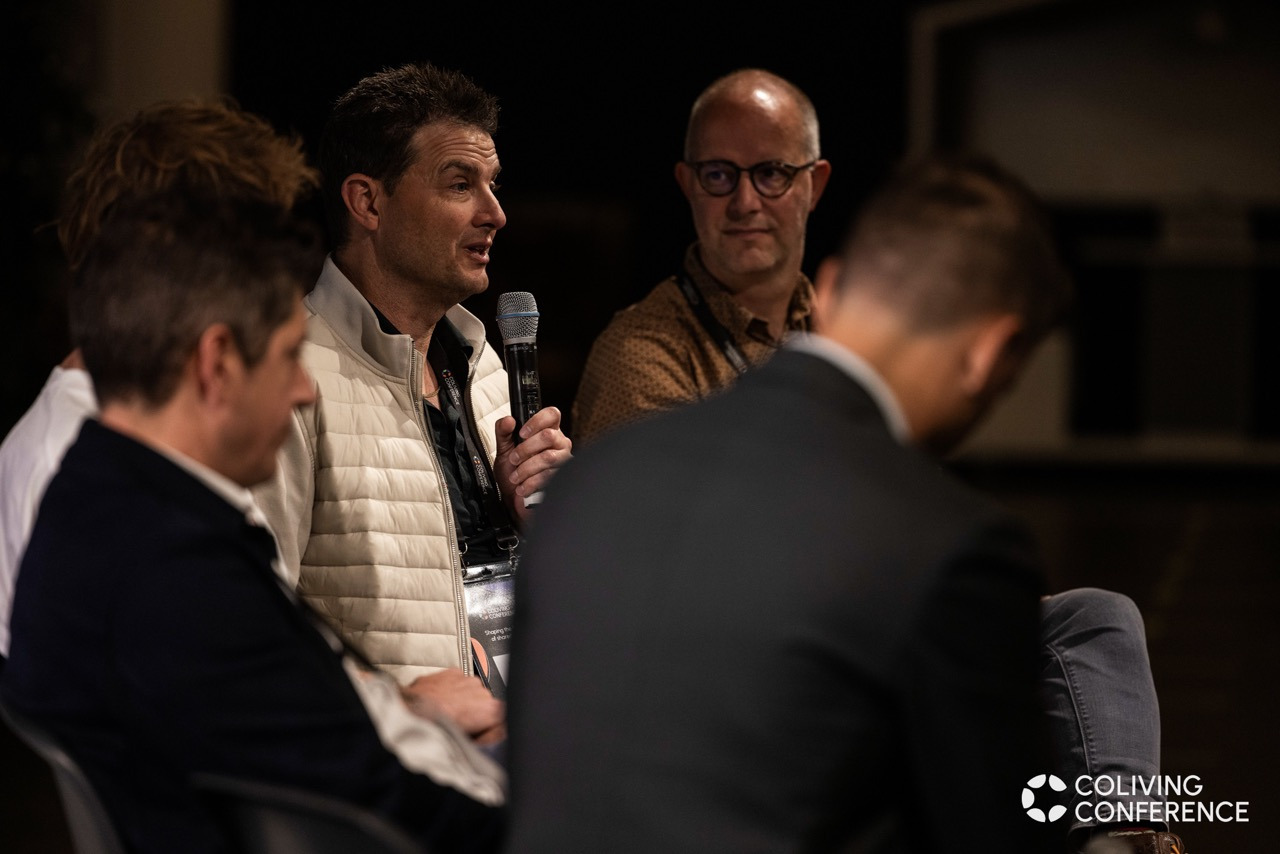
The World Health Organisation recently classified loneliness as a global health threat comparable to smoking 15 cigarettes daily, lending urgency to housing models that deliberately foster connection. Driscoll noted that coliving will not solve every affordability crisis, but it addresses a real need for younger and older people alike, particularly those arriving in cities without established networks. The sector has made progress in demonstrating viability, yet it remains held back by misconceptions, fragmented regulation, and a tendency among policymakers to classify rather than enable experimentation.
Three insights stand out for operators, investors, and developers navigating this landscape. First, focus on addressing target communities over universal solutions, whether the priority is embedding cooperative ownership for committed members, or blending residential and commercial uses to activate neighbourhoods. Second, patient advocacy pays dividends, as Garnett's 13-year campaign and the Dutch cooperative movement's incremental gains demonstrate, but progress requires documenting outcomes and building coalitions around evidence rather than ideology. Third, design quality and operational skill determine whether shared living feels aspirational or desperate, making investments in community management, thoughtful spatial hierarchy, and integration with surrounding areas essential rather than optional. Kool's challenge to the panel, asking whether any participants actually lived in coliving, underscored a final uncomfortable truth - the sector will struggle to scale until it creates environments where even its advocates choose to stay.