






Cohabitation in the neighbourhood of tomorrow
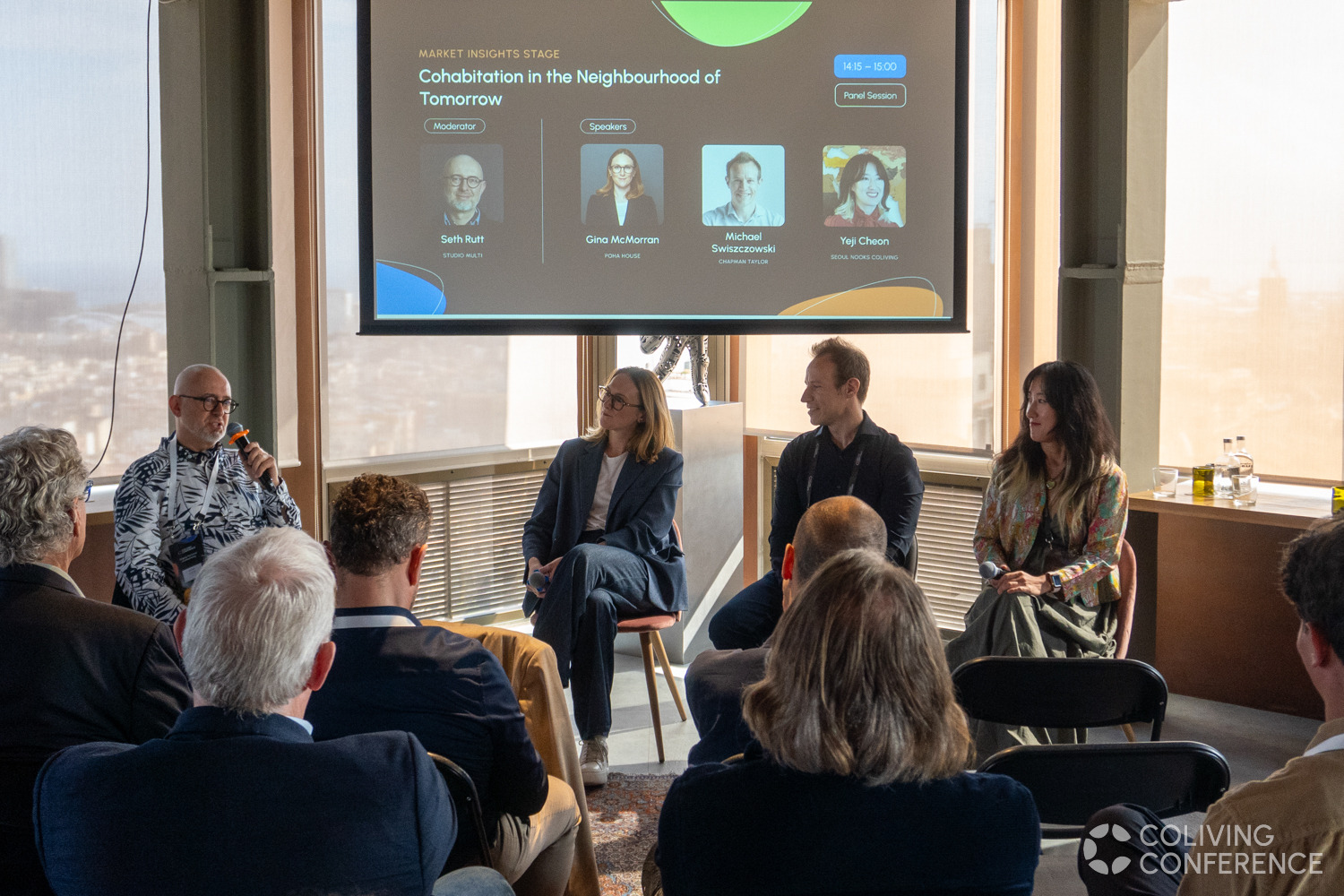
The Coliving Conference 2025 featured a thought-provoking panel discussion analysing coliving as a driver of urban regeneration, fostering mixed-use neighbourhoods, balancing density, and enhancing social infrastructure moderated by Seth Rutt. Panelists included Gina McMorran, Michael Swiszczowski, and Yeji Cheon. the face of rising urban density, housing crises, and social fragmentation, the future of neighbourhoods depends on how we design, programme, and manage shared spaces.
The modern city presents a paradox of density and isolation. As urban populations swell, the social fabric often frays, leaving residents physically closer yet emotionally more distant than ever before. This tension sits at the heart of the current evolution in the shared living sector. No longer content with simply providing efficient housing units for a mobile workforce, the most forward-thinking operators and architects are re-evaluating the boundary between the private sanctuary of the home and the public vibrancy of the street.
Insights emerging from the Coliving Conference 2025 in Barcelona, Spain, suggest a maturation of the asset class. The conversation has shifted from the internal mechanics of room density to the external impact of neighbourhood regeneration. As the sector moves from a niche alternative to a primary housing solution, the successful integration of coliving schemes into existing urban fabrics has become the critical metric for planning approval, long-term financial viability, and resident retention.
Can Transient Populations Become Permanent Stakeholders?
A persistent friction exists between municipal authorities and coliving developers regarding the nature of the resident. City councils and planners frequently view coliving through a lens of scepticism, fearing that a transient demographic will erode local community cohesion rather than contribute to it. This regulatory hesitation often stems from a misunderstanding of modern mobility. The industry is currently tasked with proving that short-term tenure does not equate to low commitment.
Gina McMorran, Commercial Director at POHA House, argues that the operational mindset determines whether a building becomes a fortress or a hub. The data challenges the assumption of transience. In their German portfolio, average tenancy lengths frequently exceed eleven months, suggesting that even in a sector designed for flexibility, residents are seeking stability. The challenge lies in operationalising this stability to benefit the wider neighbourhood. The most effective strategy appears to be an outside-in approach where the building’s amenities act as a civic resource rather than a gated privilege.
When operators open their doors to the neighbourhood, allowing locals to access community spaces or participate in events, the building ceases to stick out like a sore thumb and becomes a piece of social infrastructure. This is particularly vital when introducing modern products into sensitive or economically challenged areas. In Aachen, Germany, McMorran noted that refurbishing a property in a district previously associated with social housing required a delicate touch. By organising simple civic activities like litter picking and inviting neighbours into the fold, the development successfully acted as a catalyst for regeneration without alienating existing residents. This demonstrates that integration is not a passive architectural feature, but an active operational pursuit.
Is Loneliness a Structural or Social Failure?
While operators tackle the macro challenges of integration, a more intimate crisis plays out behind the front door. Loneliness remains a pervasive issue in high-density urban environments, exacerbated by the digital paradox where connection is abundant, yet belonging is scarce. Addressing this requires a shift in how the sector defines its value proposition, since it is becoming clear that placing people in proximity does not automatically generate community.
Yeji Cheon, Founder & Community Gardener at Seoul Nooks Coliving, suggests that the solution to urban isolation is intentionality rather than just density. Her experience running smaller, intimate coliving spaces in South Korea reveals that loneliness persists despite extensive social networks if the individual lacks a sense of being truly seen. The industrialised model of shared living often relies on high-tech amenities to sell a lifestyle, yet the psychological success of a scheme often depends on attentive curation.
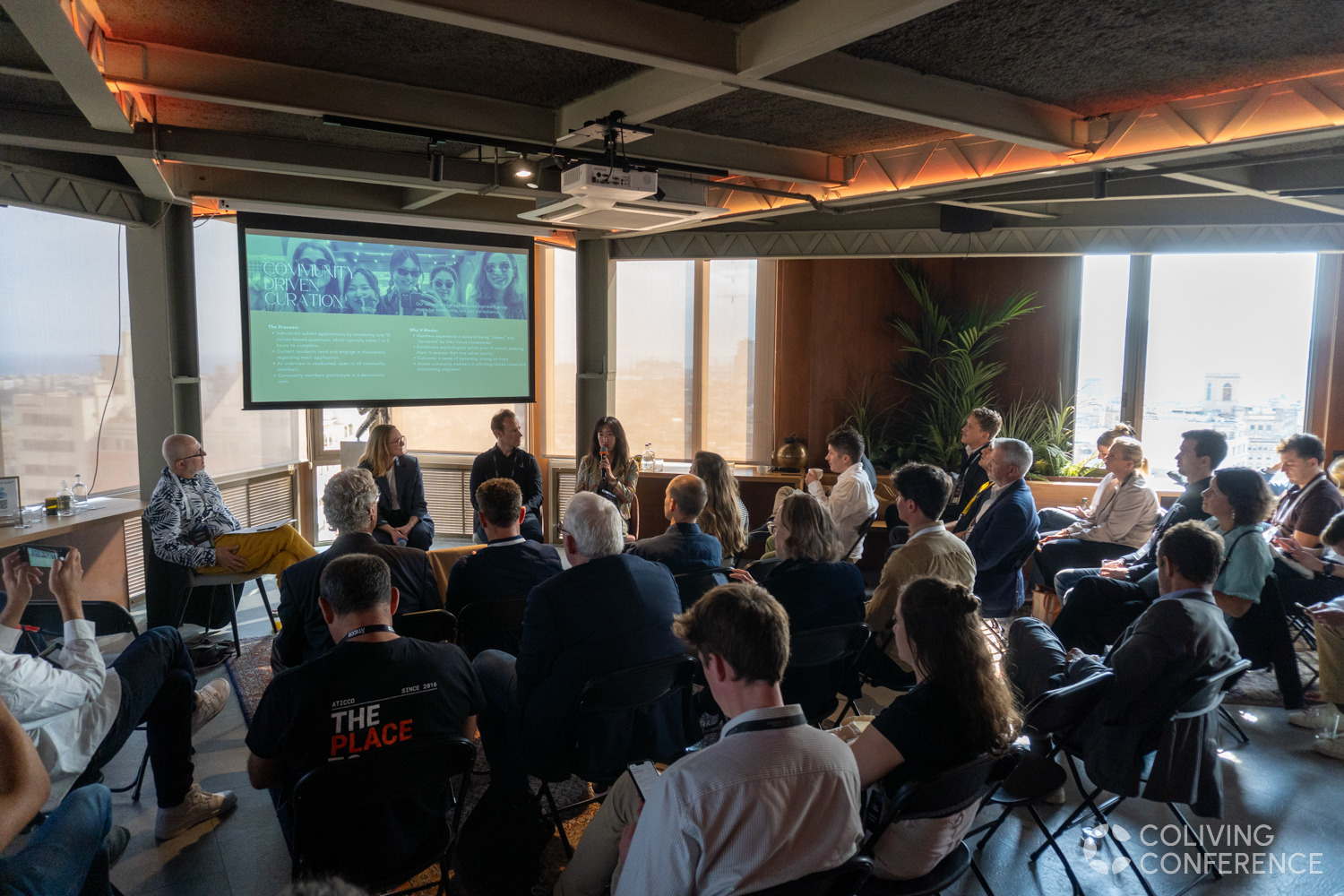
Cheon’s approach involves a rigorous vetting process where only one in ten applicants succeed, not to filter for status, but to ensure alignment with community values and conflict resolution. This bottom-up approach offers a stark contrast to institutional scaling strategies, yet it highlights a universal truth for the sector. Whether managing a seven-person house or a five-hundred-unit tower, the mechanism for belonging is the same - it requires vulnerability and the safe space to navigate conflict. When residents are encouraged to share their internal worlds - described by Cheon as their "microcosmos" - the housing unit transforms into a support system. For institutional investors, the takeaway is that emotional safety is a retention tool. Residents who feel they belong are less likely to leave, stabilising income streams and reducing marketing costs.
Curating the Active Ground Floor
The architectural response to these social ambitions is increasingly focused on the ground floor. This is the physical interface between the private capital of the developer and the public realm of the city. In traditional residential developments, this space is often wasted on sterile lobbies or sold off to the highest commercial bidder. However, the shared living sector is realising that retaining control over these spaces is a powerful lever for placemaking.
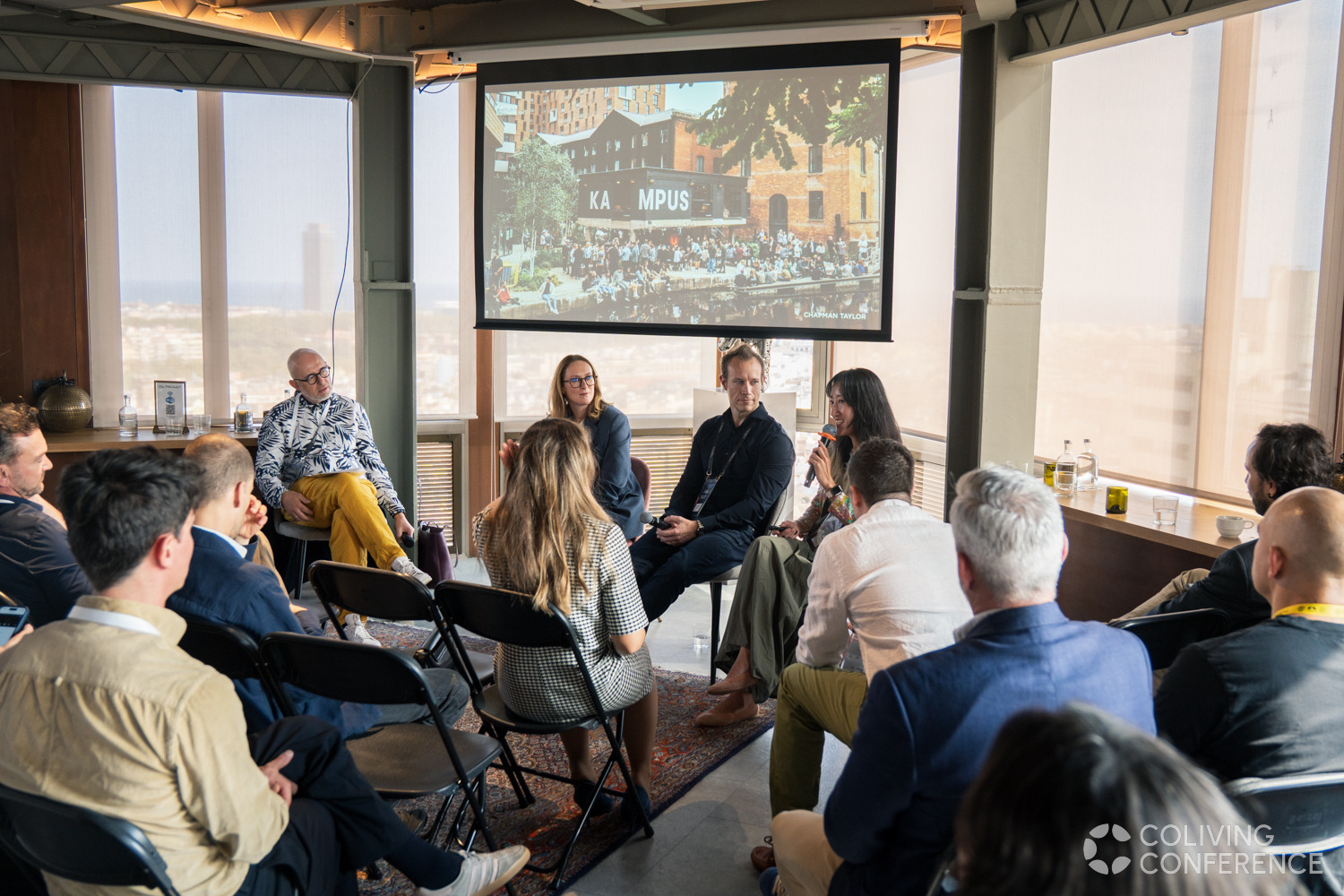
Michael Swiszczowski, Group Board Director at Chapman Taylor, emphasises that coliving and build-to-rent developments possess a distinct advantage over traditional housing because they can curate this frontage. The decision of who occupies the commercial units at street level dictates the personality of the entire scheme. In a Manchester project, Campus, the developers explicitly banned coffee chains and supermarkets in favour of independent local businesses. This strategy empowered residents to shape their own environment. By using the commercial space as an incubator for startups, the building created a feedback loop of local economic activity.
This layered mixed-use approach allows for a more granular response to site constraints. Swiszczowski highlights how active frontages can be adapted to unlikely contexts, such as a development at Trafford Wharf where university seminar rooms were placed at street level to activate the façade. By pushing active uses to the perimeter and hiding back-of-house functions, architects can demystify the building for passersby. The transparency of a gym, a coworking space, or a café signals that the building is a participant in the city’s life, not merely a spectator.
The Economics of Location & Connection
The selection of a site is rarely a purely creative endeavour, but a rigorous exercise in financial modelling and urban forecasting. For large-scale operators, the economics of core city locations are often prohibitive due to inflated land values. Consequently, the industry is increasingly looking toward gentrifying neighbourhoods on the city fringe. These areas offer the necessary yield potential but require a robust connection to the wider metropolis to attract the target demographic.
Transport infrastructure has emerged as the non-negotiable criterion for site viability. The concept of the 15-minute city is driving development patterns, where the ability to live car-free is both a sustainability goal and a planning necessity. Proximity to mass transit systems allows developers to increase density and reduce the capital expenditure associated with parking provision. Swiszczowski notes that demonstrating the socioeconomic benefits of bringing a high-density population to a transit node is often the key to unlocking planning permission.
However, the economic reality of scaling remains a hurdle for smaller, community-driven operators. While institutional players leverage pension fund capital to reshape skylines, ground-up operators face a ceiling on their growth. Cheon admits that despite the social success of the Seoul Nooks model, financial sustainability requires a shift toward asset ownership and economies of scale. This suggests that the industry may see more partnerships where large developers provide the hardware while niche community builders provide the software to run it.
Resilience Through Crisis & Intentionality
The sector has faced its share of existential doubts, particularly during the global pandemic when the very premise of coliving and shared living was questioned. Critics predicted the demise of the model in an era of social distancing. Yet, the reverse occurred. The crisis acted as a stress test that validated the resilience of the community-led model. While residents of traditional apartments faced isolation, residents in well-managed shared living schemes found stewardship and support.
This resilience was the result of embedded management structures. Operational teams that were already focused on community engagement were able to pivot quickly to support residents' mental health. The presence of community managers who know residents by name and understand their personal struggles transforms a property management role into that of a guidance counsellor. This human element is what differentiates the product from a mere asset class.
As the market matures, the definition of success is expanding beyond occupancy rates. It now includes the ability of a development to weather social adversity and foster genuine human connection. The romantic notion of community has proven to be a robust defensive strategy for asset value. Buildings that foster belonging and connection - whether through the rigorous curation of a small house or the strategic design of a skyscraper - create a stickiness that is hard to replicate in the wider rental market.
The Architecture of Integration
As the sector looks toward the next phase of growth, curation has become the new amenity. Whether it is the rigorous selection of residents in a small house in Seoul or the careful choice of retail tenants in a Manchester tower, the value of a project is defined by who and what is allowed inside. An open door does not mean an unfiltered one - it means a curated interface that adds value to both sides of the threshold.
Second, integration is an operational process, not a design feature. It requires dedicated community managers who actively court local engagement, organise litter picks, sponsor local groups, and invite the outside world in. The role of the community manager is evolving from a concierge to a neighbourhood diplomat.
Finally, adversity is the ultimate stress test for the community. The shared experience of the pandemic proved that the coliving model is resilient. Far from being the death of density, crises have highlighted the protective value of coliving and shared living. As we move forward, the most successful operators will be those who design their buildings as support systems that can hold people together when the city feels cold. The living sector has proven it can build houses, the task now is to prove it can build community-driven neighbourhoods.