





.jpg)

Coliving Outside the Metropolis: Exploring the Potential Beyond Primary Urban Centres
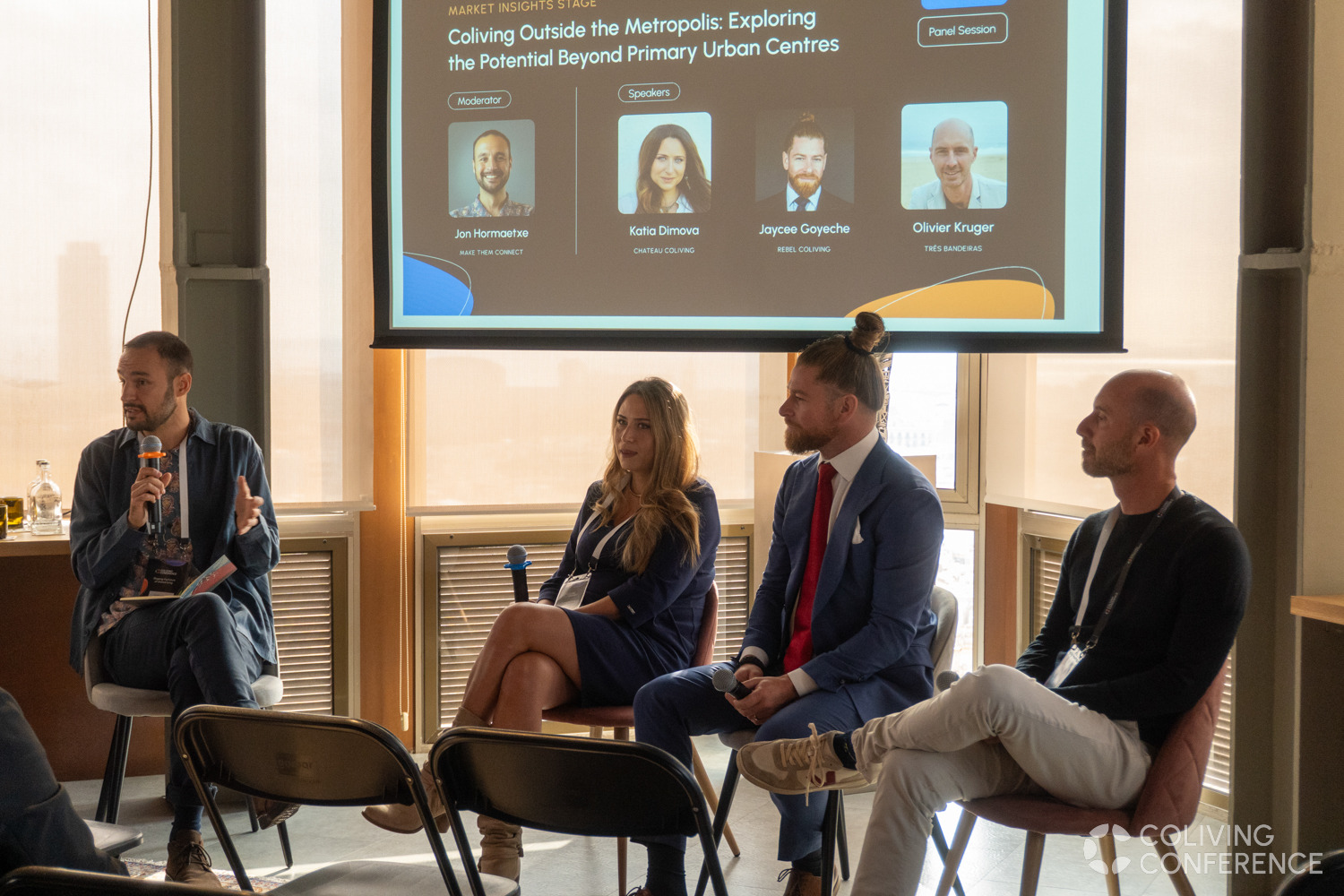
The Coliving Conference 2025 featured a thought-provoking panel discussion exploring the growing opportunity for coliving in secondary, tertiary & rural areas, and its the investment, operational & lifestyle benefits, moderated by Jon Hormaetxe. Panelists included Katia Dimova, Jaycee Goyeche, and Olivier Kruger. The session covered how these non-metropolitan spaces are becoming key opportunities for both operators and investors, offering unique advantages in terms of affordability, sustainability, and community-driven living.
For the better part of a decade, the coliving narrative has been inextricably linked to the urban core. The prevailing logic suggested that shared living was a solution to density, and a frantic response to the loneliness and affordability crisis plaguing cities like London, New York, and Berlin. However, the conversations emerging from the Coliving Conference 2025 in Barcelona, Spain, suggest a significant decoupling of this asset class from the city centre. As the sector matures, operators and investors are discovering that the periphery is not merely a retreat for the weary urban dweller, but a robust, standalone market with distinct economic advantages. The shift is no longer just about lifestyle experimentation, but the calculated diversification of portfolios into regions where asset acquisition costs are lower, but yield potential remains surprisingly resilient..
Is the Rural Market a Retreat or a Permanent Shift?
The migration to non-urban environments is often framed as a temporary retreat, yet operational data suggests a more permanent lifestyle transition is underway. Olivier Kruger, Co-Founder at Três Bandeiras in Ericeira, Portugal, noted that the initial driver for many residents is a reaction to the exhaustion of corporate urban life. Kruger, a former investment banker who transitioned to the sector after experiencing burnout, observed that residents are not merely seeking a holiday, but are attempting to redesign their lives around “regenerative living". This model, which integrates health, entrepreneurship, and nature, suggests that the market depth for non-urban coliving extends beyond digital nomads to include city dwellers seeking long-term mental and physical recalibration.
The distinction between a retreat and a home is narrowing. Katia Dimova, Founder at Chateau Coliving, highlighted that while the aesthetic of a 12th-century castle serves as the initial marketing hook, the retention mechanism is the profound sense of domesticity and understanding among residents. The psychological driver is the elimination of the “alien” feeling that remote workers often experience in traditional hospitality settings. By providing a venue where professional and personal lifestyles are implicitly understood, rural operators are capturing a demographic that is increasingly viewing the metropolis as optional rather than essential.
Can Historic Assets Be Repurposed for Modern Community?
From an asset management perspective, the rural strategy unlocks a treasure trove of undervalued real estate that traditional developers often overlook. Jaycee Goyeche, Founder & Chief Vision Officer at Rebel Coliving, described his firm’s approach as “problem resolving” for obsolete building typologies. His portfolio, which includes 12 buildings and approximately 500 units, relies heavily on converting monasteries, old hotels, and senior living facilities. Goyeche argued that these structures are the “architectural ancestors of coliving”. A monastery, with its small private rooms and expansive communal halls, is spatially identical to the modern coliving ideal, requiring less structural intervention than converting a standard residential block.
This adaptive reuse strategy offers a unique value proposition. New builds in city centres often struggle to manufacture character, whereas a repurposed heritage site comes with a built-in narrative. Dimova’s operation in a French castle demonstrates that the building itself acts as a filter, attracting a specific psychographic of residents fascinated by the unique nature of the dwelling. However, the romance of the asset must be balanced against the realities of infrastructure. Historic properties frequently present significant maintenance challenges, from heating inefficiencies to structural limitations, which demands a more hands-on operational model than the automated systems possible in modern urban builds.
Strategic Location Selection Beyond the City Centre
The success of non-urban coliving is not solely reliant on proximity to nature, but on rigorous location criteria that ensures economic sustainability. It is not enough to simply buy a cheap building in the countryside. Goyeche outlined a precise framework for site selection that focuses on “institutional poles”. His strategy targets locations within fifteen minutes of major institutions such as universities, government administrative centres, or hospitals. This ensures a consistent flow of potential residents, including students, researchers, and public sector employees, insulating the asset from the volatility of pure tourism demand.
Furthermore, connectivity remains paramount. Successful rural projects prioritise “transport-oriented development”, situating themselves on major transit axes that link back to urban hubs. This creates a safety net for residents who want the rural lifestyle without total isolation. When this connectivity is paired with a “nature driver” - such as a ski mountain, a lake, or a massive park - the location becomes a destination in its own right. This triangulation of institutional demand, transport accessibility, and natural amenity creates a defensible moat against vacancy, a risk that scares many institutional investors away from secondary markets.
The Economics of Captive Audiences & Longer Stays
One of the most compelling economic arguments for the non-urban model is the reduction of churn. In a dense city centre, a resident can move to a competitor’s building across the street to take advantage of a one-month promotion. In a rural setting, Goyeche noted that the customer becomes "captive” in a positive sense. Once settled and integrated into the community ecosystem, the friction of leaving is significantly higher, leading to longer average stays and stabilised revenue.
To capitalise on this, operators are innovating their lease structures. Dimova implemented a strict monthly stay model with fixed arrival and departure dates. This operational rigidity actually enhances the user experience by eliminating the “revolving door” dynamic that disrupts community bonding. Residents who wish to extend must commit to a full second month, ensuring that the social fabric remains intact. Similarly, Kruger reported that his smaller, eight-room facility in Portugal sees average stays of two to four months, driven by residents who are testing the waters for potential relocation or seeking a substantial break from city living.
To maintain profitability within these models, cost control is essential. Kruger emphasised the importance of sustainability investments, such as solar panels, to mitigate the high energy costs associated with running rural villas and large houses. Furthermore, dynamic pricing strategies help smooth out seasonality, using high-yield summer months to subsidise the lower occupancy of winter, where niche targeting of entrepreneurs helps fill the gap.
Community-First Launch Strategies
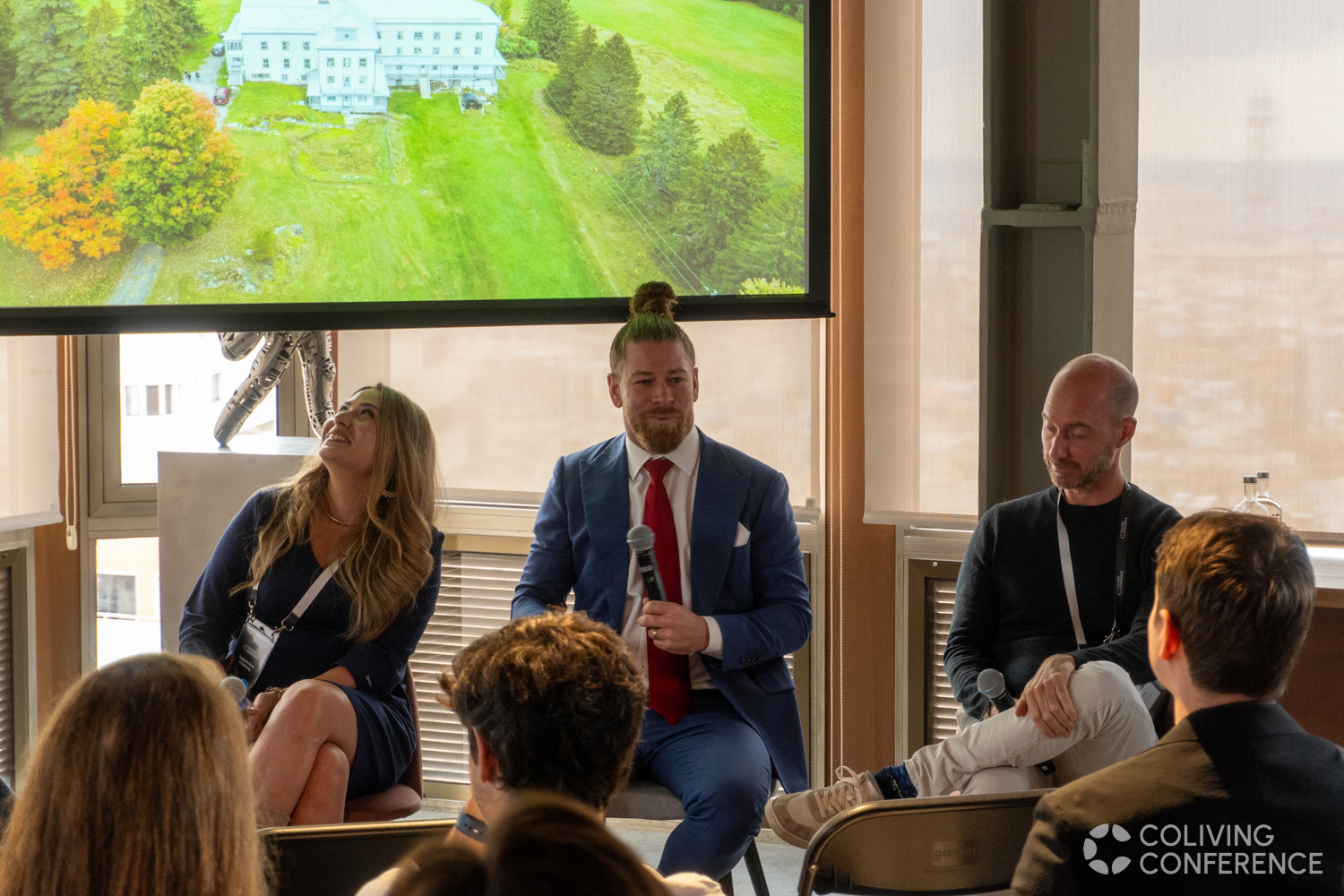
Generating demand for a location that may not yet exist on the map is a recurring challenge for rural operators. The traditional “build it and they will come” approach is risky when there is no passing foot traffic. The solution, according to Dimova, is to build the community before the building is even habitable. She cited examples of “blind booking” campaigns where trusted community members booked stays in unrenovated properties simply based on the reputation of the operator and the promise of the group experience. This pre-selling validates the business case and generates immediate cash flow upon opening.
Goyeche reinforced the power of “inside marketing” over paid advertising. Rebel Coliving utilises an ambassador programme that rewards residents for referring friends, a strategy he described as both the most powerful and cost-effective acquisition channel. By creating a strong brand identity, operators can turn their residents into a distributed sales force. In rural areas, where digital ad targeting can be inefficient, this organic word-of-mouth is critical for survival.
Managing Operations & Burnout in Remote Locations
While the lifestyle is idyllic for residents, the operational reality for staff in rural coliving spaces can be demanding. The isolation that attracts guests can lead to rapid burnout for community managers who live on-site. Dimova highlighted the difficulty of retaining staff who are expected to be constantly “on” for guests while living in the same remote location. The blurring of boundaries between work and private life is exacerbated when there is nowhere else to go after the workday ends.
To combat this, successful operators are adopting rotation models. Dimova’s team rotates on and off-site every few months, preventing the social exhaustion that comes from continuous community management. Additionally, making the community manager’s work invisible is a key performance indicator. A seamless experience where guests feel the community is happening organically, rather than being engineered, is the hallmark of a mature operation. This requires sophisticated backend management that allows the on-site team to focus on emotional connection rather than just logistics.
Creating Unique Value Outside the Metropolis
The question is no longer whether demand exists outside the metropolis, but rather how to operationalise that demand in markets where traditional hospitality benchmarks simply do not apply. For operators and investors looking to enter this space, it is imperative to not fall in love with the building alone, but also consider the viability of a rural project dependent on its proximity to institutional anchors and transport links that guarantee a baseline of demand. Second, operational efficiency in rural settings requires a focus on energy sustainability and staff preservation, as the costs of utilities and human capital burnout can be higher than in cities. Finally, recognising the power of the “captive market” by designing lease terms and experiences that discourage turnover can achieve stable occupancy that rivals the most popular urban hubs. As the sector matures, rural areas are proving not to be just a place to escape to, but a place to build the future of shared living.