





AI, Tech, Automations vs. Human Authenticity: Striking the Optimal Balance in Future Coliving Experiences
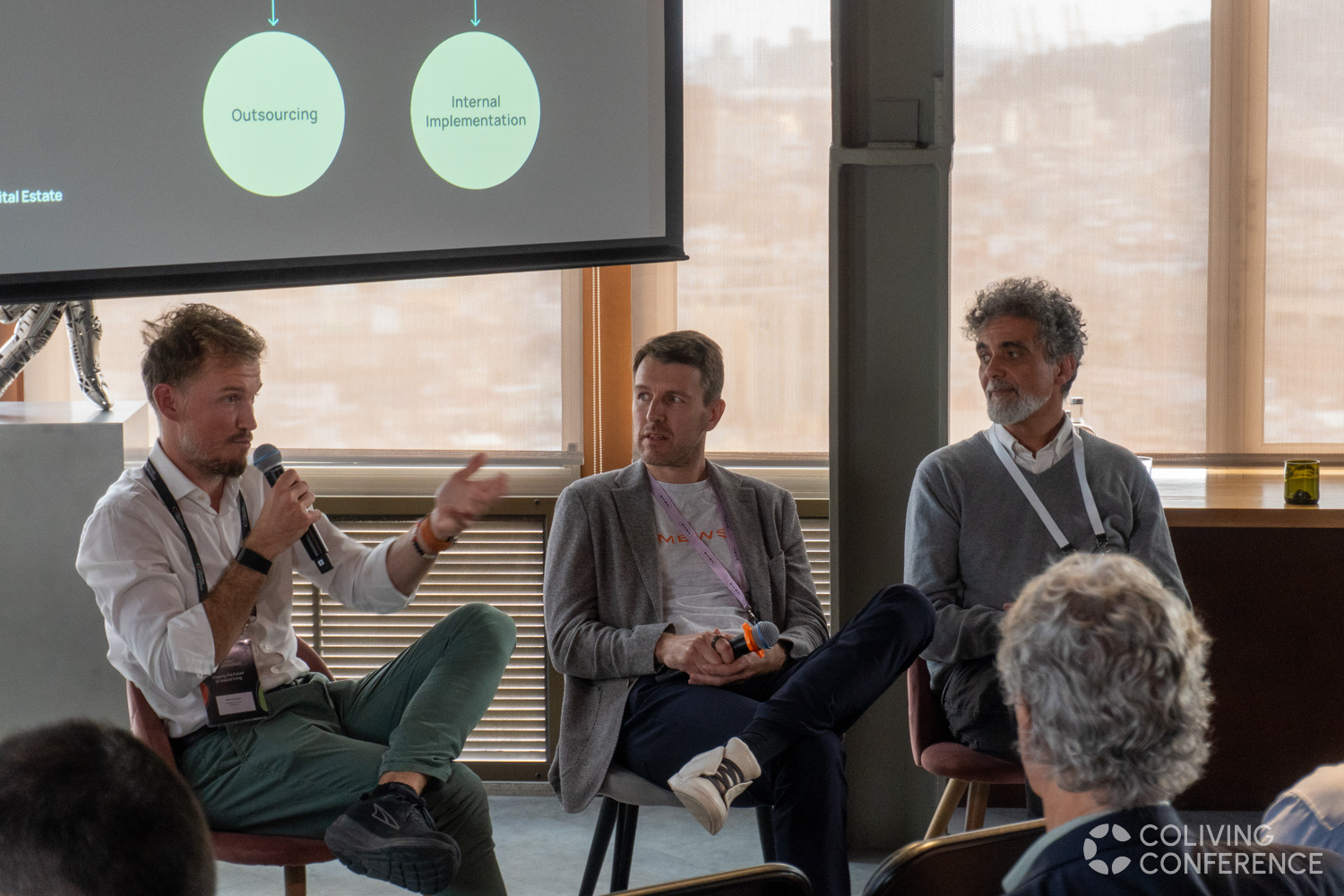
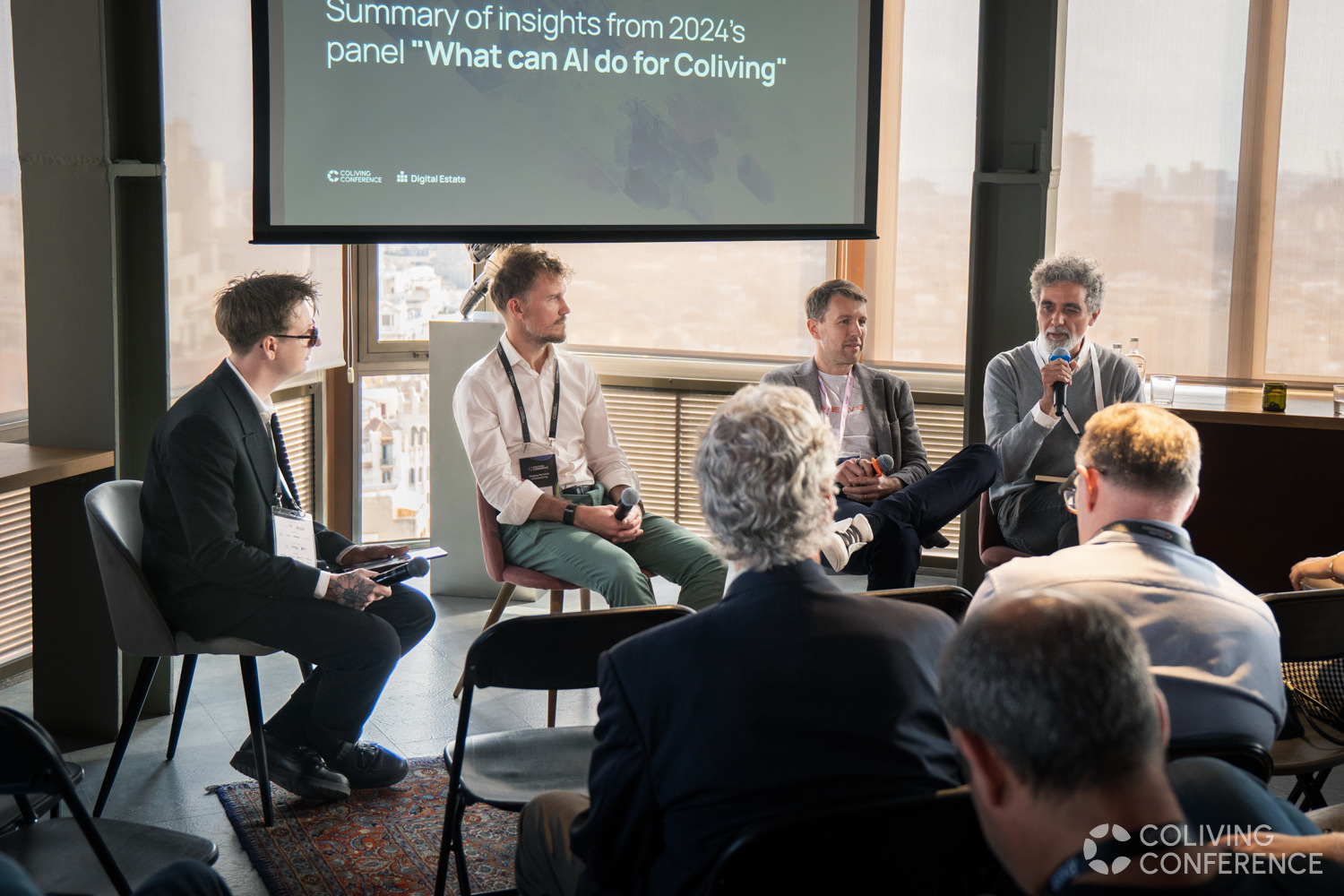
The Coliving Conference 2025 featured a thought-provoking panel discussion diving into how coliving balances AI-driven efficiencies with genuine, human-centred experiences for the future of shared living moderated by Dawid Houser. Panelists included Marc Rovira, Martin Reichenbach, and Diego Gaspar. This session delved into the evolving role of AI across the project development and resident lifecycle; from streamlined, automated leasing processes and dynamic pricing models, to predictive maintenance and hyper-personalised service delivery.
The promise of automation has long seduced real estate operators with the allure of seamless efficiency, yet a tension lies at the heart of the coliving and shared living sector. In an industry defined by community and connection, does the relentless pursuit of algorithmic optimisation risk eroding the very humanity that makes coliving a viable product? This critical balance was a central theme at the Coliving Conference 2025 in Barcelona, Spain, where industry leaders convened to dissect the evolving role of artificial intelligence in property operations. The consensus emerging from the dialogue suggests a maturation in the sector’s approach to technology. Moving past the initial hype of generative AI, operators are now grappling with practical implementation, focusing on distinguishing between back-of-house efficiencies that demand ruthlessness and front-of-house interactions that demand empathy.
The Efficiency Paradox
A fundamental question facing decision-makers is determining which operational pillars remain core competencies and which should be delegated to external experts or automated entirely. The operational landscape is split into two distinct approaches - internalising tools to enhance staff capabilities versus outsourcing complex, non-core functions to specialised entities.
Marc Rovira, Founder & Co-CEO at Polaroo, argues that coliving operators often underestimate the complexity of recurring expenses. The administrative burden of managing thousands of utility bills - spanning water, gas, electricity, and internet across multiple jurisdictions - distracts from the core mission of community building. Rovira notes that while a coliving operator might ask a seemingly simple question - such as the total utility spend for January - the answer requires navigating a labyrinth of overlapping billing cycles, variable tax rates, and distinct consumption metrics. By delegating these data-intensive, non-core tasks to specialised firms that utilise AI for invoice processing and procurement, operators can unburden their internal teams. The value lies not just in cost savings, but in reclaiming cognitive bandwidth. When an operator is no longer drowning in the monotony of billing reconciliation, they can redirect that energy toward the resident experience.
However, the strategy shifts when applied to property management systems (PMS) and direct guest interactions. Martin Reichenbach, Senior Director EMEA at Mews, observes that while the underlying transactional data remains consistent, the volume and adoption of AI tools have exploded. With global adoption of generative AI interfaces reaching the billions, trust in automated interactions has grown. Reichenbach suggests that guests now feel comfortable conversing with chatbots for standard queries, provided the interaction remains efficient. The industry is moving toward a model where standardisation makes the "average" experience irrelevant, allowing human staff to focus exclusively on the exceptional or complex cases that define true hospitality.
From Data Hoarding to Predictive Intelligence

The conversation around data has shifted from mere collection to strategic prediction. For years, the industry mantra was to gather as much information as possible, often resulting in "data lakes" that were little more than masses of unorganised information. The current imperative is to transform this raw data into predictive insights that drive revenue and operational stability.
The potential for "golden profiles" of tenants is becoming a reality. Reichenbach points out that traditionally, pricing models relied on a limited set of competitor rates and internal occupancy figures. Today, the integration of macro data - ranging from flight patterns to social feeds - allows for a far more granular understanding of demand. For the coliving sector, which manages longer stays and more complex inventory than traditional hotels, this means the ability to price not just a room, but a lifestyle. By capturing data across the entire tenant journey, operators can move beyond reactive service to proactive anticipation of resident needs.
This shift is democratising access to high-level data analysis. Diego Gaspar, Expert in Innovation & Digital Entrepreneurship, highlights how large language models (LLMs) are bridging the gap between complex coding and daily operations. In the past, analysing specific variables to predict churn or revenue required knowledge of Python or SQL. Today, staff can query databases using plain speech, asking an AI model to perform a random forest analysis or generate synthetic data for stress testing. This accessibility empowers general managers and community builders to act as data scientists, making evidence-based decisions without needing a technical background.
The Human-in-the-Loop Necessity
Despite the capabilities of these technologies, the limitations of AI in complex, high-stakes scenarios remain a significant hurdle. There is a "happy path" in automation - a standard workflow where AI outperforms humans in speed and accuracy. However, once a request deviates from this path, the quality of automated service drops drastically.
Reichenbach illustrates this with the example of complex invoicing. While an AI can instantly generate a standard bill, it often struggles with nuanced requests, such as splitting costs between personal and corporate accounts in specific ratios. In these instances, a human operator is essential for untangling the context that the algorithm misses. This reinforces the "human-in-the-loop" philosophy - using AI to handle the 99 % of standard interactions so that human talent can address the 1 % of exceptions that require judgment and empathy.
This philosophy extends to data privacy and security, a growing concern as operators integrate open-ended LLMs into their workflows. Audience members at the conference raised valid concerns regarding data leakage, citing instances where chatbots inadvertently revealed private contact details. The industry is learning that while open models offer flexibility, they require rigorous guardrails - often in the form of Retrieval-Augmented Generation (RAG) systems - to ensure that confidential tenant information remains protected.
Cultivating an AI-Ready Culture
Implementing these technologies is akin to a cultural transformation. The most sophisticated tool is useless if the on-ground team refuses to use it or uses it incorrectly. Gaspar shares his experience of leading a digital transformation within a hotel-based coliving space, noting that initial resistance often stems from a fear of obsolescence.
The strategy for overcoming this is education and empowerment rather than top-down imposition. By running internal workshops and design sprints, Gaspar’s team moved from scepticism to adoption. The results were tangible - a hotel director who previously spent days manually consolidating Excel sheets for reporting now completes the task in hours, freeing him to interact with guests in the lobby. The explanation that AI creates time for human connection rather than replacing it is crucial for internal buy-in.
Furthermore, the rise of "agentic AI" - autonomous agents capable of executing multi-step workflows - is reshaping job roles. Staff are now overseeing fleets of digital agents that handle SEO research, content drafting, and onboarding protocols. In Gaspar’s team, a community builder who once spent hours on administrative tasks has now pivoted to product development and B2B sales, effectively expanding the scope of the role without increasing headcount. This suggests that the future coliving workforce will be smaller but more highly skilled.
Navigating the Integration Curve
The trajectory of AI adoption in coliving appears to be following a standard maturity curve. Most operators are currently in the integration stage, experimenting with prototypes and enhancing specific processes like tenant vetting or content creation. Few have reached the transformation stage, where AI is woven into the very fabric of the company’s decision-making and product offering.
However, the pace of change is accelerating. Mews, for instance, scaled from 100 million to one billion AI interactions in a single year, reflecting an exponential increase in comfort and usage. As operators move from static experiences to hyper-personalised journeys, the definition of a coliving product will expand. It will no longer just be a room and a shared kitchen, it will be a digitally enabled ecosystem that knows the resident's preferences before they arrive and adapts the physical environment to their needs.
This evolution brings new risks. As companies build thousands of internal agents, the question of oversight becomes critical. Who manages the bots? Ensuring that these autonomous agents remain aligned with the brand’s voice and operational standards is a new managerial challenge that will require robust governance frameworks.
The Automated Community
The coliving sector stands at a precipice. The tools to automate the mundane are readily available, offering a path to operational leanness that was previously unimaginable. Yet, the industry must resist the temptation to automate the soul out of its product. The ultimate lesson from the frontlines of innovation is that technology should be invisible, working silently in the background to remove friction so that human connection can flourish in the foreground.
For operators, the mandate is to clean their data infrastructure immediately, as the quality of future insights depends entirely on the hygiene of current databases. Investors should look for teams that demonstrate "technological maturity" and integrate them into a cohesive ecosystem that improves net operating income while maintaining high tenant satisfaction scores. Developers must design buildings with digital infrastructure in mind, treating connectivity and data flow as utilities as vital as water and electricity.
Ultimately, the future of coliving and shared living is not about robots replacing community managers. It is about community managers who, freed from the drudgery of spreadsheets and billing disputes, have the time to look a resident in the eye, ask how their day was, and actually listen to the answer. In a world increasingly mediated by screens, that human moment may ultimately become the most valuable amenity of all.