


Coliving for Every Generation: Building Inclusive Communities Across Demographics and Lifestyles
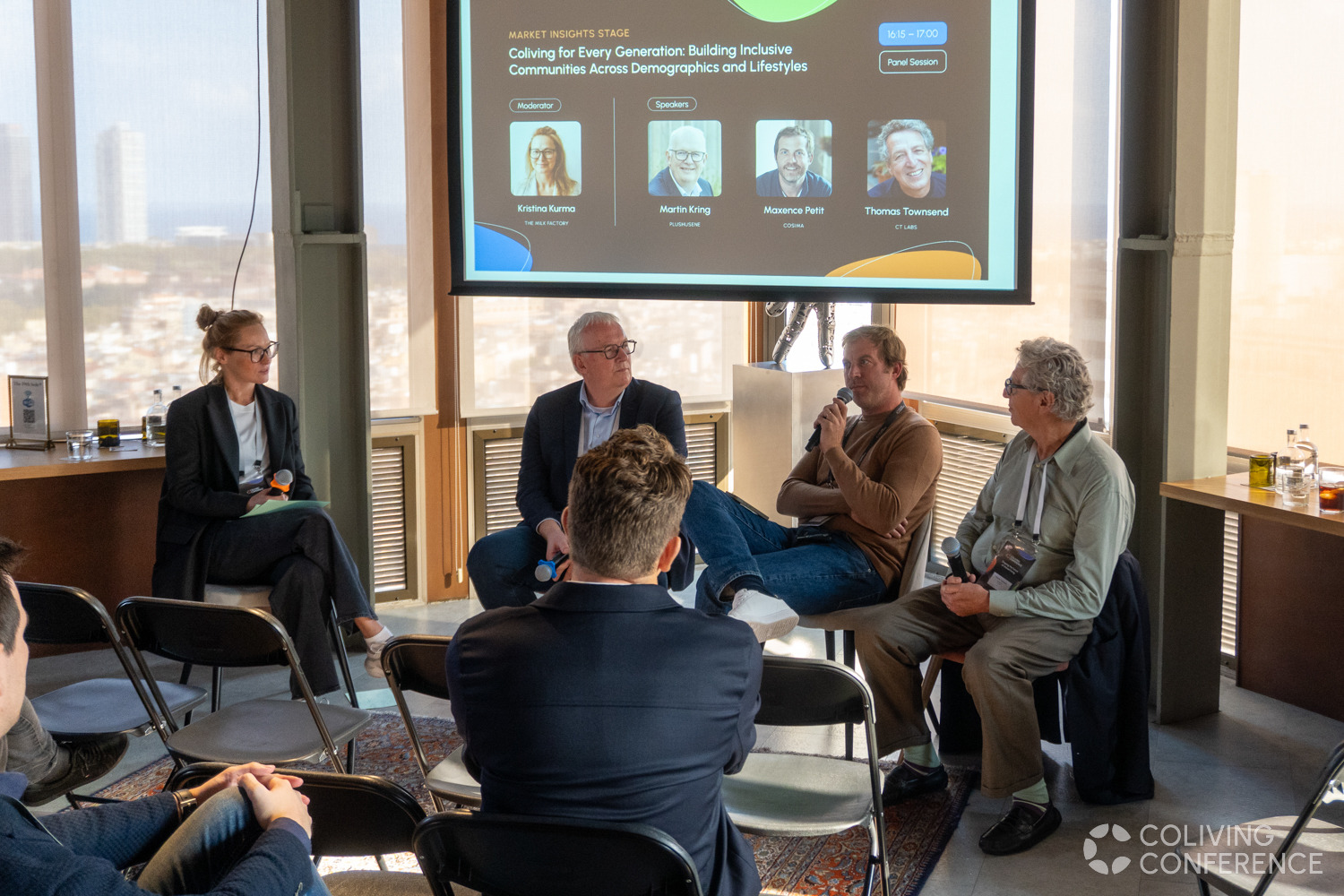
The Coliving Conference 2025 featured a thought-provoking panel discussion diving into how coliving is evolving to meet the needs of diverse groups, from seniors to creatives, offering tailored community experiences for all moderated by Kristina Kurma. Panelists included Martin Kring, Maxence Petit, and Thomas Townsend. This session explored how operators, investors, and developers can navigate the balance between inclusivity and specialisation - ensuring that targeted models remain open, welcoming, and adaptable, while meeting market demand and creating a sense of belonging for all.
Traditionally, the concept of home has been binary - you either live in a nuclear family unit, or as you age, you move into institutionalised care. Yet this rigid dichotomy is failing to keep pace with the liquidity of modern life. Loneliness has become a pervasive public health crisis, housing affordability is squeezing the middle class, and the demographic pyramid is inverting. Insights emerging from the Coliving Conference 2025 in Barcelona, Spain, highlight a pivotal shift. The real estate industry now stands at a precipice where the physical asset is less valuable than the social fabric it contains. This tension suggests that the next great opportunity in residential real estate is not merely about providing a roof over one’s head, but about engineering the social interactions that happen beneath it.
Dismantling the Myth of the Demographic Silo
The prevailing narrative in real estate development often categorises residents into rigid boxes - students, young professionals, families, and retirees. However, the reality of modern household composition is far more fluid. Kristina Kurma, Concept Developer at The Milk Factory, noted that in Europe only 15% of households fit the traditional nuclear family model with children. The vast majority of the market comprises single adults, childless couples, and a rapidly growing cohort of independent seniors. This fragmentation is even more acute in North America. Thomas Townsend, Researcher at CT Labs, highlighted that by 2030 one-third of the Canadian population will be over the age of 65. In his specific study of a Canadian neighbourhood, he found 1.500 residents over that age threshold, with 800 of them living by themselves.
Therefore, the industry must ask whether its current products are fit for purpose. The assumption that older adults wish to retreat into age-segregated silos is being challenged by rigorous data. When Plushusene, a Danish operator, surveyed 8.000 seniors during their concept phase, 74% per cent of respondents explicitly stated they did not want to live exclusively with other seniors. They wanted to be surrounded by younger generations. Conversely, when the company surveyed 2.000 families, 89% expressed a desire for their children to grow up around older adults, citing the benefits of having “too many grandparents” rather than too few. This insight drove a complete redesign of their asset strategy, moving away from a senior living model toward a truly cross-generational approach where the youngest resident is a newborn and the oldest is 98.
Can Different Generations Truly Live Together?
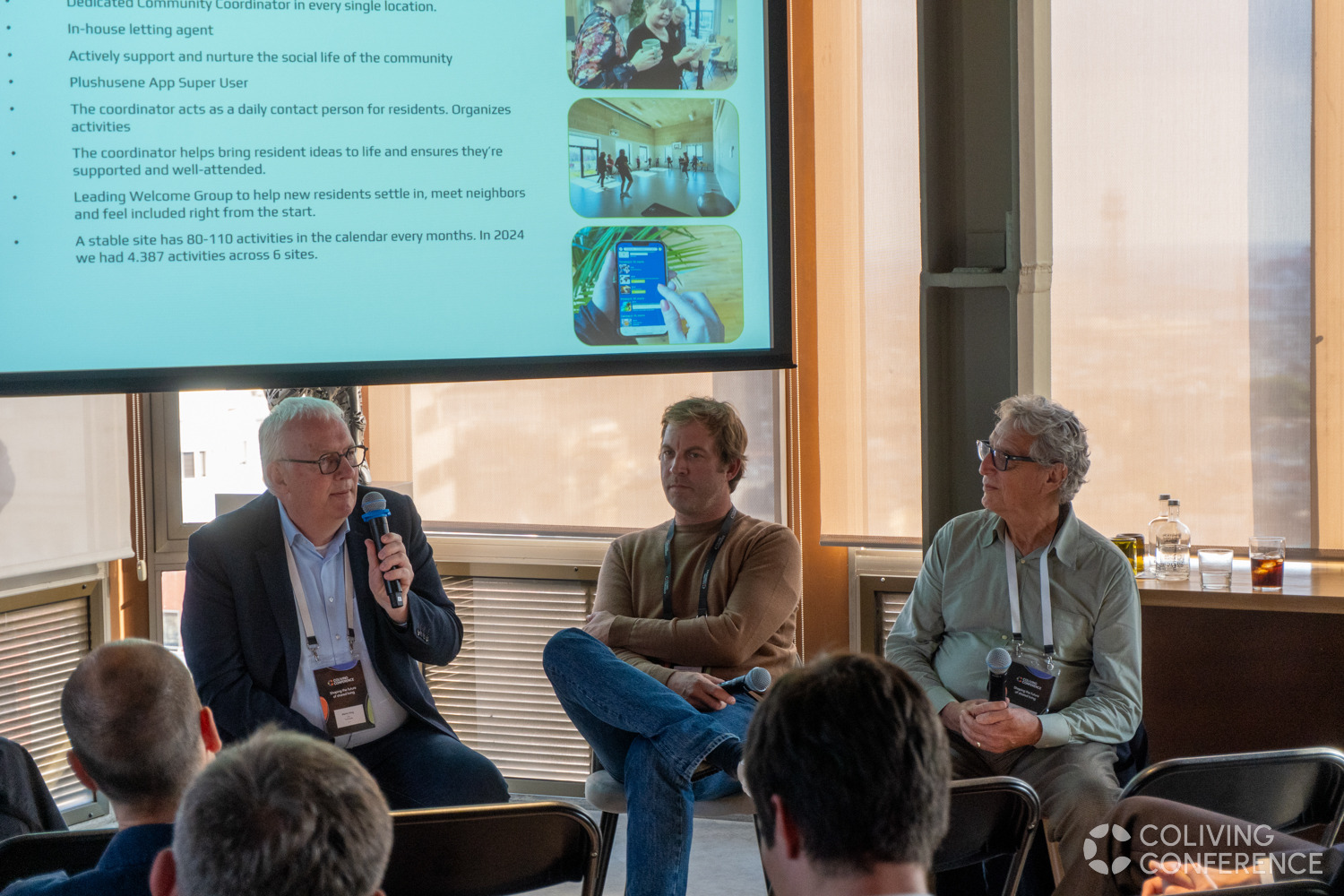
One of the most compelling developments in the sector is the move towards intergenerational living. However, successful operators are learning that mixing generations requires more than just placing them in the same building. It requires a nuanced understanding of lifestyle compatibility.
The assumption that all generations can mix seamlessly is a fallacy. For instance, the romanticised notion of combining university students with the elderly often fails in practice due to clashing circadian rhythms and lifestyle habits. Students operate on late night schedules and generate noise, while seniors often prioritise tranquillity and early routines.
However, replacing students with families changes the equation entirely. Martin Kring, CEO & Co-Founder at Plushusene, has found profound success in mixing seniors with families and single parents. This model creates a mutually beneficial ecosystem. Single parents, who often face a significant lack of time, benefit from the presence of older neighbours who might have more time to spare. In return, the seniors gain a sense of purpose and connection that combats the cognitive decline associated with isolation. The architecture of the building facilitates this, but it is the curation of the tenant mix that makes it functional.
Empowerment Over Care in Senior Living
For the older demographic, the traditional alternative to staying at home is currently the nursing home - a model often associated with a total loss of autonomy. A new wave of coliving is challenging this by focusing on empowerment rather than care. The goal is to strip away the clinical atmosphere and return to a domestic one.
Maxence Petit, Founder & President at Cosima, exemplifies this approach by converting floors in traditional buildings into shared apartments for people with mild to moderate loss of autonomy. The scale is intimate, typically housing only eight people per floor across 400 m2. The philosophy here is anti-institutional - the residents retain control over their daily lives, from choosing their menu for the week to deciding what cultural activities they wish to pursue.
This effectively decouples housing from healthcare. By keeping the environment domestic and integrating care services only as a support layer, residents maintain their identity. They are not patients, but neighbours. Furthermore, rather than forcing intergenerational living within the unit, which can cause friction, this model invites the outside world in. Local associations, music schools, and neighbours are invited into the space for events, ensuring the seniors remain tethered to the wider community without compromising the tranquillity of their private living quarters.
The Operational Mechanics of Community
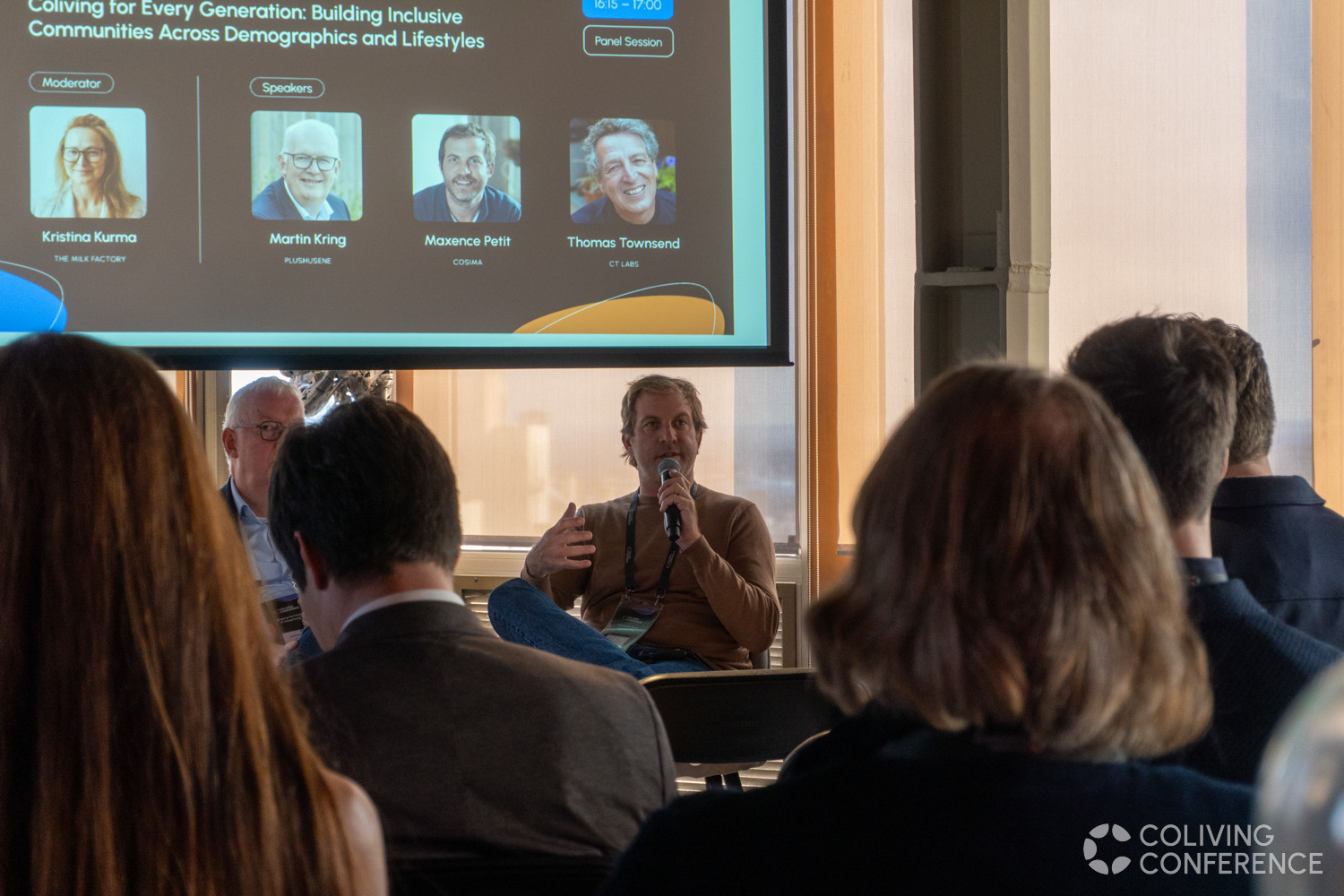
Building a community is an operational strategy that must be executed with precision. The most successful coliving operators are those who view community engagement as a key performance indicator, managed through a structured framework rather than vague aspirations.
Dining is the most powerful tool in this arsenal. However, the logistics of feeding 80 to 130 people require a system that prevents burnout. Plushusene employs a chef not to serve the residents, but to train them. For the first four months of a new site opening, the chef teaches the residents how to purchase food at scale, how to use industrial kitchen equipment, and how to organise cleaning rotations. Once the residents are competent, the chef leaves. This transition is critical. It shifts the dynamic from a hotel service model, where residents are passive consumers, to a cooperative model, where they are active stakeholders.
This creates a high barrier to entry that paradoxically increases retention. Potential residents must apply and demonstrate what they will contribute to the ecosystem. Whether it is a 98 year old resident telling stories while helping to clear plates or a younger resident organising a carpentry workshop, everyone has a role. This "active environment" ensures that the community is self-sustaining. When residents have invested labour and emotion into their housing, they are far less likely to leave.
The Financial Case for Social Assets
For investors, the primary hesitation regarding coliving has always been the lack of comparable data. Institutional capital relies on benchmarks, and in a still-budding industry, these can be scarce. However, the financial narrative is shifting from pure risk assessment to value creation through ESG - specifically the “Social” component.
The economic argument for these evolved coliving models rests on efficiency and retention. By moving guest rooms, large dining areas, and workshops into shared facilities, operators can reduce the private footprint of individual units without diminishing the resident's perceived quality of life. A resident is willing to pay a premium for a smaller private apartment if it grants them access to high-quality amenities they could never afford in a single-family home.
More importantly, the churn rates in these community-centric models are significantly lower - often between half to one-third of the market average. Low churn translates directly to higher net operating income by reducing vacancy loss and marketing costs. Additionally, the health outcomes associated with these environments offer a compelling macro-economic argument. By keeping seniors active and socially engaged, these models delay entry into the state-funded healthcare system. In regions with public healthcare, this presents a potential avenue for government partnership or subsidy, as the housing operator effectively becomes a preventative health provider.
Navigating the Intergenerational Imperative
As the industry matures, the distinction between coliving and housing will likely blur. The experiments being conducted today-from social labs in Canada to retrofitted apartments in Paris and purpose-built districts in Denmark - are writing the playbook for a world where the nuclear family is no longer the default unit of planning. We are moving toward a landscape where housing is defined by the quality of life it enables rather than the square footage it provides.
For operators and developers, the path forward necessitates decision-making that is grounded in granular data rather than assumptions. The revelation that seniors prefer the busyness of families over the silence of age-segregated blocks was only possible because an operator asked 8.000 people what they actually wanted. Operations must also be designed to take a step back. The most sustainable communities are those where the operator facilitates rather than dictates, training residents to run their own dining clubs and events. This reduces operational expenditure in the long run while deepening resident buy-in. Finally, the capital conversation needs to be reframed around resilience. The premium in coliving comes not just from furnished rooms or high-speed internet, but from the radical reduction of loneliness and the subsequent stability of the tenant base. In a volatile market, a building full of neighbours who know and rely on each other is the safest asset one can own.