


From Medals to Medley: What the Olympic Village Can Teach the Coliving Sector
The Olympic Village is rarely discussed in housing innovation circles, but it should be. Every Games cycle delivers one of the most complex residential operations in the world - thousands of residents from over 200 nations living in high-density, shared environments with extraordinary logistical demands. The model combines temporary occupancy, community integration, sustainability targets, and long-term adaptive reuse planning. It must function immediately, operate flawlessly, and convert seamlessly into legacy housing. For stakeholders in coliving, the Olympic Village offers a valuable case study in scale, community management, and urban integration.
Every Olympic Games is remembered for its medal counts, its record-breaking feats, and its global spectacle. Yet one of the most complex components of the Games unfolds largely outside public view - and often years before the opening ceremony - the Olympic Village. Built to temporarily house thousands of athletes, coaches, and officials from more than 200 nations, the Olympic Village is one of the most ambitious residential experiments in the world. It must function at extreme density, under global scrutiny, for a limited time frame, while accommodating diverse cultural norms, dietary needs, languages, and daily routines. From the perspective of coliving, the Olympic Village offers some of the world’s most ambitious coliving experiments at scale, and is a testament to how coliving has escaped the confines of its rigid characterisation as a lifestyle product for digital nomads.
Shared Purpose as the Foundation of Community
One of the most persistent challenges in coliving is the creation of authentic community. Many developments attempt to engineer social cohesion through events, branding narratives, or shared interest themes. Olympic Villages, by contrast, begin with an organic and powerful driver of cohesion - shared purpose.
Olympic Villages bring together athletes, coaches, and officials into a densely populated, but highly coordinated environment. For instance, the Paris 2024 Olympic Village alone housed approximately 14,500 Olympic athletes and 9,000 Paralympic athletes and their teams across its 82 buildings, creating a temporary coliving environment that spanned 46 hectares of Seine-Saint-Denis and adjacent areas.
Athletes enter the Village with clear behavioural expectations. Rest is respected. Performance routines are prioritised. Social life is structured around preparation and recovery. Even without formal community-building programmes, bonds form rapidly through shared intensity.
Unlike many coliving developments that attempt to retrofit community, the design of the Olympic Village embeds community around performance goals - shared meals, recovery spaces, communal transport, recreational areas, and integrated medical and sports facilities - all optimised to support elite performance. Functional community design, rooted in a clear shared purpose, offers a template for how coliving developments can move beyond amenity lists toward meaningful interdependence among residents.
Designing for Performance & Wellbeing
If Olympic Villages demonstrate anything, it is that operations matter as much as architecture. Managing thousands of residents from different cultures requires centralised services, clear communication systems, and behavioural norms that are widely understood and accepted.
Olympic Villages operate with centralised food services capable of serving thousands of meals daily, multilingual wayfinding and communication, strict but accepted codes of conduct, and continuous logistics, security, and maintenance.
This operational intensity offers a counterpoint to the idea that structure undermines autonomy. In practice, Olympic Villages show that well-run operations enable individual freedom by removing uncertainty and inefficiency. For coliving operators, this reinforces the importance of operational clarity - especially at scale.
The foundations of coliving emphasise architecture that supports interaction and wellbeing, but designers often struggle to create spaces that genuinely influence behaviour at scale. Olympic Villages demonstrate how architectural and spatial decisions shape daily life. With temporary housing designed as efficient apartments, shared kitchens, and common areas, and easy access to services - healthcare, restaurants, transport nodes, gyms, recovery spaces - under the same roof or adjacent buildings, this integration translates to walkability that makes almost every destination within the Village is a short walk or cycle away.
These principles align with the growing emphasis on wellbeing, routine, and reduced daily friction in communal environments, and show how mass-scale high-performance living can also be human-oriented.
Temporality: Can Temporary (Pop-up Coliving) Still Be Real Community?
One of the distinctions of Olympic Villages is that they operate intensely, but briefly. Athletes and officials live there for a matter of weeks, yet communities form rapidly under shared schedules and routines. This matters for coliving, as it challenges the idea that community requires years to build, and highlights how clear behavioural rhythms - meal times, training, rest periods, communal transit - accelerate social integration. Coliving developments can leverage this insight by designing intentional rhythms, collective routines, and event-based lifestyles that accelerate community formation.
Yet temporality also reveals that not all residents willingly embrace communal living, even within the Olympic context. Ahead of the 2026 Winter Olympics, reports confirmed that members of Canada’s men’s hockey team would opt to stay in a five-star hotel rather than the Olympic Village, prioritising privacy, routine control, and performance optimisation over communal immersion. This decision underscores a broader truth about shared living. While the Olympic Village functions as a highly engineered coliving ecosystem, elite athletes - much like certain demographics in urban markets - may resist density when individual performance or privacy are perceived to be at stake. The Olympic Village demonstrates that coliving can operate at scale, but it also exposes a psychological barrier of willingness to share space being contextual, and often stratified by status, expectation, and perceived need for autonomy.
From Games to Neighbourhoods: Legacy & Adaptive Reuse
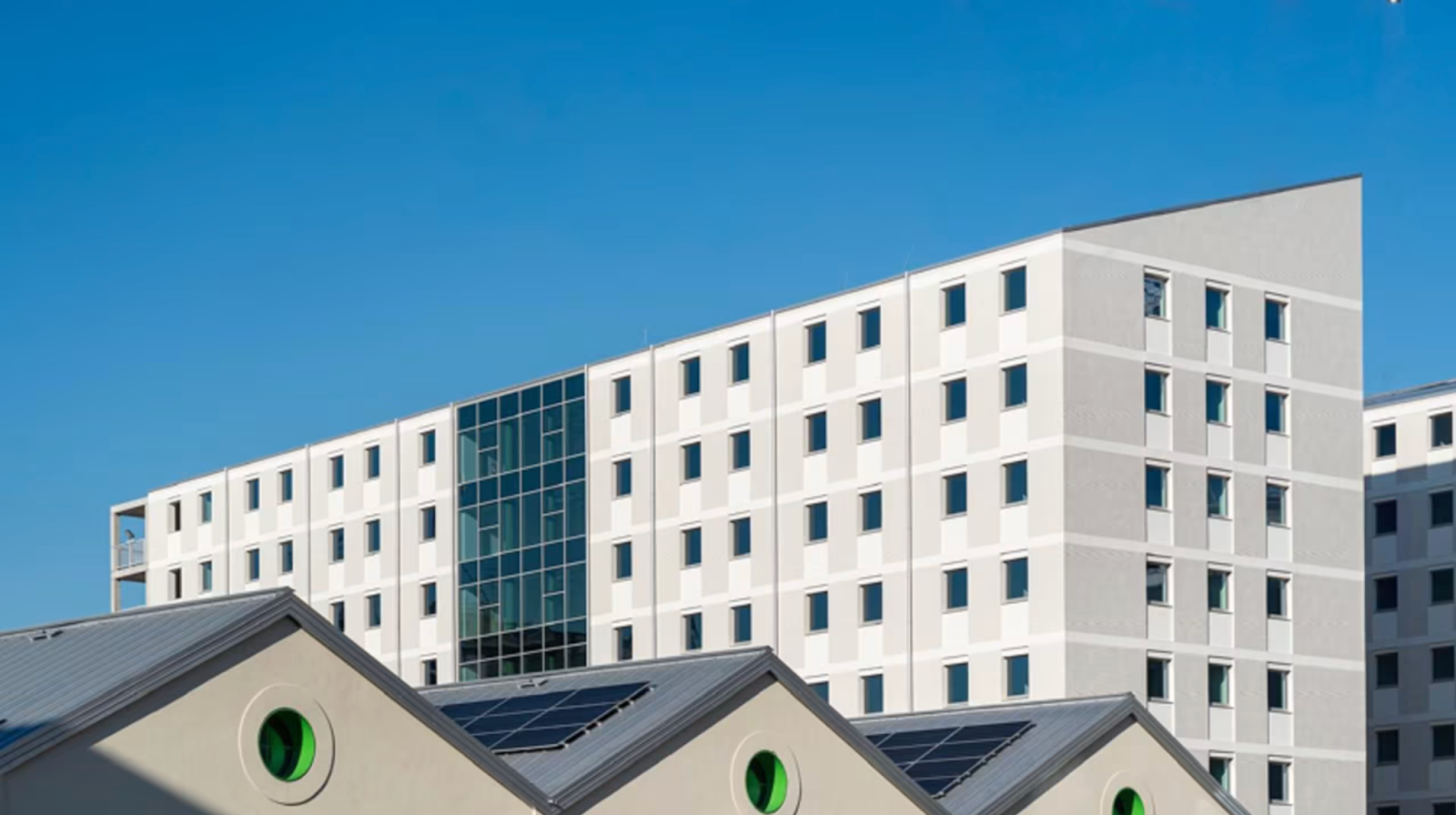
Perhaps the most compelling intersection of Olympic Villages and coliving is what happens after the Games. Rather than being dismantled, many Olympic Villages are transformed into permanent residential communities, often housing thousands. The most recent Olympic projects have been conceived explicitly with legacy in mind. Conversion plans are embedded into initial master planning, infrastructure investments are aligned with long-term demographic needs, and public amenities are designed to remain functional after athlete departure.
- London 2012’s Olympic Village was converted into the East Village, with approximately 2.818 homes intended for mixed use, including affordable housing and community facilities such as schools and health centres. The Village originally accommodated around 17.000 athletes and officials during the Games.
- Seoul’s 1988 Olympic Village, originally built with capacity for around 15.000 people across 3.692 apartments, is now a mixed residential community containing approximately 5.500 households decades after the Games.
- Vancouver’s 2010 Olympic Village, which housed up to 2.800 athletes, coaches, and officials during the Games, was redeveloped into a neighbourhood with about 1.100 residential units and broader mixed-use spaces aligned with sustainability goals.
- Paris 2024’s Olympic Village is being transformed into approximately 2.800 housing units expected to house around 6.000 long-term residents, alongside green spaces, transit connections, and commercial spaces.
These legacy conversions mirror coliving’s goals to build dense, supportive, mixed-use residential environments. While Olympic Villages are purpose-built and later converted, much of the coliving sector operates in the opposite direction through adaptive reuse. Former office buildings, hotels, industrial sites, and even retail spaces are being transformed into shared living environments. Adaptive reuse has become a defining strategy within coliving because it allows developers to respond to shifting urban demand, especially in cities facing office oversupply or changing retail patterns. Rather than building entirely new residential districts, coliving frequently inserts itself into the existing urban fabric, reprogramming underutilised assets into community-oriented housing. For coliving developers, Olympic Villages demonstrate the importance of designing for future flexibility even in new-build projects - adaptability should not be reactive but embedded structurally.
Sustainability & Urban Integration
In recent decades, Olympic Villages have evolved from temporary accommodation compounds into large-scale sustainability demonstrations. Modern Olympic Village designs are now intentionally aligned with sustainability goals - an area where coliving also seeks leadership.
- The Paris Olympic Village aimed to reduce carbon emissions by nearly 47% compared to conventional development projects, and includes six hectares of green space, integrated transit connections, and water management systems.
- Milan’s 2026 Olympic Village, uses mass-timber construction and plans to convert the facilities into 1.700 beds of student housing, promoting urban regeneration and reduced environmental impact after the Winter Games.
Olympic Villages suggest that coliving can go further. Coliving developments can integrate district-scale energy systems rather than relying solely on building-level efficiencies. Partnerships with municipalities to connect to renewable district heating, geothermal networks, or shared battery storage systems could transform coliving projects into sustainability anchors within broader neighborhoods. Material selection in new-build coliving can also prioritise low-carbon construction, including mass timber and modular prefabrication. Prefabrication, widely used in Olympic developments due to time constraints, not only accelerates construction but reduces waste and improves quality control. Coliving developers, particularly those scaling portfolios across multiple cities, could adopt similar modular systems to standardise sustainable construction.
Olympic Villages as Hyper-Scale Coliving Prototypes
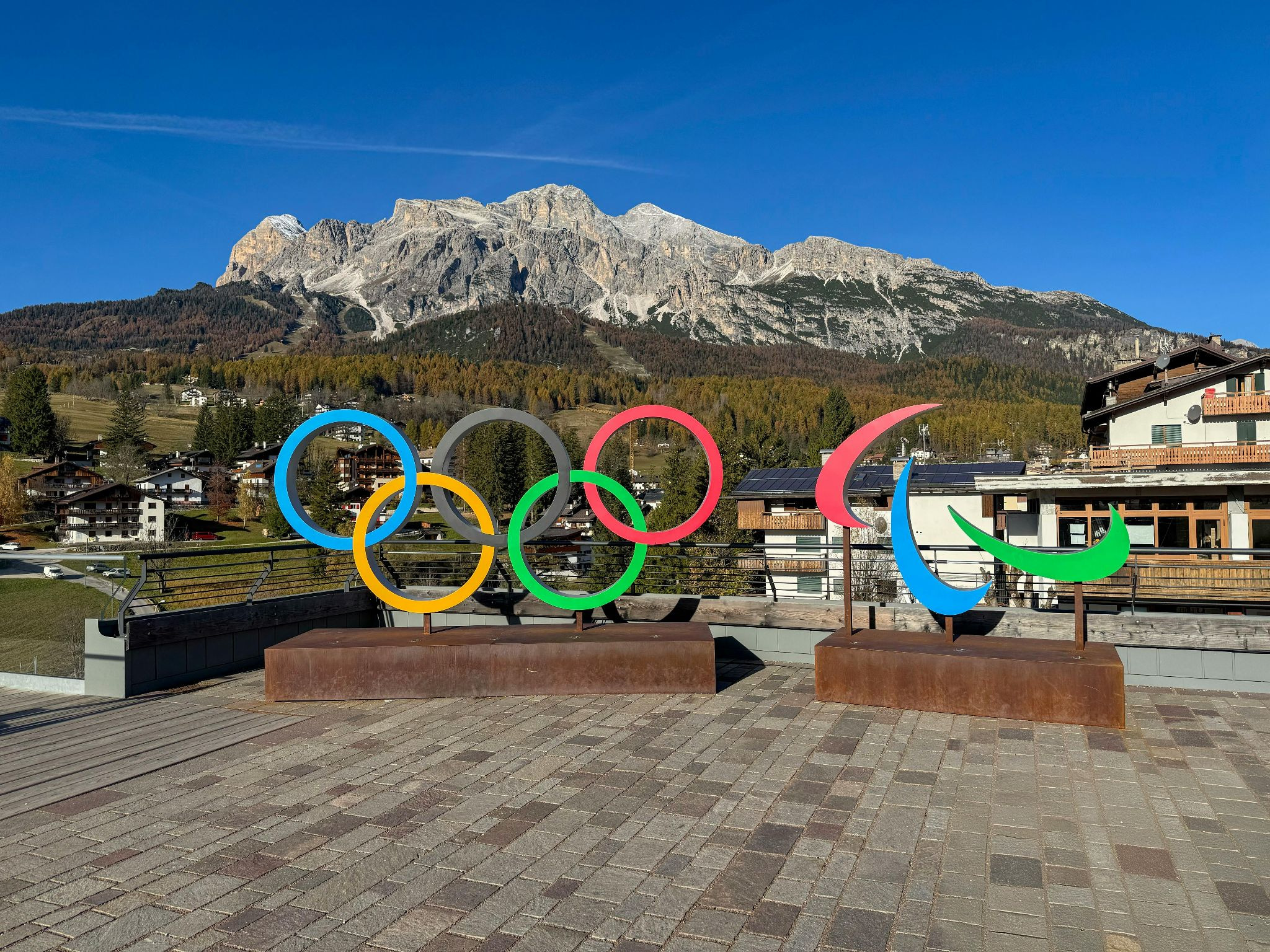
Olympic Villages prove that when residents share a compelling common purpose - be it performance, schedules, or service systems - community forms quickly and meaningfully. From a design perspective, spatial arrangements that prioritise proximity to services, community spaces, and wellbeing amenities result in livable, supportive environments. To those still unconvinced by coliving’s temporal status, Olympic Villages prove that even short-term coliving can be socially rich when rhythms and routines are explicit and intentional. Finally, with regard to sustainability efforts, Olympic Villages incorporate carbon-reduction and ecological planning that coliving communities can emulate, especially in new developments and event-driven urban districts.
The Olympic Village may be designed for elite sport, but it embodies many of the principles coliving advocates value most: community by design, shared environments with purpose, and adaptability. By studying how Olympic Villages are conceived, inhabited, and repurposed, the coliving sector can learn how to create urban living environments that are social, sustainable, resilient, and adaptable - for both temporary communities and long-term neighbourhoods.