


Accelerating Coliving with Technology: A Strategic Approach
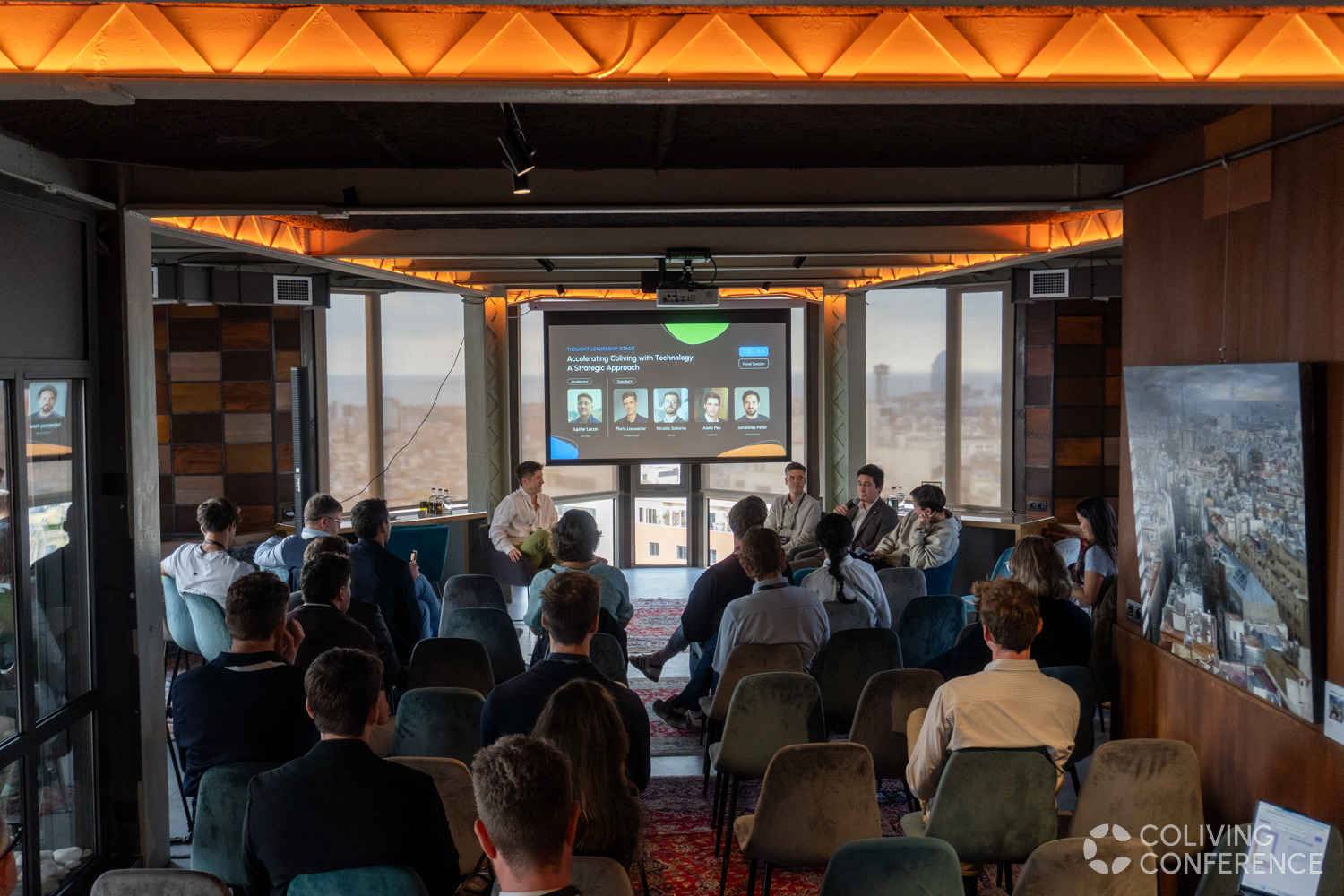
The Coliving Conference 2025 featured a thought-provoking panel discussion on how coliving businesses are embedding digital solutions into their strategies, moderated by Jupiter Lucas. Panelists included Floris Lauwerier, Aleks Pes, and Johannes Peter. The session focused on how technology is reshaping coliving from investment to operations, creating fully integrated and future-proofed coliving ecosystems. From low-code agility and automation, to investor transparency, pricing ethics, and scaling community without burning out teams, technology is no longer an add-on to coliving operations -it is the infrastructure itself.
As demand for flexible, community-driven living spaces surges across major global cities, the operational complexity of delivering these experiences at scale threatens to erode the very margins that make the business model viable. The romantic vision of shared living is now being tested against the cold reality of balance sheets, investor returns, and the logistical friction of managing thousands of residents. Insights from Coliving Conference 2025 in Barcelona, Spain showed operators are no longer asking if technology is necessary, but rather how it can be deployed to bridge the gap between human-centric hospitality and rigorous asset management.
Can Coliving Scale Without Losing Its Human Touch?
The industry remains divided on the most effective way to construct a technology stack, driven largely by capital structure and business models. For bootstrapped operators, the cost of custom development has historically been prohibitive, yet the rise of low-code platforms is changing this landscape. Johannes Peter, Founder & CEO at TomoDomo Coliving in Switzerland, represents a growing cohort of agile operators who are rejecting expensive enterprise software in favour of off-the-shelf solutions built on easily adaptable platforms like Bubble and Wix. Managing a portfolio of 255 rooms with a team of six, Peter argues that technology must primarily serve to free staff from performing repetitive administrative burdens. By utilising AI to write project briefs and hiring freelancers through platforms like Upwork, smaller operators can now deploy custom property management systems (PMS) that integrate ticketing, access control, and accounting at a fraction of traditional costs.
However, this DIY approach contrasts sharply with the strategy of large-scale operators backed by institutional or retail capital. Aleks Pes, MENA Partner at You&Co, which operates approximately 4.000 rooms across Dubai and the CIS region, claims that off-the-shelf solutions often fail to meet specific stakeholder requirements. Pes notes that his company’s unique funding model, which involves selling individual units to private investors, requires a level of reporting transparency that standard platforms could not provide. For You&Co, the decision to build in-house was driven by the need to provide real-time dashboards where investors could track asset appreciation, monthly income, and market value.
Floris Lauwerier, Founder & CEO at Powerhouse, has another view on the in-house trend. He advises operators against the "build-it-yourself" trap, suggesting that 80% of operational processes - such as rent collection, finance, and onboarding - are standard across the industry. Lauwerier argues that the strategic value lies in customising the final 20% of the tenant journey rather than reinventing the core transactional engine. This perspective highlights a crucial decision for operators - if your business model relies on standard rental yields, proprietary tech may be a distraction. If, like You&Co, your model involves complex fractional ownership or internal clients, off-the-shelf tools may indeed prove too limiting.
Can Automation Coexist with Authentic Community?
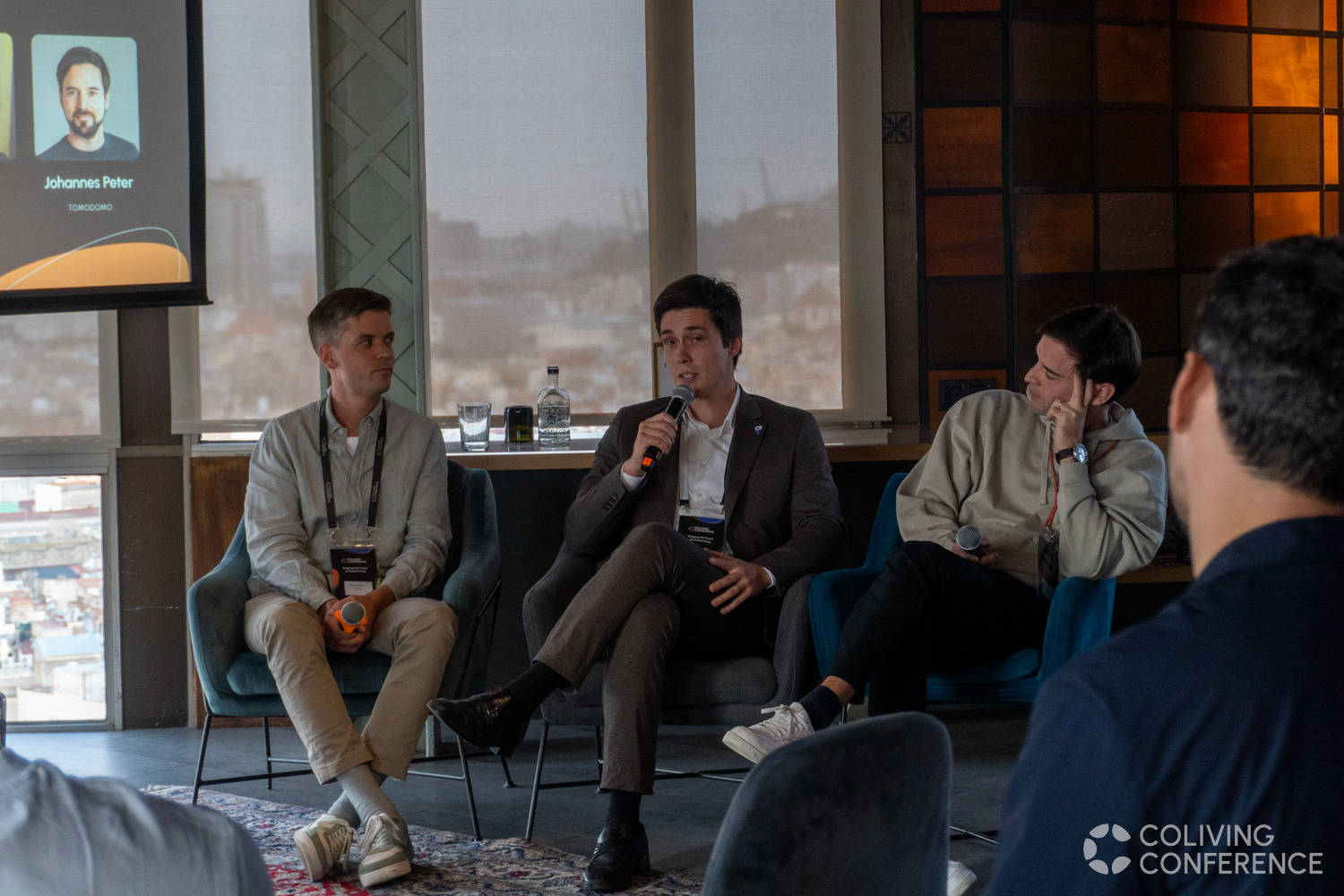
A lingering fear in the sector is that efficiency inevitably kills the "vibe" of a community, turning a coliving space into a dormitory with a digital lock. However, the operational reality suggests the opposite is true - inefficiency is a greater threat to community. When community managers are busy with tasks like invoicing and manual data entry, they are absent from the communal spaces where culture is built. Peter describes his philosophy as using back-of-house automation to ensure his hospitality managers can be physically present in the front of house. The goal is not to replace humans, but to empower them to handle more units without reducing service quality. As TomoDomo prepares to convert the former Pfizer headquarters in Zurich into a 136-unit coliving house, the ability to maintain a flat headcount while nearly doubling capacity depends entirely on this technological leverage.
The definition of "artificial intelligence" in this context requires a second look. Pes points out that what many operators label AI is often just well-written scripts or bots, not a sentient digital concierge. However, even these basic tools can have profound applications. Pes shared an example from a location with over 1.000 rooms where resident communication was primarily complaints about laundry. By deploying bots to foster conversations about entrepreneurship, legal advice, and business scaling, the operator successfully shifted the community culture from complaints to professional networking.
Efficiency also manifests in the physical realm. The integration of hardware and software is critical for reducing the friction of daily operations. Simple innovations, such as the use of e-reader screens on mailboxes that update automatically via a custom script, eliminate the need for staff to physically print and replace paper labels every time a resident moves in or out. In a high-turnover environment, these marginal gains aggregate into significant labour savings.
The Imperative of Investor Transparency
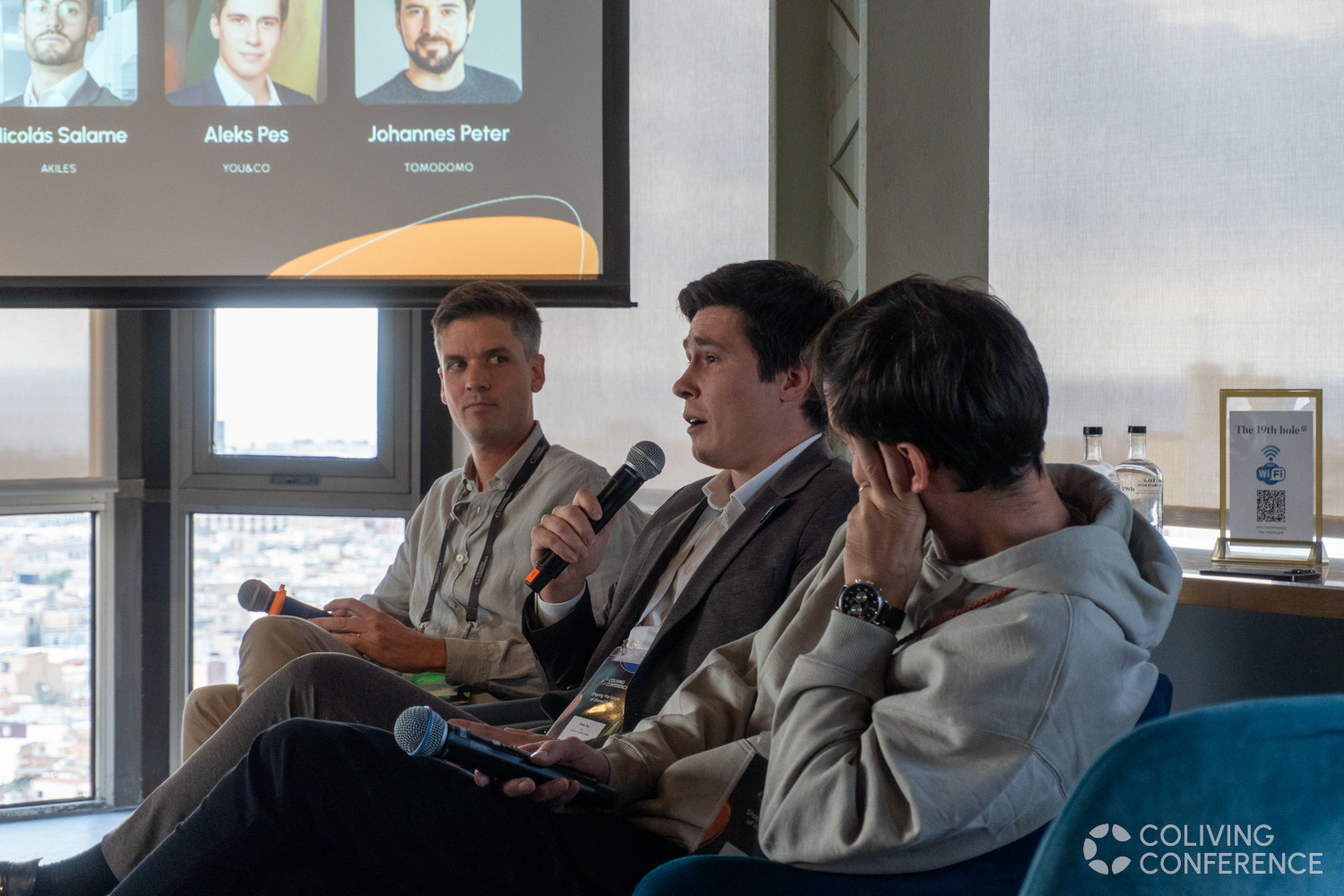
As coliving seeks to establish itself as a mature asset class, the days of quarterly PDF reports are fading, as demands from capital partners become more sophisticated. . For operators managing capital from retail investors or private equity, the ability to provide granular, real-time data is becoming a prerequisite for doing business. Pes notes that with You&Co’s model, manual reporting is impossible. An automated dashboard that allows investors to approve capital expenditures, such as replacing appliances, or to view the real-time valuation of their specific unit is the operational glue that holds the investment vehicle together.
This transparency also extends to supplier management. In large-scale developments, the loss of value through inefficient maintenance or cleaning services can be substantial. Pes emphasises that integrating local suppliers into the operator’s technology stack is essential. If cleaners and technicians are not using the operator’s ticketing and access systems, quality control becomes impossible to enforce. With occupancy rates hovering around 88% and average stays of just two months in some markets, the turnover speed is unforgiving. Operational expenses can swing from 35% for long-term rentals to 55% for short-term stays, making strict vendor management a primary focus for protecting net operating income.
The Tension Between Dynamic Pricing & Trust
One of the sharpest strategic divides in the industry lies in revenue management. The hotel industry standard of dynamic pricing clashes with the community-centric ethos of coliving. Peter argues that variable pricing creates "noise" within a community, eroding trust when residents realise they are paying different rates for identical rooms. For operators prioritising long-term retention and social cohesion, fixed pricing offers stability and transparency that aligns with the brand promise.
Conversely, for operators with a strong investor mandate and a mix of short-term and mid-term inventory, dynamic pricing is non-negotiable. Pes asserts that because coliving must prove it yields higher returns than traditional serviced apartments or hotels, maximising the top line is essential. In markets where coliving competes directly with hospitality assets on platforms like Booking.com, failing to adjust prices based on demand is akin to leaving money on the table. He suggests that operators can bridge this gap by writing scripts that adjust pricing relative to external platforms, effectively automating the yield management process without needing to build complex algorithms from scratch.
Strategic Imperatives for the Road Ahead
The democratisation of software development is reshaping who can compete in the coliving market. The barrier to entry for creating sophisticated, custom operational tools has collapsed. The ability for a founder with limited coding experience to build a fully functional PMS using no-code tools and AI assistance means that small operators can now achieve levels of efficiency previously reserved for venture-backed giants. This agility allows for rapid experimentation. If a specific workflow for checking payments or managing access isn't working, a low-code architecture allows the operator to pivot immediately rather than waiting for a third-party vendor to release a feature update.
This shift suggests a future where the competitive advantage does not lie in owning the software but in the speed at which an operator can adapt their digital processes to physical realities. Whether it is integrating a new access control system or automating a specific communication flow for onboarding, the operators who view technology as a malleable toolkit rather than a rigid constraint are best positioned to scale. The era of managing properties on spreadsheets is effectively over, replaced by a new imperative where software architecture is as critical as physical architecture.
As the sector moves forward, a successful coliving operator has to evolve into a tech-enabled service provider. The insights from industry leaders clarify that the goal is not to remove humans from the loop, but remove them from cyclical routines. By automating the repetitive, the mundane, and the administrative, operators can ensure that their staff are deployed where they add the most value - in the lobby, at the dinner table, and in the heart of the community.